By Sarah
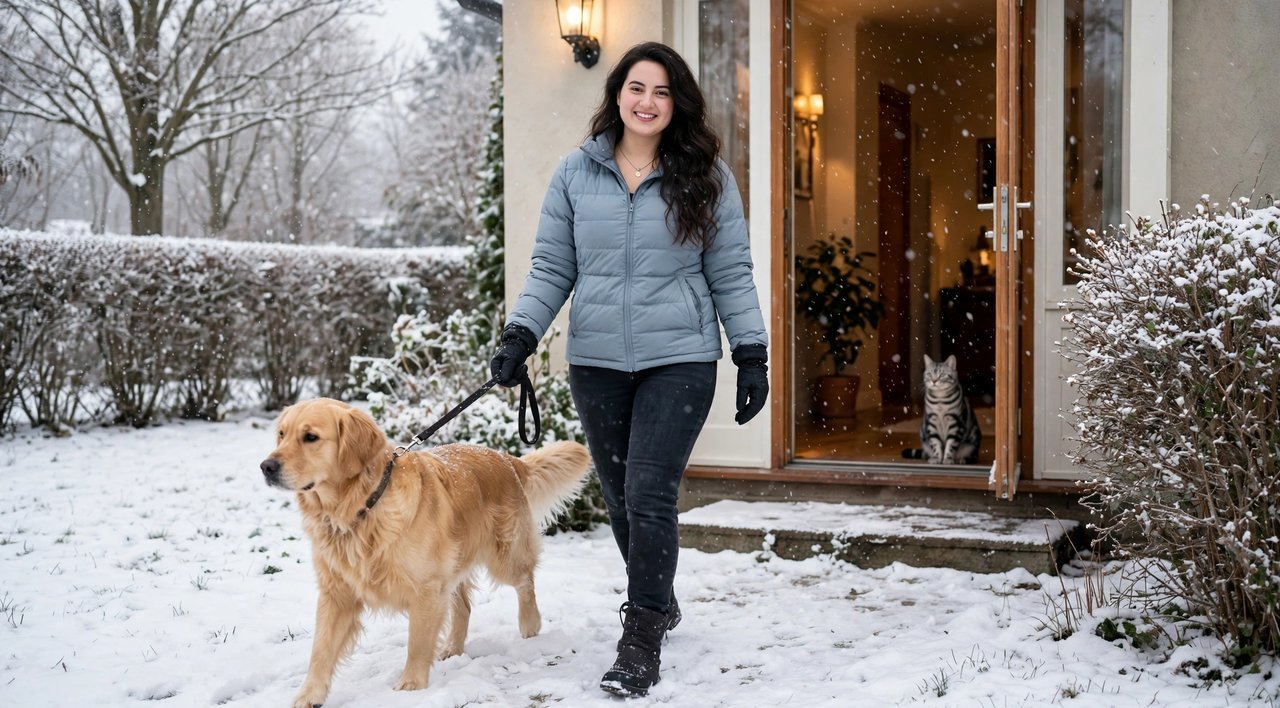
The forecast says 25 degrees, the dog needs his walk, the cat stares at the door, and you stand there in three layers wondering the rules for animals in one. How cold is too cold for dogs and cats is not one number — it is a set of bands shifting with size, coat, age, wind, and wetness.
Get the bands right and most decisions become simple: how long outside, who wears a coat, whose paws get wiped, when the answer is “not today.” Guess wrong one way and a pet suffers quietly; the other, and healthy animals lose exercise.
This guide gives the bands, the modifiers moving a pet between them, cold’s two injuries — frostbite, hypothermia — and outdoor-cat risks unrelated to air temperature: engines, antifreeze, frozen bowls.
Quick Answer
How cold is too cold for dogs and cats depends on the animal: below about 45°F, small, thin-coated, young, and old pets feel it; below 32°F, limit time outside for most; below 20°F, frostbite and hypothermia become real risks for everyone. Wet and wind move every band warmer. Indoors is the right answer for cats in a true cold snap.
The Bands: Temperature Guidance That Admits the Caveats
Start with the vets’ framework. Around 45°F (7°C) is where cold-sensitive pets — small dogs, thin coats, puppies, kittens, seniors, the unwell — grow uncomfortable outdoors beyond minutes. Hardy double-coated adults may still be cheerful; the band describes the vulnerable, not the average.
Below freezing — 32°F (0°C) — caution widens: most dogs get shortened outings, cats should be choosing indoors, and ears, tails, and paws accumulate cold-injury risk. Below 20°F (−7°C), exposed skin can frostbite in tens of minutes; any pet left out is in danger.
Treat these as planning bands, never guarantees. They assume a dry, still day; wind and wet rewrite them. The AVMA’s cold weather safety guidance makes the same point: know your pet’s tolerance — it varies more than any chart.
Why One Number Never Fits
The same 30°F is a romp for a husky and a medical risk for a chihuahua; the difference is physics. Small bodies lose heat faster, proportionally. Thin, single coats insulate poorly; a greyhound in January wears a t-shirt. Fat insulates, which is why lean, elderly, and ill animals chill first.
Wet changes everything. A soaked coat loses most insulation, so 40°F rain can feel colder than dry 25°F — wind strips the warm air layer from a coat as it does from you. “Feels like” temperatures proxy your pet too.
Acclimatization counts, quietly. A dog who lived through autumn hardens to December; one flown from Florida in January has not. Judge the animal — shivering, lifting paws, seeking the door are data — over any number, ours included.
Dogs Outside: Time and the Turn-Back Signs
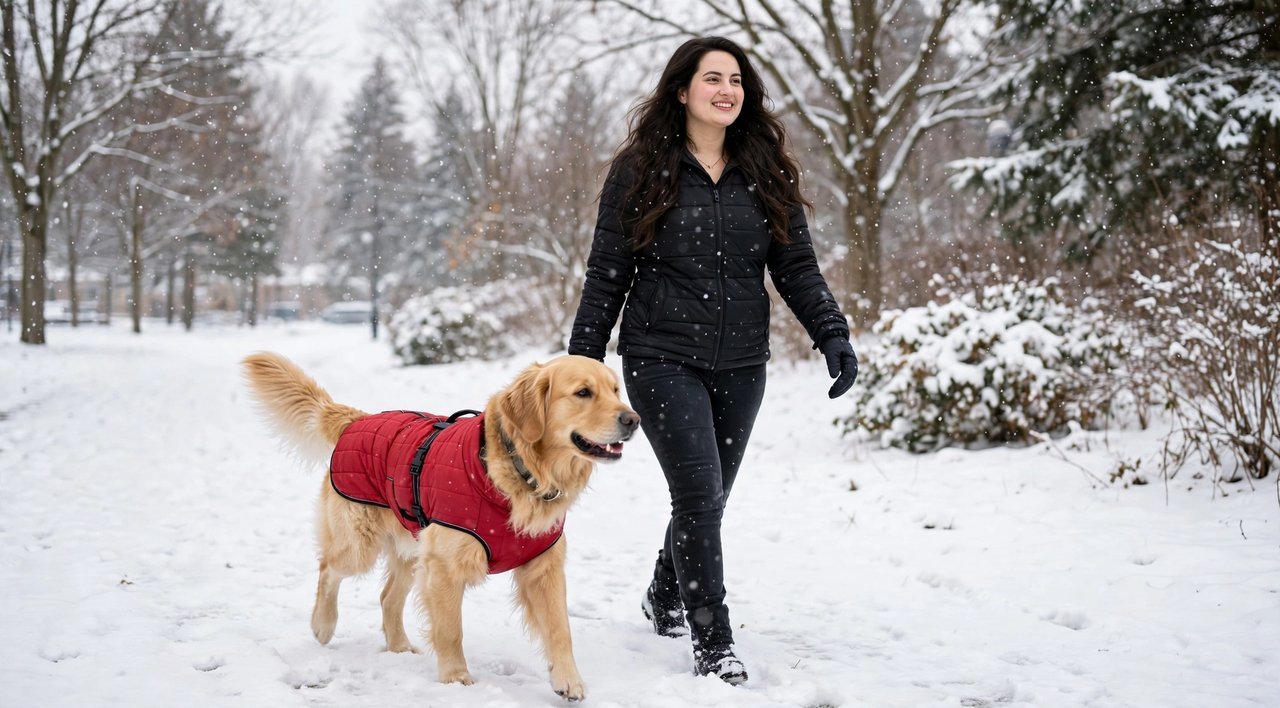
In a cold snap, walks shrink; outdoor business stays business. A dog in motion tolerates more than one standing around — movement generates heat — so keep walks brisk and continuous rather than stopping to chat, shortening them as temperature falls: the walk serves the dog, not the route.
Watch for the turn-back signs, which outrank any plan: shivering that does not settle, paws lifted or held up, whining, lagging, turning for home, ice balling between the toes. Any of these ends the outing. A dog “pushing through” winter discomfort is not being brave for you.
Our winter dog care tips build the full seasonal routine around these limits. The daily rule: when in doubt, two shorter walks beat one heroic one, and the garden-break-plus-indoor-play combo beats both on the coldest days.
Cats Outside: The Risks Are Not the Thermometer
Free-roaming cats in a snap rarely die of air — they die of the shelter they choose. A parked car’s engine bay stays warm an hour after driving; cats climb in to sleep. Before starting a car that sat outside in winter, bang the hood or honk — the season’s cheapest lifesaving habit.
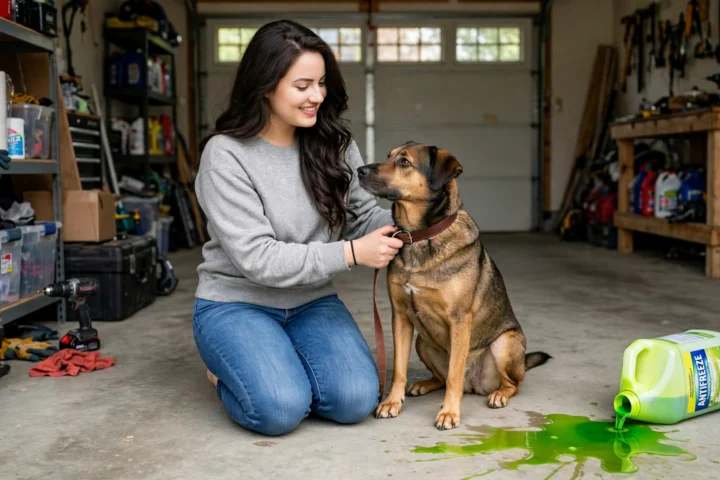
Antifreeze is the other winter poison: ethylene glycol tastes sweet, spills where cars leak, and a few licks can kill. Clean spills, store containers sealed, and treat a cat who walks through a garage puddle as exposed — wash paws, call the vet today.
And water: outdoor bowls freeze; a cat cannot drink ice. Winter dehydration is common precisely because nobody expects it. Check bowls twice daily, use a heated or deep sheltered bowl, and feed outdoor cats more — cold burns calories.
Frostbite: Ears, Tails, and Paws
Frostbite is cold injury to tissue — blood retreats from extremities to protect the core, and abandoned parts freeze. The map is predictable: ear tips first (cats especially), then tail tip, toes, pads. It usually accompanies long exposure, not one short walk.
Signs are easy to miss: frostbitten tissue first looks like itself, only paler, grayer, cold to the touch — and may not hurt; frozen tissue is numb. Damage declares over days: redness, swelling, pain as feeling returns, blistering, sometimes darkening.
First aid is restraint: bring the pet in, warm the area with lukewarm — never hot — water or a warm damp cloth; never rub or apply direct heat, which worsens it. Then the vet, same day. Our dog winter paw care guide covers the paw version in depth.

Hypothermia: When the Whole Body Cools
Hypothermia is the whole-body version: core temperature drops; systems slow in sequence. It follows classic exposures — a pet left out too long, a fall through ice, a wet animal in wind — and creeps up on old, small, or sick animals in cold houses.
Early signs are the shivering and warmth-seeking you expect. The dangerous turn is when shivering stops while the pet is still cold — the body surrendering its defense — alongside lethargy, stiffness, pale gums, slow breathing — an emergency, not a wait-and-see.
Warm gradually: indoors, wrapped in dryer-warmed blankets, warm (not hot) water bottles against the body, no hair dryers on unfeeling skin. A mildly chilled pet who perks up can be monitored; one who was limp, or found outside in severe cold, goes to the vet as you warm.
Paws on Ice, Salt, and Chemicals
Winter attacks paws from three directions. Cold itself: ice balls pack between the toes of long-furred feet like pebbles in a shoe. Chemistry: sidewalk de-icers irritate and crack pads, toxic when licked off. And cold surfaces drain heat from the body part touching the ground.
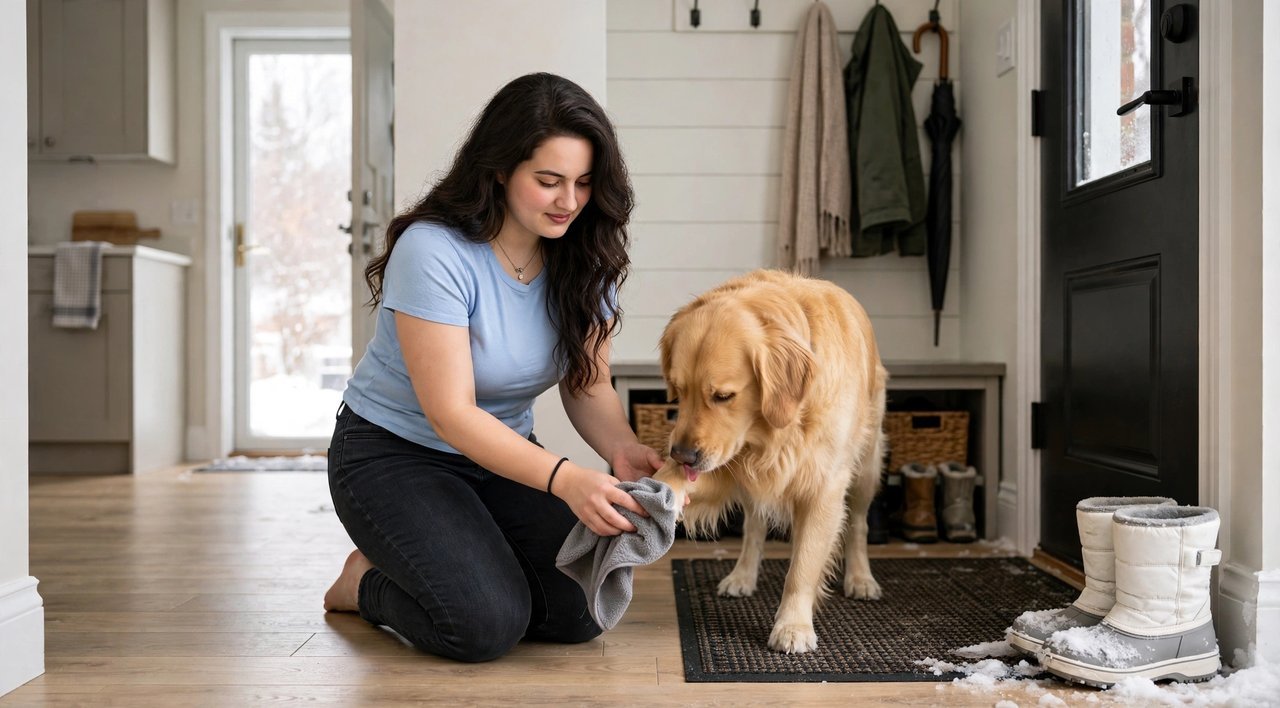
The fixes are unglamorous and complete. Wipe or rinse paws after every walk — this prevents most de-icer trouble, ingestion included. Keep toe fur trimmed so snow cannot ball. Booties are the full solution for dogs who accept them; paw balm is the partial one for dogs who do not.
The ASPCA’s cold weather safety tips add the bath note: winter bathing dries working skin, so bathe less often in a snap, moisturizing as your vet advises. Cracked, bleeding pads or obsessive paw-licking after walks: vet visits, not more balm.
Coats, Booties, and What Actually Helps
Pet clothing has an image problem and a real function: for small, thin-coated, elderly, or clipped dogs, a fitted coat extends safe outdoor time — insulation the dog lacks. Fit matters more than fashion — snug without restricting stride or toilet, dry before reuse, off indoors.
For cats, coats are mostly a non-starter — few accept them, and a cat who cannot move naturally is distressed. The feline “dressing for the weather” is a door: indoor access, a working cat flap, a warm place legally hers. Never force clothing on a cat; her vote counts.
What does not help: leaving a pet in a parked car “because it is warm from the drive.” Cars become refrigerators once the engine stops — the AVMA’s cold weather guidance lists cold cars beside hot ones as killers. If it cannot come in, it stays home.
Indoor Cold: The House Is Not Always Safe Either
A cold snap tests the house too. The usual indoor victims: the very old and young, animals in door drafts, pets on cold floors, small animals in unheated rooms. Raise beds off tile and concrete, out of drafts, and offer a blanket nest — a burrowing animal self-regulates.
Heaters and fireplaces trade cold risk for burn and fire risk when a pet sleeps against them. Guard them, keep beds distant, never leave a tippable heater running unsupervised — a tipped heater on a rug is a house fire.
Check the quiet places: garages, basements, and conservatories can fall far below house temperature overnight. If a pet sleeps in one, verify its night temperature, not noon’s. The coldest hour, near dawn, is spent alone.
Outdoor Cats: Shelter That Actually Works
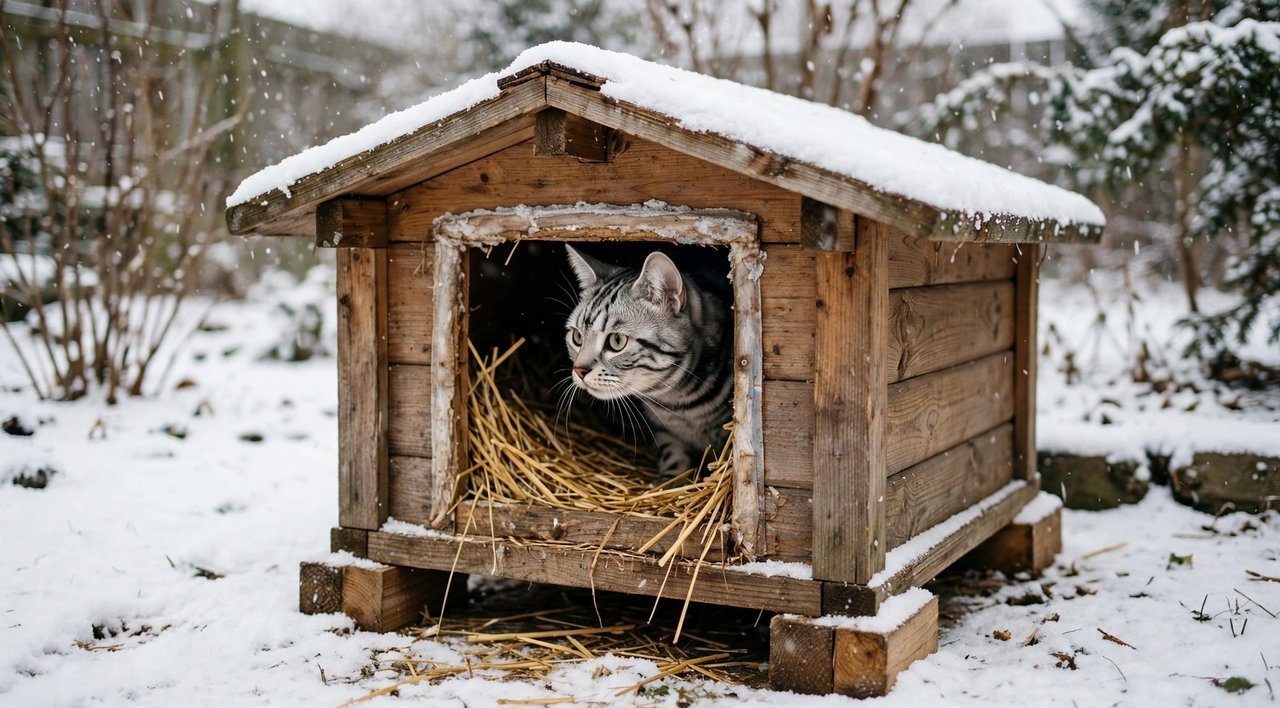
Some cats live outdoors by history or temperament; a snap grades the setup. A working shelter is small (body heat warms a small space, not a doghouse), insulated, raised off the ground, small entrance keeping wind out, straw inside — straw sheds moisture and holds warmth; blankets freeze.
Position matters: entrance away from the wind, under cover, somewhere quiet. Two exits are safer where predators or rivals exist, so she can never be trapped inside it. Community-cat caretakers run exactly this spec; it scales to one garden cat easily.
Water and food complete it: a heated bowl or twice-daily fresh water in a deep sheltered bowl, extra calories for the cold — wet food freezes, so time it. Provide it before the snap: one already claimed is worth three unclaimed.
Before the Snap: A One-Hour Prep
Most cold-snap harm is preventable in the hour before temperatures fall. Walk the checklist: shelter built and strawed, water plan set, a week’s food and daily medicines in the house in case roads close, cat flap tested, vet numbers saved for a sitter.
Check the animal, not just the house itself. A pet entering a snap unwell, underweight, or freshly clipped starts one band more vulnerable than charts assume. If the forecast is severe and your pet is old or fragile, a vet call beforehand beats a difficult journey during it.
Finally, tell the neighbors. Outdoor cats get fed by more households than owners know; a snap is when coordination matters: who feeds her, whose garage is open, whose car to bang on. One driveway conversation aligns the street.
Frequently Asked Questions
How cold is too cold for a dog to sleep outside?
For almost every pet dog, the honest answer is: colder than any night you would consider it. Dogs who live outdoors year-round in working roles are acclimatized, housed in insulated kennels, and fed for it — a household dog sleeping on a porch in a cold snap has none of those protections. Below freezing, and certainly in the 20s and below, an unacclimatized dog risks hypothermia in the hours before dawn, when temperature bottoms out and nobody is watching. If a dog must be out overnight in cold weather for any reason, the minimum is an insulated, straw-bedded, windproof kennel raised off the ground — and the better answer, which vets give uniformly, is to bring the dog in for the snap. Old, young, small, thin, or unwell dogs: indoors, no debate. Add the dawn test to any borderline call: the temperature at 5 a.m., not 9 p.m., is the one the dog must survive — plan for the night’s floor, not its start.
Can cats really get frostbite on their ears?
Yes — ear tips are the classic feline frostbite site, because they are thin, furry only lightly, and at the body’s edge where circulation retreats first. Outdoor and free-roaming cats in hard winters present with it every year: ear edges that turn pale and cold, then red and painful, and in severe cases the tip can curl, darken, and even slough. The early stage is easy to miss on a cat who objects to ear handling, so build the check into a stroking session after any hard-cold night she spent out. Prevention is the familiar pair: indoor access in the snap, and a proper small insulated shelter if she insists on being out. Frostbitten ears are a vet visit, not a wait — the tissue outcome is decided early. Cats who have had frostbite once seem prone to it again in the same spots — damaged circulation heals imperfectly — so a previously frostbitten ear moves its owner one band more cautious for life.
My dog loves the snow and refuses to come in. Should I worry?
Enjoy it, with two supervisions. A healthy adult dog playing hard in snow is generating heat and self-limiting reasonably well — enthusiasm is real data. But dogs are poor reporters of their extremities: check paws for ice balls and pads for cracking during the fun, watch for the shiver that means play has stopped paying for itself, and call a hard stop in genuinely dangerous cold regardless of the vote. Breeds built for winter can still frostbite ear tips and tails on long exposures. The compromise that usually works: let the snow lover have his play in shorter, more frequent sessions, with warm recovery between — most dogs experience that as more winter, not less. Dry him thoroughly when he does come in, ears and paws included: a wet dog in a warm house is fine, but a damp coat carried into the next outing starts that outing half-insulated.
Is a sweater on a cat ever a good idea?
Rarely, and only for specific cats: hairless and very short-coated breeds indoors in a cold house, elderly or unwell cats who run cold, and only when the individual cat tolerates clothing calmly — some genuinely do, having been dressed since kittenhood. For the average cat, a sweater adds stress, restricts the movement she uses to stay safe, and can overheat her indoors. The better feline wardrobe is environmental: a warm bed away from drafts, a heated pad made for pets on its lowest setting, and access to the warm rooms. If your cat shivers indoors, the first call is the vet — a healthy cat in a normally heated house should not be cold, and shivering can be pain or illness wearing a winter costume. Whichever route you choose, weigh her: unexplained weight loss shows up fast in winter vulnerability, and a cat dropping weight in December is telling you something the thermometer did not.
Conclusion
The question has bands, not a boundary: the vulnerable feel 45°F, most pets need limits below freezing, 20°F threatens everyone — wind and wet drag every line warmer. Read the animal over the number, and you will call almost every day right.
The rest is habits, not purchases: shorter brisk walks, wiped paws, a hood bang before the engine starts, antifreeze treated like the poison it is, straw in the shelter, fresh water in the bowl — the difference between winter as season and winter as hazard.
When the snap arrives, bring the cats in, shorten the dog’s world to two good walks, and let the house be the warm center both animals believe it is. Your job: every ear, tail, and paw to spring intact.
By Sarah