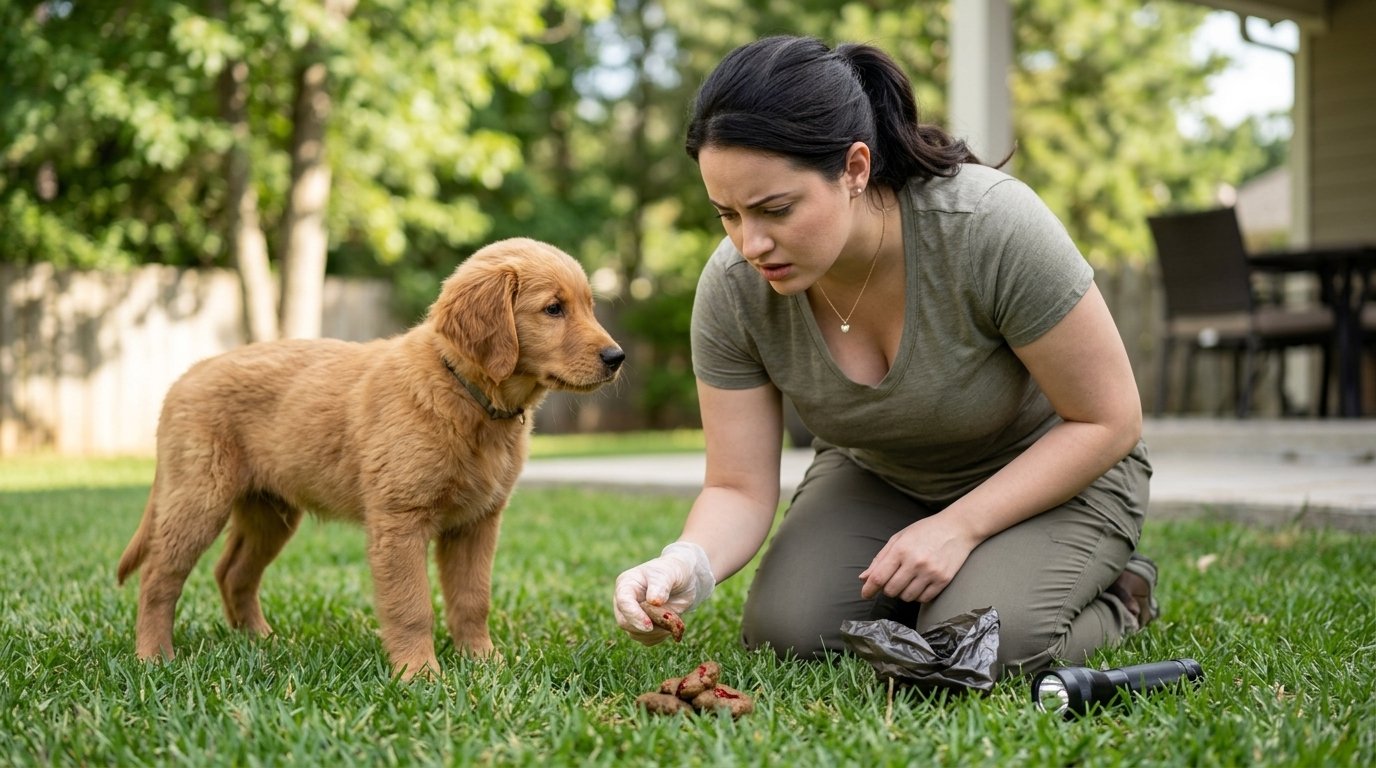
Seeing your dog pooping blood can be frightening, especially when you do not know whether you are looking at a minor digestive upset or an emergency. Blood in dog poop can happen for several reasons, ranging from irritation after straining to infections, parasites, intestinal inflammation, toxins, foreign bodies, and other serious illnesses.
The appearance of the blood matters. Bright-red blood usually indicates fresh bleeding from the lower digestive tract, while black, tarry stool can indicate digested blood coming from higher in the digestive system.
If your dog has a large amount of blood, black/tarry stool, repeated bloody diarrhea, vomiting, weakness, pale gums, severe pain, collapse, or other signs of serious illness, contact a veterinarian promptly.
Table of Contents
What to Do If Your Dog Is Pooping Blood
First, try not to panic. The next step is to look carefully at what the stool looks like and how your dog is acting.
Ask yourself:
- Is the blood bright red or dark/black?
- Is it a few streaks or a large amount?
- Is the stool formed, soft, or watery?
- Is there mucus?
- Is your dog vomiting?
- Is your dog eating and drinking normally?
- Does your dog seem energetic or unusually weak?
- Is your dog repeatedly straining to poop?
- Is your dog a young puppy or not fully vaccinated?
- Could your dog have eaten garbage, bones, medication, toxins, or a foreign object?
These details can help your veterinarian determine how urgent the situation may be.
If possible, take a clear photo of the stool and keep a fresh sample in a clean container. A fresh fecal sample can be useful for veterinary testing, including evaluation for parasites and other causes of gastrointestinal illness.
Do not give your dog human medications unless a veterinarian specifically tells you to. Some human medications can cause gastrointestinal bleeding or other serious poisoning in dogs.
What Does Blood in Dog Poop Look Like?
Not all bloody stool looks the same. The color and appearance can provide clues about where the bleeding may be occurring.
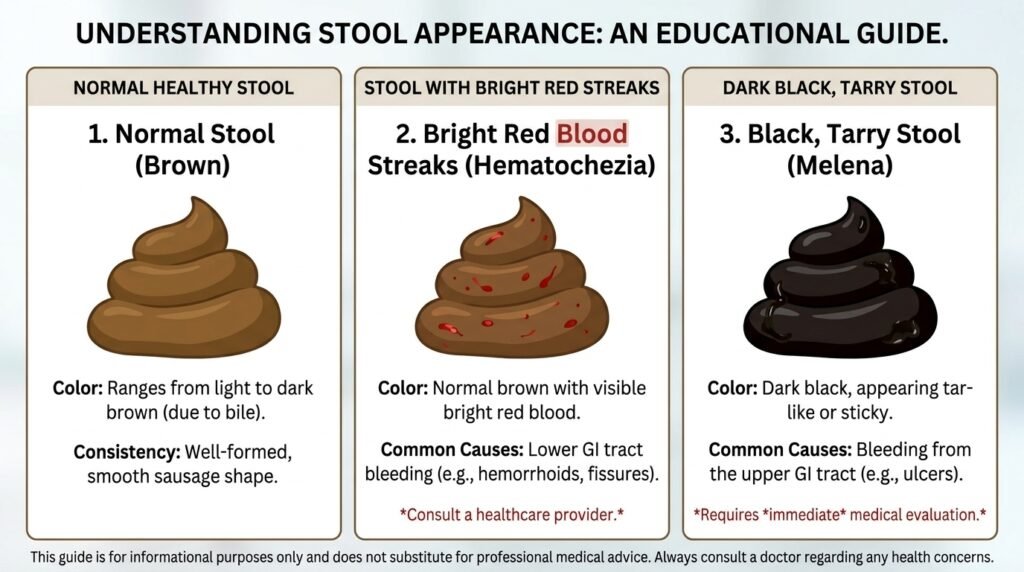
Bright-Red Blood
Bright-red blood is called hematochezia. It may appear as:
- Red streaks on the outside of the stool
- A few drops of blood after defecation
- Red mucus mixed with stool
- Bright-red or jelly-like diarrhea
- Fresh blood around the anus
Fresh blood generally suggests bleeding in the lower portion of the digestive tract, such as the colon, rectum, or anus. Colitis, straining, parasites, anal-gland problems, and other conditions can produce this appearance.
A small amount of bright-red blood does not automatically mean your dog has a life-threatening disease. However, repeated bleeding, increasing amounts, or blood accompanied by other symptoms deserves veterinary attention.
Black or Tarry Stool
Black, sticky, or tar-like stool is called melena.
This appearance is particularly important because blood can become dark as it is digested while moving through the stomach and upper intestinal tract. Merck Veterinary Manual notes that black, tarry feces may indicate bleeding in the stomach or small intestine.
Black/tarry stool should not simply be dismissed as ordinary dark poop. If you believe your dog has melena, contact your veterinarian promptly.
Blood With Mucus or Diarrhea
Blood mixed with mucus and frequent, small bowel movements can occur with colitis, which is inflammation of the large intestine. Merck describes large-bowel diarrhea as commonly involving mucus, hematochezia, urgency and straining.
This can happen after dietary changes, stress, infections, parasites, or other gastrointestinal problems.
The important point is that the appearance can provide clues, but it cannot establish the diagnosis by itself.
7 Common Causes of Bloody Stool in Dogs
There are many possible explanations for a dog pooping blood. Some are relatively mild, while others require urgent treatment.
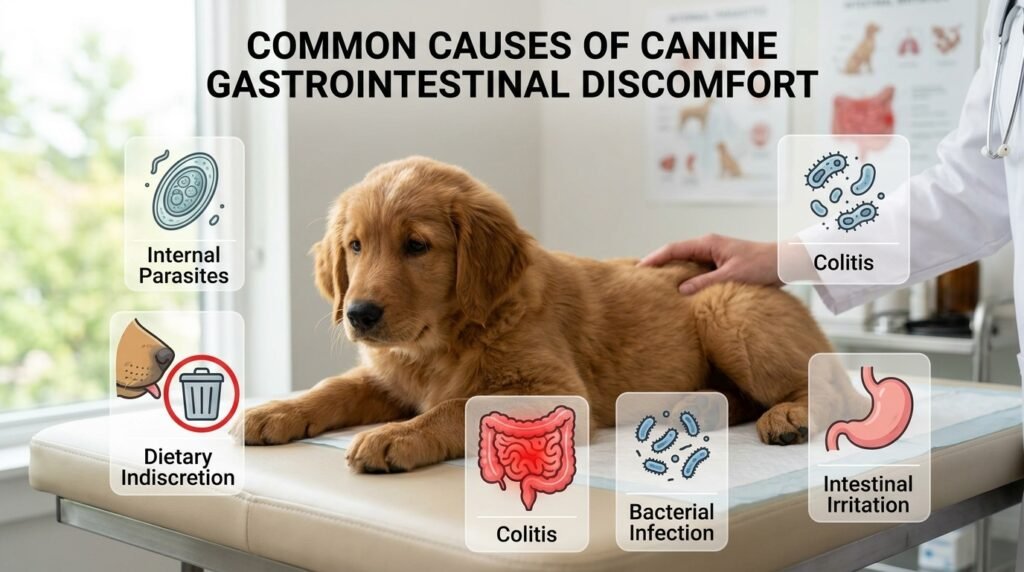
1. Colitis and Intestinal Irritation
Colitis occurs when the colon becomes inflamed.
A dog with colitis may:
- Poop more frequently
- Pass smaller amounts of stool
- Strain repeatedly
- Produce mucus
- Have bright-red blood in the stool
- Develop diarrhea
Dietary changes, stress, infections, parasites, and other gastrointestinal problems can contribute to colitis.
A mild episode may resolve, but persistent or worsening bloody diarrhea should be evaluated by a veterinarian.
2. Eating Something They Shouldn’t
Dogs are notorious for eating things they find interesting.
Garbage, spoiled food, bones, sticks, toys, table scraps, and other inappropriate items can irritate the digestive tract. Some foreign objects can also cause an obstruction or internal injury.
Some foods can also be dangerous or toxic to dogs, so it is important to know which dangerous foods dogs should not eat.
Dietary indiscretion is a common consideration when dog pooping blood begins shortly after a dog gets into something unusual.
Do not assume that your dog simply needs to “get it out,” especially if there is repeated vomiting, abdominal pain, weakness, or an inability to pass stool.
A swallowed foreign object can become a veterinary emergency.
3. Parasites
Intestinal parasites can cause gastrointestinal irritation and bleeding.
Possible parasites include hookworms and whipworms, among others. Parasites may also cause:
- Diarrhea
- Weight loss
- Poor appetite
- Vomiting
- Weakness
- Mucus or blood in stool
Your veterinarian may recommend a fecal examination to look for parasites and other abnormalities.
Regular parasite prevention and appropriate fecal testing can help reduce the risk of undetected intestinal parasites.
4. Infections, Including Parvovirus
Some bacterial and viral infections can cause bloody diarrhea.
Canine parvovirus deserves particular attention in puppies and dogs that are not fully vaccinated. Cornell University College of Veterinary Medicine notes that parvovirus can progress from lethargy and appetite loss to vomiting and diarrhea that may contain blood.
If a puppy or unvaccinated dog develops vomiting and bloody diarrhea, do not wait to see whether it improves on its own.
Call a veterinarian and explain the symptoms before arriving. If parvovirus is suspected, the clinic may want to take precautions to reduce exposure to other dogs.
Bloody diarrhea does not automatically mean your dog has parvo. Many other conditions can produce similar symptoms.
5. Anal-Gland or Rectal Problems
Sometimes the source of visible blood is close to where the stool leaves the body.
Anal-gland inflammation, infection, abscesses, rectal irritation, constipation, or other problems around the anus can result in fresh blood.
You may also notice:
- Scooting
- Excessive licking around the rear
- Discomfort when sitting
- Straining to poop
- A strong odor
- Swelling around the anus
These problems require veterinary assessment if the bleeding continues or your dog appears uncomfortable.
6. Ulcers, Toxins, or Bleeding Disorders
Some causes of bloody stool are more serious because they can involve bleeding throughout the body or damage to the stomach and intestines.
Examples include:
- Gastrointestinal ulcers
- Certain medications
- Toxic substances
- Clotting disorders
- Liver disease
- Kidney disease
- Some cancers
Human medications can be particularly dangerous. Certain nonsteroidal anti-inflammatory drugs and other substances can cause vomiting, blood in the stool, black/tarry stool, abdominal pain, and other signs of poisoning in dogs.
If you suspect your dog swallowed medication, rat poison, or another toxin, treat it as an urgent veterinary situation rather than waiting for bloody stool to become worse.
7. Pancreatitis, Intestinal Disease, or Other Serious Conditions
More significant gastrointestinal or systemic diseases can also result in blood in the stool.
These can include:
- Pancreatitis
- Inflammatory bowel disease
- Intestinal obstruction
- Intestinal inflammation
- Certain tumors
- Immune-mediated disorders
- Severe gastrointestinal infections
CareCredit and PetMD both emphasize that bloody stool can have a wide range of causes, which is why the dog’s overall condition matters when determining urgency.
When Is Dog Pooping Blood an Emergency?
The most important question is not simply whether there is blood. It is how much blood there is, what it looks like, and how your dog is behaving.
Seek urgent veterinary care if your dog has bloody stool along with:
- Repeated vomiting
- Severe or persistent diarrhea
- Marked weakness or lethargy
- Pale, white, or grayish gums
- Collapse
- Difficulty standing or walking
- Severe abdominal pain
- A swollen or distended abdomen
- Large amounts of blood
- Black, tarry stool
- Frequent passage of bloody diarrhea
- Repeated unsuccessful attempts to poop
- Suspected toxin exposure
- Suspected foreign-object ingestion
- Recent significant trauma
VCA lists blood in the stool among reasons for veterinary evaluation and recommends emergency care when a pet appears severely ill or has difficulty standing or walking.
Puppies Need Extra Caution
A puppy with bloody diarrhea deserves particular attention.
Puppies can become seriously dehydrated with vomiting and diarrhea, and parvovirus is an important concern in dogs that are young or not fully vaccinated.
Do not wait for severe weakness or collapse before contacting a veterinarian.
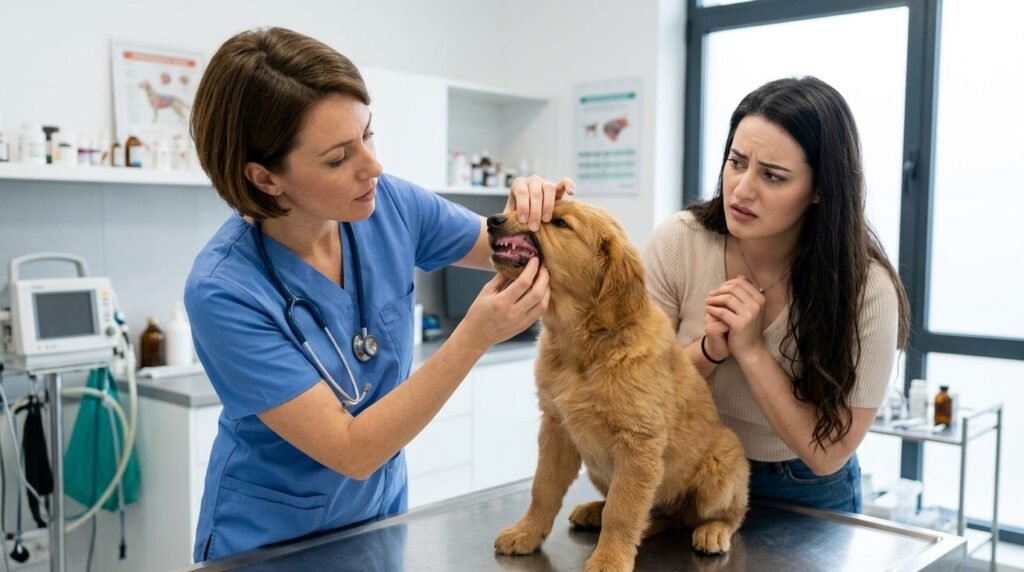
Dog Pooping Blood but Acting Normal: Should You Worry?
This is one of the most confusing situations for owners.
Your dog may have a small streak of bright-red blood but still be:
- Eating normally
- Drinking normally
- Energetic
- Interested in play
- Acting like themselves
That is generally less alarming than a dog passing large amounts of blood while vomiting and becoming weak.
However, dog pooping blood should not be ignored simply because the dog seems normal.
A small, isolated amount may sometimes occur after straining or minor intestinal irritation. Blue Cross notes that a small amount of blood in otherwise well dogs is not always an emergency, but repeated blood, larger amounts, or illness should prompt veterinary contact.
Monitor closely and contact your veterinarian if the bleeding continues, returns repeatedly, increases, or is accompanied by other symptoms.
If you are unsure, it is safer to call your veterinary clinic and describe exactly what you saw.
What to Do Before Calling the Vet
You can make the veterinary visit much more useful by gathering information.
1. Take a Photo
A clear photo can help your veterinarian understand the color, amount, consistency, and appearance of the blood.

2. Save a Fresh Stool Sample
If your veterinarian requests one, collect a fresh sample in a clean container. VCA notes that stool samples may be used for fecal testing and ideally should be relatively fresh.
3. Write Down Recent Changes
Think about what happened during the previous few days.
Record:
- New food
- New treats
- Table scraps
- Garbage exposure
- Bones or chews
- New medications
- Possible toxin exposure
- Travel
- Boarding
- Dog-park exposure
- Changes in appetite
- Vomiting
- Diarrhea
- Changes in energy
These details can help your veterinarian narrow down possible causes.
4. Don’t Give Random Home Treatments
Avoid giving human medications or trying internet remedies without veterinary guidance.
A treatment that is appropriate for one cause of bloody stool could be inappropriate or dangerous for another.
For example, VCA specifically advises against trying to manage diarrhea at home when blood is present.
5. Call Before Arriving if Parvo Is Possible
If your puppy or unvaccinated dog has bloody diarrhea and vomiting, tell the clinic before you arrive.
That allows the veterinary team to advise you about the safest way to bring the dog in while protecting other patients.
How Vets Diagnose Bloody Stool
Bloody stool is a symptom, not a diagnosis.
Your veterinarian may begin with a physical examination and questions about your dog’s diet, medications, vaccination status, parasite prevention, environment, and recent behavior.
Depending on the situation, testing may include:
- Fecal testing
- Parvovirus testing
- Blood tests
- Urinalysis
- Abdominal X-rays
- Ultrasound
- Additional gastrointestinal testing
- Tests for clotting problems
A fecal test can help identify parasites and certain infectious causes. Blood work can help evaluate hydration, anemia, inflammation, organ function, and other problems.
VCA notes that blood in the digestive tract can have many causes, including parasites, ulcers, inflammation, tumors, and foreign bodies, so additional testing may be needed to identify the source.
How Bloody Stool Is Treated
There is no single treatment for bloody stool because the appropriate treatment depends on the underlying cause.
For example:
- Parasites may require veterinarian-prescribed antiparasitic medication.
- Dehydration may require fluid therapy.
- A bacterial or viral disease may require supportive care and monitoring.
- A foreign-body obstruction may require imaging and possibly surgery.
- Certain ulcers or bleeding disorders require specific medical treatment.
- Severe gastrointestinal disease may require hospitalization.
This is why it is risky to assume that every case of dog pooping blood should be treated with the same home remedy.
Treatment should address the reason the bleeding is happening rather than simply trying to stop the visible blood.
How to Reduce the Risk of Bloody Stool
Not every cause can be prevented, but several habits can reduce avoidable risks.
Keep Harmful Objects Out of Reach
Secure:
- Garbage
- Human medications
- Rodenticides
- Cleaning products
- Toxic foods
- Small chewable objects
- Dangerous household chemicals
Avoid Sudden Food Changes
If your dog’s diet needs to change, a gradual transition can reduce digestive upset.
Avoid frequent table scraps and large dietary changes.
Keep Vaccinations Current
Vaccination is especially important for protecting puppies against serious infectious diseases such as parvovirus. Cornell notes that puppies and unvaccinated dogs are particularly vulnerable to severe parvovirus disease.
Stay Consistent With Parasite Prevention
Ask your veterinarian which parasite-prevention program is appropriate for your dog’s age, lifestyle, location, and risk factors.
Pay Attention to Your Dog’s Normal Stool
Knowing what your dog’s normal poop looks like makes changes easier to spot.
Pay attention to:
- Color
- Consistency
- Frequency
- Amount
- Mucus
- Straining
- Unusual odor
A change from your dog’s normal pattern can be useful information for your veterinarian.
Frequently Asked Questions
Is dog pooping blood always an emergency?
No. A small amount of bright-red blood can sometimes occur with lower intestinal irritation or straining in an otherwise healthy dog. However, large amounts of blood, black/tarry stool, repeated bloody diarrhea, vomiting, weakness, pale gums, severe pain, or other concerning symptoms require prompt veterinary attention.
Why is my dog pooping blood and acting normal?
A dog can sometimes have a small amount of fresh blood while otherwise appearing normal. Possible causes include temporary intestinal irritation, straining, dietary upset, or colitis. Acting normal is reassuring, but it does not identify the cause. If the blood persists, returns, increases, or other symptoms develop, contact your veterinarian.
Does bloody diarrhea mean my dog has parvo?
Not necessarily. Parvovirus can cause vomiting and bloody diarrhea, especially in puppies and unvaccinated dogs, but infections, parasites, colitis, dietary problems, toxins, and other conditions can cause similar signs.
What should I do if my dog is pooping blood?
Look at the amount and color of the blood and check for vomiting, weakness, pale gums, pain, diarrhea, appetite changes, or other symptoms. Take a photo and, when appropriate, collect a fresh stool sample for your veterinarian. If there is a large amount of blood, black/tarry stool, repeated bloody diarrhea, severe illness, suspected toxin exposure, or a young/unvaccinated puppy, seek veterinary care promptly.
Conclusion
Dog pooping blood can have many causes, and the appearance of the stool provides important clues. Bright-red blood often points toward the lower digestive tract, while black, tarry stool can indicate digested blood from higher in the gastrointestinal system.
A small streak of fresh blood in an otherwise normal adult dog is not automatically a life-threatening emergency. But repeated bleeding, large amounts of blood, black/tarry stool, bloody diarrhea with vomiting, weakness, pale gums, severe pain, or other concerning signs should be taken seriously.
When in doubt, contact your veterinarian. Take a photo, note recent food or medication changes, and bring a fresh stool sample if requested.
Most importantly, don’t try to diagnose the cause based on the blood alone. Dog pooping blood is a symptom, not a diagnosis, and the safest treatment depends on what is causing the bleeding.