Your dog does not need to eat an entire plate of something dangerous for a problem to begin. A bite of food dropped during dinner, a spoonful of sugar-free peanut butter, a few raisins hidden in baked goods, or seasoning left on meat can expose a dog to an ingredient that its body cannot handle safely.
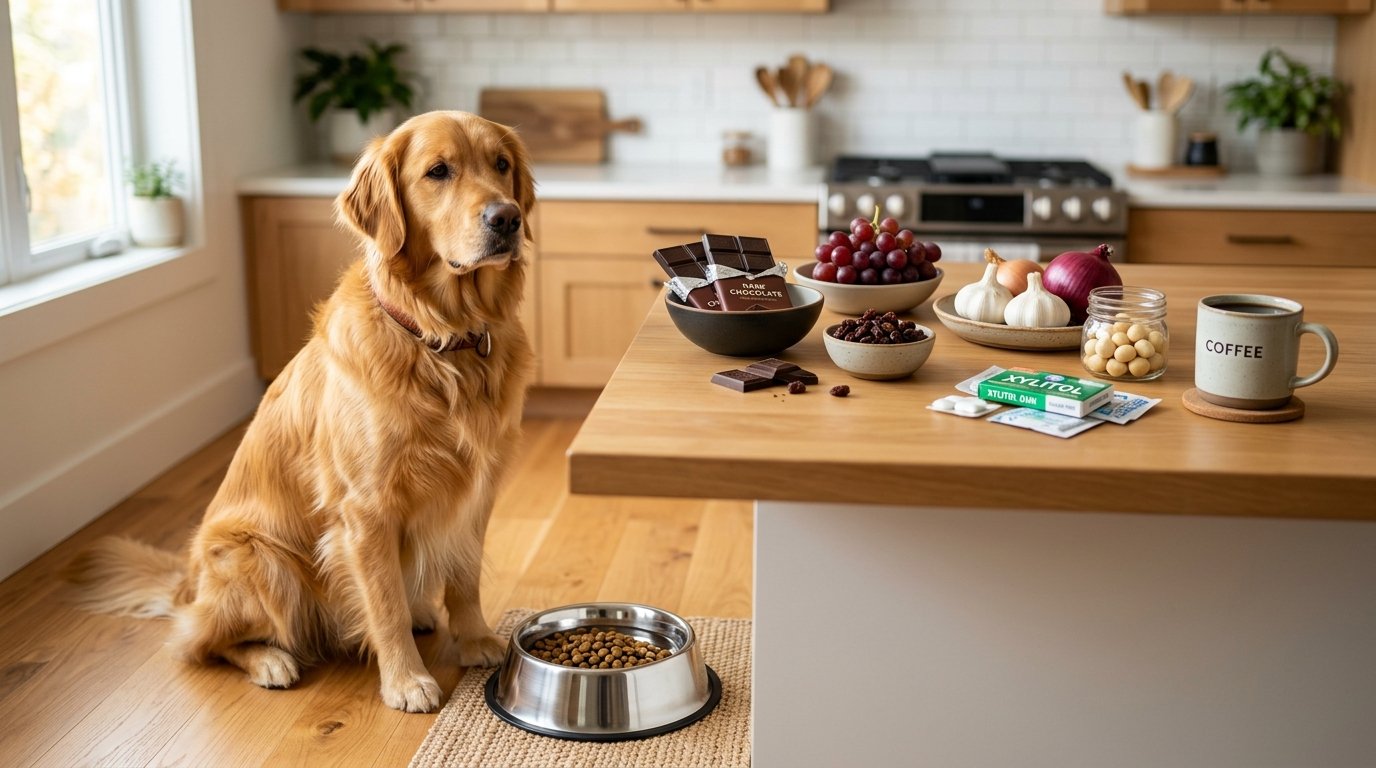
The tricky part is that dangerous dog food ingredients are not always obvious. Some are easy to recognize, such as chocolate or grapes. Others hide inside everyday products under ingredient names that owners may not immediately recognize. The ASPCA reports that food and drink were the second-largest category of animal poison-control exposures in 2024, with protein drinks and bars, xylitol-containing gum, grapes, raisins, onions, garlic, and chocolate among notable concerns.
This guide explains the most important ingredients to watch for, where they commonly appear, why they are dangerous, what symptoms can develop, and what you should do if your dog accidentally eats something unsafe.
Important: This article is educational and does not replace veterinary advice. If you believe your dog has eaten a potentially toxic ingredient, contact your veterinarian or an emergency veterinary clinic promptly rather than waiting for symptoms.
Table of Contents
What Makes Dangerous Dog Food Ingredients So Risky?
Not every unhealthy food is technically poisonous. There is an important difference between an ingredient that may cause stomach upset when eaten in excess and an ingredient that can cause poisoning, organ damage, or a life-threatening emergency.
Some dangerous dog food ingredients interfere with blood sugar regulation. Others can damage red blood cells, affect the nervous system, trigger abnormal heart rhythms, or injure the kidneys.
The amount that causes trouble can also vary according to the ingredient, the concentration of the product, and the individual dog. A small dog may face a different level of exposure than a large dog, while a concentrated product may contain far more of an ingredient than the original food.

Cornell’s veterinary toxicology guidance identifies xylitol, Allium vegetables such as garlic and onion, chocolate, grapes and raisins, and macadamia nuts among substances that can be toxic to dogs.
That is why guessing is risky.
If you are uncertain about an ingredient, treat the situation seriously and ask a veterinary professional.
For everyday prevention, it also helps to understand the difference between toxic ingredients, potentially harmful foods, and foods that are simply poor choices.
For example, a very salty snack may not create the same poisoning mechanism as xylitol, but it can still be inappropriate for dogs. Likewise, fatty foods may contribute to gastrointestinal problems or pancreatitis without containing a classic poison. VCA lists alcohol, chocolate, macadamia nuts, garlic, onions, grapes, raisins, salty snacks, high-fat foods, moldy cheeses, and xylitol-containing products among foods to avoid.
Homemade Dog Food Recipe (Vet-Approved): A Safe Guide for Dog Owners
Dangerous Dog Food Ingredients Hidden in Everyday Products
One of the biggest mistakes owners make is looking only for the name of a food rather than checking the ingredient list.
A dog may never be handed a piece of candy, for example, but could still encounter a dangerous ingredient through chewing gum, a protein bar, baked goods, nut butter, supplements, or another household product.
When checking labels, look beyond the front of the package.
1. Xylitol
Xylitol is one of the most important dangerous dog food ingredients for every dog owner to recognize.
It is a sugar alcohol used in some sugar-free products and can appear in chewing gum, candies, baked goods, some peanut and nut butters, dental products, and certain medicines or supplements.
The FDA notes that xylitol can cause a rapid insulin release in dogs, leading to potentially severe hypoglycemia. Signs may begin within 10 to 60 minutes, although serious effects can sometimes be delayed.
The FDA also warns that xylitol may appear under names such as birch sugar, wood sugar, and birch bark extract.
Possible signs include:
- Vomiting
- Weakness
- Decreased activity
- Staggering
- Collapse
- Tremors
- Seizures
- Liver failure
Xylitol exposure should be treated as an emergency.
If your dog eats sugar-free gum, candy, baked goods, or another product and you suspect xylitol may be present, do not wait for your dog to look sick before contacting a veterinarian.
2. Chocolate and Cocoa
Chocolate is another well-known member of the dangerous dog food ingredients category.
Chocolate contains methylxanthines, including theobromine and caffeine. Dogs process these substances differently from humans, and toxicity can affect the nervous and cardiovascular systems.
Dark chocolate and cocoa products deserve particular caution because their concentrations can be higher.
Cornell advises keeping chocolate, coffee, and caffeine away from dogs and notes that even relatively small amounts can cause severe toxicity.
Potential signs include:
- Restlessness
- Vomiting
- Diarrhea
- Increased heart rate
- Tremors
- Abnormal behavior
- Seizures
The risk depends on the type and amount of chocolate, as well as the dog’s size. Because owners often cannot accurately determine the toxic dose themselves, veterinary guidance is the safest choice.
Cornell Veterinary Medicine’s chocolate and food-safety guidance
Dangerous Dog Food Ingredients in Fruits and Baked Goods
Fruit can sound automatically healthy, but some fruits and fruit-derived ingredients are not safe for dogs.
3. Grapes, Raisins, Sultanas, and Zante Currants
Grapes and raisins are among the most concerning dangerous dog food ingredients because the amount that can cause toxicity is unpredictable.
Cornell explains that grapes, raisins, sultanas, and Zante currants can cause acute kidney injury in dogs. The exact toxic dose is unknown, and individual sensitivity varies.

That means you should not use a rule such as “one grape is fine.”
Potential signs can include:
- Vomiting
- Diarrhea
- Loss of appetite
- Lethargy
- Dehydration
- Abdominal discomfort
- Increased thirst
- Changes in urination
- Weakness
A particularly important detail is that raisins can be hidden in foods that do not look like fruit. Watch out for:
- Raisin bread
- Trail mix
- Granola
- Cookies
- Muffins
- Breakfast cereals
- Holiday baked goods
If a dog has eaten grapes or raisins, prompt veterinary advice is recommended because early treatment may help reduce the risk of serious kidney damage.
Cornell’s grape and raisin toxicity guide
4. Onion, Garlic, Leeks, and Chives
Onions and garlic can be especially deceptive because they often appear as ingredients rather than obvious pieces of vegetables.
This entire plant group, known as Allium, includes onions, garlic, leeks, shallots, and chives.
ASPCA notes that Allium species can cause gastrointestinal irritation and red blood cell damage, potentially leading to anemia.
The ingredient can appear in:
- Onion powder
- Garlic powder
- Seasoning blends
- Gravy
- Soup
- Sauces
- Stuffing
- Baby food
- Meat marinades
- Processed meats
Do not assume that cooked or powdered versions are automatically safe. AKC specifically warns that raw, cooked, fried, or powdered onion-family ingredients can be harmful.
This is one reason table scraps can be more dangerous than they look.
A plain piece of cooked meat may be reasonable in some circumstances, while that same meat covered in onion-and-garlic seasoning is a very different situation.
ASPCA’s people-food safety guide for pets
Dangerous Dog Food Ingredients in Snacks and Treats
5. Macadamia Nuts
Macadamia nuts are another food that belongs on your mental list of dangerous dog food ingredients.
Cornell identifies macadamia nuts as toxic to dogs, while ASPCA reports that affected dogs can develop weakness, incoordination, depression, vomiting, tremors, and increased body temperature.

The risk is not limited to a bowl of plain macadamia nuts.
They may also appear in:
- Cookies
- Cakes
- Nut mixes
- Granola
- Chocolate-covered snacks
- Trail mixes
- Baked desserts
If your dog gets into a package of mixed nuts, do not assume that removing the visible macadamias solves the problem. The mixture may contain other unsafe ingredients, chocolate, raisins, excessive salt, or seasonings.
6. Alcohol
Alcohol may not look like a “food ingredient,” but it can enter a dog’s system through drinks, desserts, sauces, fermented products, and other foods.
VCA includes alcohol among foods that should be avoided by dogs.
Keep alcoholic drinks, cocktail leftovers, alcohol-containing desserts, and unattended glasses out of reach.
Never deliberately give a dog alcohol as a joke or because it appears to enjoy the taste.
What Not to Feed Dogs: 10 Dangerous Foods Every Owner Should Know
Dangerous Dog Food Ingredients in Seasoned Human Food
Human meals are one of the most common ways dogs encounter problematic ingredients.
A dog may receive only a small piece of meat, but that piece could contain several ingredients that are unsuitable for canine consumption.
Seasoning Blends
Seasonings deserve special attention because owners often think of them as harmless flavoring.
Garlic powder and onion powder can be concentrated forms of Allium ingredients. Other seasonings may also contain excessive salt, fats, or ingredients that are inappropriate for dogs.
Before sharing cooked food, ask:
- Is it plain?
- Does it contain onion or garlic?
- Is it heavily salted?
- Is it very fatty?
- Does it contain chocolate, raisins, or another toxic food?
- Does the sauce contain sugar-free sweeteners?
- Does it contain bones or other physical hazards?
When the answer is uncertain, the safest choice is to skip the table scrap.
For more everyday nutrition guidance, explore the PawMindTips nutrition and feeding section.
Gravy and Sauces
Gravy can contain onion, garlic, excessive salt, high fat, or other seasonings.
The same applies to sauces used on meat, pasta, vegetables, or holiday meals.
Instead of sharing a seasoned dinner, offer a small amount of plain, dog-appropriate food.
Stuffing and Holiday Foods
Stuffing is another example of why ingredient awareness matters.
Recipes commonly contain onions, garlic, herbs, butter, salt, and other ingredients that can be unsuitable for dogs. AKC recommends keeping stuffing, casseroles, gravy, sweets, raisins, grapes, onions, garlic, alcohol, yeast dough, fatty foods, and certain seasoned foods away from dogs during holiday meals.
Hidden Dangerous Dog Food Ingredients in “Healthy” Foods
A product can appear healthy while still containing a dangerous ingredient.
This is especially important with products marketed as:
- Sugar-free
- Low-sugar
- Keto
- Protein-rich
- Natural
- Organic
- Reduced calorie
- No added sugar
The marketing message does not tell you whether a product is appropriate for dogs.
Protein Bars and Shakes
Protein products deserve particular caution.
ASPCA reported that protein drinks and bars were among food-and-drink exposures reported to its poison-control service in 2024.
These products may contain sweeteners, concentrated ingredients, chocolate or cocoa, caffeine, supplements, or other components that are not appropriate for dogs.
Never assume that a protein bar is safe simply because it contains ingredients such as oats, peanut butter, or fruit.
Read the complete ingredient panel.
Sugar-Free Peanut Butter
Peanut butter is commonly used as a dog treat or as a way to hide medication.
That makes label checking especially important.
The FDA specifically recommends checking nut-butter labels because some products may contain xylitol.
Choose a simple product without xylitol and avoid products loaded with unnecessary sweeteners, salt, or flavorings.
How to Read a Dog Food or Human Food Ingredient Label
Learning to read labels is one of the easiest ways to prevent exposure to dangerous dog food ingredients.
You do not need a nutrition degree. You simply need a consistent habit.
Step 1: Look at the Ingredient List
Do not rely only on the words “natural,” “healthy,” or “premium.”
Look at what is actually inside the package.
Step 2: Search for High-Risk Names
When checking human foods, pay particular attention to:
- Xylitol
- Birch sugar
- Wood sugar
- Birch bark extract
- Chocolate
- Cocoa
- Caffeine
- Grapes
- Raisins
- Sultanas
- Zante currants
- Onion
- Garlic
- Onion powder
- Garlic powder
- Macadamia nuts
- Alcohol
Step 3: Check Sugar-Free Products Twice
If a product says sugar-free, do not automatically consider it dog-safe.
Xylitol can occur in sugar-free foods and non-food products. FDA guidance specifically recommends checking labels and keeping products containing xylitol away from pets.
Step 4: Check Baked Goods
Cookies, cakes, muffins, brownies, breads, and pastries can contain combinations of chocolate, raisins, xylitol, macadamias, alcohol, or other ingredients.
A homemade treat is not automatically safer than a commercial treat.
Step 5: Consider Concentration
Powders and concentrated products can create a different exposure than a small amount of a whole ingredient.
For example, seasoning may contain concentrated onion or garlic powder.
Dangerous Dog Food Ingredients vs. Foods That Are Simply Unhealthy
It is useful to distinguish toxicity from poor nutrition.
Not every food you should avoid giving your dog is poisonous.
Foods That Can Be Toxic
These include ingredients such as:
- Xylitol
- Chocolate
- Grapes and raisins
- Onions and garlic
- Macadamia nuts
- Alcohol
These deserve a stronger response than simply “that food isn’t healthy.”
Foods That May Cause Digestive Problems
Some foods may cause diarrhea, vomiting, or discomfort without being classic poisons.
Dairy products, for example, can cause digestive upset in some dogs. ASPCA notes that pets have limited lactase and may experience diarrhea or digestive problems after consuming dairy.
Foods That Are Too Fatty or Salty
High-fat foods can cause gastrointestinal distress and may contribute to pancreatitis in susceptible dogs. Excessively salty foods are also poor choices.
VCA recommends avoiding salty snack foods and high-fat snacks for dogs.
The practical lesson is simple:
“Not poisonous” does not automatically mean “good for dogs.”
What to Do If Your Dog Eats a Dangerous Ingredient
Knowing what to do after exposure can be just as important as recognizing dangerous dog food ingredients.
1. Remove the Food
Prevent further access immediately.
If packaging is available, keep it. The label can help your veterinarian identify exactly what your dog consumed.
2. Identify the Ingredient
Write down:
- Product name
- Ingredient list
- Approximate amount eaten
- Approximate time of ingestion
- Your dog’s weight
- Your dog’s age
- Any symptoms you have noticed
3. Contact a Veterinarian
Do not wait for symptoms if you know your dog has consumed a potentially toxic ingredient.
Some poisonings may begin with mild or nonspecific signs and become more serious later.

Xylitol is a particularly important example because hypoglycemia can develop rapidly.
Grape and raisin exposure is another situation where early action matters because kidney injury can develop even when the dog initially appears normal.
4. Do Not Experiment With Home Remedies
Do not give your dog random foods, medications, oils, or other substances in an attempt to “neutralize” the ingredient.
Do not induce vomiting unless a veterinary professional specifically instructs you to do so.
The correct response can depend on the substance, amount, timing, and condition of the dog.
5. Monitor Closely
Follow the veterinarian’s instructions.

If you are told to monitor your dog at home, watch for:
- Repeated vomiting
- Diarrhea
- Weakness
- Tremors
- Collapse
- Seizures
- Difficulty walking
- Unusual sleepiness
- Restlessness
- Excessive thirst
- Changes in urination
- Pale gums
- Abdominal discomfort
If symptoms worsen, seek veterinary care immediately.
VCA Animal Hospitals’ food and treat guidance
How to Prevent Dangerous Dog Food Ingredients From Reaching Your Dog
Prevention is easier when your household has a simple routine.
Store Human Food Securely
Do not leave food on counters if your dog can reach it.
Dogs that counter-surf can quickly grab foods that owners thought were temporarily out of reach.
Secure the Trash
Food packaging and leftovers can be just as dangerous as food on a plate.
Use a trash container with a secure lid, especially when it contains:
- Chocolate wrappers
- Raisin packaging
- Food scraps
- Bones
- Seasoned leftovers
- Sugar-free candy wrappers
Teach “Leave It”
A reliable “leave it” cue can provide an additional layer of protection.
It should not replace good storage habits, but it can help prevent your dog from swallowing something dropped on the floor.
PawMindTips also covers practical dog behavior and training topics that can help build safer everyday habits.
Tell Guests
Visitors may not know your dog’s dietary rules.
Before gatherings, make it clear that guests should not feed your dog from their plates unless you have approved the food.
This is especially important during holidays and parties.
Keep a Dog-Safe Treat Container
Having appropriate treats available makes it easier for family members to give the dog something safe instead of sharing whatever is on the table.
Choose simple treats made specifically for dogs and use them in moderation.
A Quick Kitchen Safety Checklist
Use this simple routine before leaving your dog unattended around food:
- Sugar-free products are stored securely.
- Chocolate and cocoa are out of reach.
- Grapes and raisins are stored safely.
- Onions and garlic are secured.
- Macadamia nuts are inaccessible.
- Alcohol is kept away from the dog.
- Protein bars and supplements are stored securely.
- Seasoned leftovers are not available.
- Trash has a secure lid.
- Guests know not to feed the dog without permission.
A few seconds of prevention can prevent a stressful emergency.
Are All Human Foods Dangerous for Dogs?
No.
The existence of dangerous dog food ingredients does not mean dogs must never eat any human food.
Some plain foods can be appropriate treats for many healthy dogs when offered in moderation. VCA lists examples such as carrots, green beans, zucchini, cooked eggs, certain berries, seedless watermelon, and plain cooked meats and seafood.
The key is preparation.
A plain cooked carrot is very different from a vegetable casserole containing onion, garlic, butter, and heavy seasoning.
A small piece of plain cooked chicken is different from chicken covered in a rich sauce.
A simple ingredient can become inappropriate when combined with several other ingredients.
That is why owners should evaluate the whole ingredient list, not just the main food.
Why Dogs Need Their Own Food
Dogs have different nutritional requirements from humans.
A food can be safe for people while being inappropriate or toxic for dogs. The FDA specifically notes that an ingredient approved for use in human food is not necessarily appropriate for dog food; xylitol is a clear example.
Commercial dog foods and treats are formulated with canine nutrition in mind, while human snacks are designed for human dietary needs.
This does not mean every dog treat is automatically perfect, either. Portion size, calorie content, allergies, medical conditions, and overall diet still matter.
For regular meals, choose a complete and balanced diet appropriate for your dog’s life stage and individual needs. For occasional treats, keep portions reasonable and avoid ingredients known to be unsafe.
Even when buying commercial kibble, you must read the labels carefully. Discover the top 10 worst ingredients in dry dog food that you should always avoid.
Dangerous Dog Food Ingredients: The Most Important Ones to Remember
If you remember only a few ingredients from this guide, make these your priority:
Xylitol
Often found in sugar-free gum, candy, baked goods, some nut butters, dental products, and medicines.
Chocolate and Caffeine
Especially concerning in concentrated forms such as cocoa powder and dark chocolate.
Grapes and Raisins
Potentially associated with acute kidney injury, with an unpredictable toxic dose.
Onion and Garlic
Can occur in fresh, cooked, powdered, or seasoned forms and may damage red blood cells.
Macadamia Nuts
Toxic to dogs and capable of causing neurological and gastrointestinal signs.
Alcohol
Should never be intentionally given to dogs and should be kept away from food and drinks they can access.
Remember that this is not an exhaustive list of every possible hazard. If you are unsure about an ingredient, consult a veterinarian or a recognized veterinary poison-control resource.
Frequently Asked Questions
1. What are the most dangerous dog food ingredients?
Some of the most important ingredients to avoid include xylitol, chocolate, caffeine, grapes, raisins, onions, garlic, macadamia nuts, and alcohol. The severity depends on the ingredient, amount consumed, and individual dog.
2. Is xylitol really dangerous for dogs?
Yes. Xylitol can cause a rapid drop in blood sugar and may also contribute to severe complications such as seizures and liver failure. The FDA recommends immediate veterinary attention when a dog may have consumed xylitol.
3. Can dogs eat food containing onion powder or garlic powder?
Onion and garlic products should not be treated as harmless simply because they are powdered. They are concentrated ingredients that can be present in seasonings, sauces, gravies, stuffing, and processed foods. Contact your veterinarian if your dog consumes a potentially harmful amount.
4. What should I do if my dog eats something toxic?
Remove access to the food, keep the packaging or ingredient list, note the amount and time consumed, and contact your veterinarian or emergency veterinary clinic promptly. Do not wait for symptoms and do not attempt home treatment unless a veterinary professional tells you to.
Conclusion
Knowing dangerous dog food ingredients is one of the simplest ways to make your home safer for your dog.
The biggest risks often come from foods that seem ordinary: sugar-free gum, peanut butter, baked goods, leftovers, seasoning blends, trail mix, chocolate desserts, and holiday meals.
The best habit is to stop thinking only about whether a food “looks safe” and start checking what is actually inside it.
Keep xylitol, chocolate, grapes, raisins, onions, garlic, macadamia nuts, alcohol, and other known hazards away from your dog. Read labels carefully, secure your trash, keep food off accessible counters, and make sure guests know your dog’s food rules.
And if your dog accidentally consumes a potentially toxic ingredient, act promptly. Some poisonings can become serious before obvious symptoms appear, so professional advice is safer than waiting and hoping the problem passes.
A few seconds of label checking can make a major difference in protecting your dog’s health.