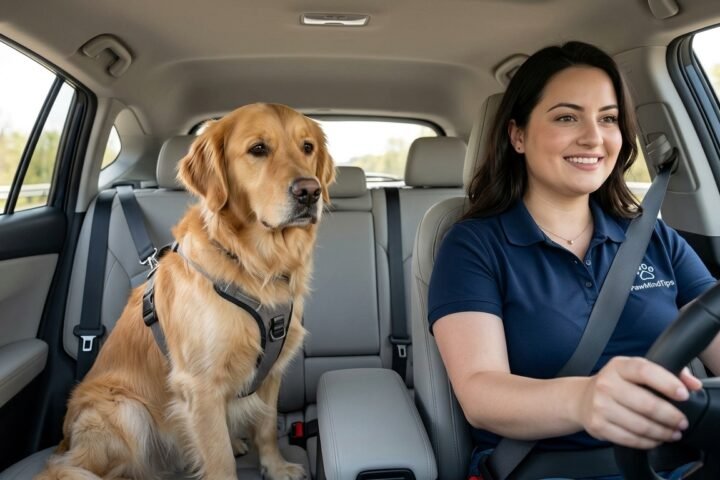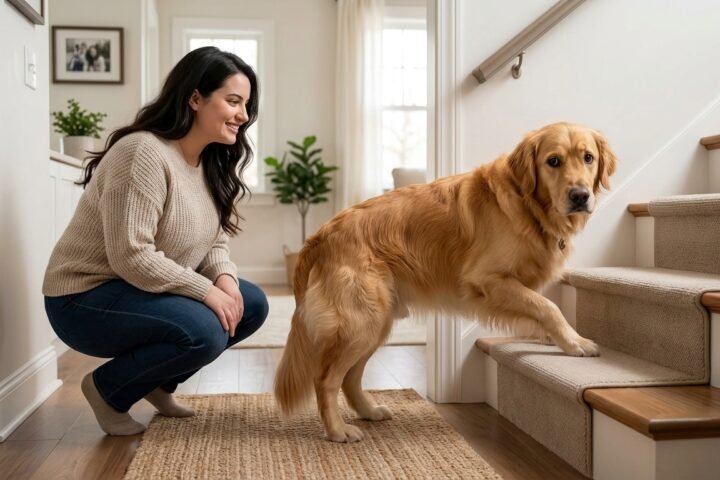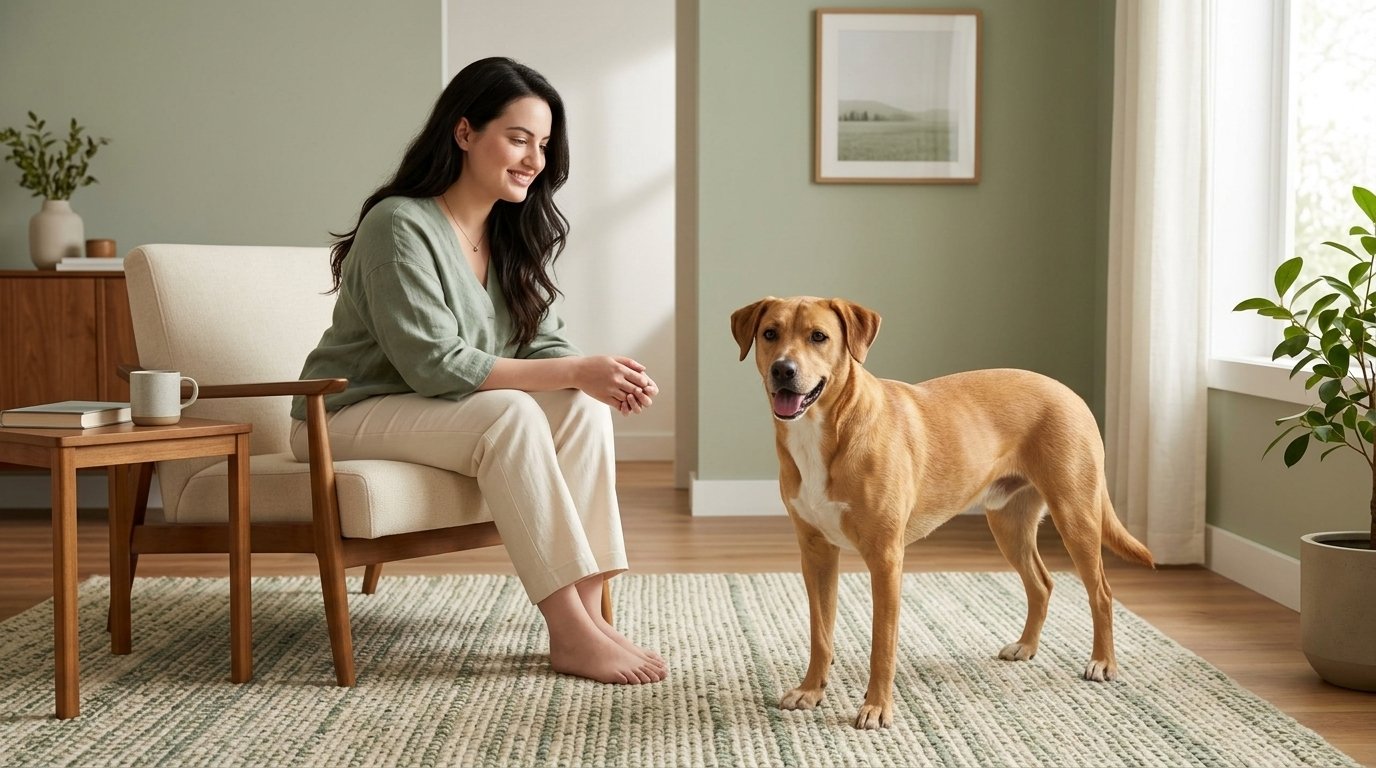
A dog sensitive to touch may turn away from petting, tense up when a harness appears, or growl when someone reaches toward a paw. These reactions can make ordinary care difficult, but they are information worth listening to. Pain, fear, previous handling experiences, and individual preferences can all affect a dog’s comfort.
Start by discussing new or worsening sensitivity with your veterinarian. Once medical concerns have been assessed, use small, comfortable training steps and let your dog move away. The aim is safer necessary care and enjoyable interaction, not unlimited tolerance of human touch.
This guide explains what to notice, seven ways to build handling comfort, and how to adapt everyday tasks without turning them into a struggle. It provides general education; a dog who may bite or appears painful needs an individual veterinary and behavior plan.
Table of Contents
Why Is Your Dog Sensitive to Touch?
Touch sensitivity describes a reaction, not a diagnosis. One dog may enjoy shoulder scratches but dislike having their feet held. Another may avoid all approaching hands. Notice whether the concern involves a location, movement, person, piece of equipment, or combination of factors.
Physical discomfort
A sensitive reaction can occur when contact hurts. Dental problems, inflamed skin, joint discomfort, injuries, or other medical issues may affect handling. Avoid deciding that the problem is behavioral simply because your dog still eats, plays, or accepts touch elsewhere.
Previous experiences and unfamiliar handling
A dog may become wary after an uncomfortable nail trim, tangled coat brushing, or frightening restraint. Limited experience with gentle handling can also contribute. Best Friends Animal Society’s touch-sensitivity guidance discusses painful grooming experiences and early socialization as possible influences.
However, avoiding hands does not prove that a dog was abused. History may be unknown, and several factors can operate together. Work with the behavior you can observe rather than building a training plan around an assumed past.
Preferences, context, and surprise
Not every dog enjoys hugging, head pats, or being picked up. A dog may choose to lie beside you without wanting repeated strokes. Preferences can also change when a dog is resting, tired, excited, or approached unexpectedly.
Record what happened before the reaction. “Moved away when I reached over his head while he was resting” is more useful than “doesn’t like affection.” Specific observations help you change the interaction and explain the concern to a professional.
Check for Pain Before Practicing Handling
Contact your veterinarian about sudden, worsening, or localized sensitivity. Stop optional touching of the affected area while you obtain advice. Do not repeatedly press a sore-looking spot or manipulate a limb to test the reaction.
VCA’s overview of aggression and medical contributors explains that painful conditions and other health problems can contribute to defensive behavior. A training exercise cannot treat the underlying medical cause.
Useful observations to share include:
- When the sensitivity first appeared and whether it is changing.
- Which movements or body areas seem involved.
- Changes in walking, resting, appetite, grooming, or activity.
- Whether the dog reacts before contact or only after being touched.
- Any recent injury, grooming appointment, equipment change, or treatment.
Our guide to recognizing possible signs of pain in dogs provides additional observations to discuss with your veterinarian, rather than a way to diagnose the cause at home.
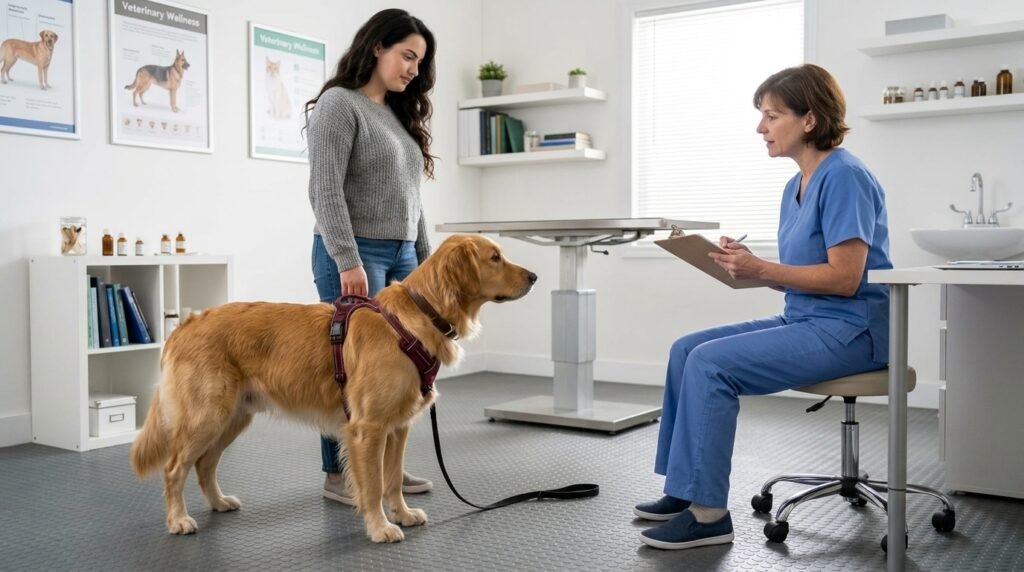
If your dog has severe pain, trouble breathing, collapses, or cannot stand, seek urgent veterinary help rather than starting training. Call ahead about safe transport and handling. Tell the clinic about growling, snapping, or bite history before the appointment so the team can prepare.
Read Body Language Before Reaching In
Watch your dog’s whole body and the surrounding situation. A single yawn or lip lick does not identify fear, pain, or intent. Look for changes that happen as you approach or begin handling.
| What you observe | A sensible next step |
|---|---|
| Dog approaches with loose posture and seeks contact | Offer a brief interaction, then pause |
| Dog turns away or steps back | Stop reaching and allow space |
| Dog becomes unusually still, tense, or watchful | Pause; do not assume stillness means comfort |
| Dog repeatedly avoids a particular movement or body area | Stop that exercise and discuss the pattern with your veterinarian |
| Dog growls, snaps, or attempts to bite | End the interaction safely and seek qualified support |
Eating treats is useful information, but it is not proof of comfort. A dog may accept food while remaining tense. Similarly, a wagging tail does not cancel out freezing or attempts to escape.
The PawMindTips guide to signs of a stressed dog can help you notice broader patterns. During handling, respond to the earliest change instead of waiting for a growl. You do not need to identify the exact emotion before giving your dog space.
Help a Dog Sensitive to Touch in 7 Gentle Ways
Use these steps for mild concerns after medical advice, not as instructions to handle a dog who is already threatening to bite. Progress at your dog’s pace, and keep essential care coordinated with your veterinary team.
1. Let your dog choose optional contact
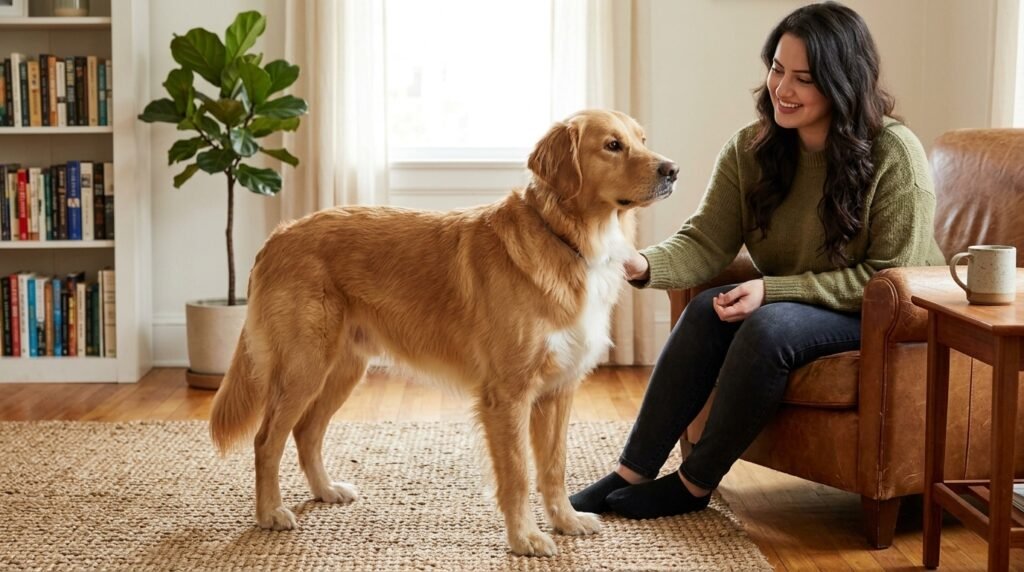
Begin in a quiet place with room to leave. Sit or stand slightly sideways and keep your hands relaxed. Let your dog approach rather than following them with an outstretched hand.
If they clearly seek petting, briefly touch an area they already enjoy, then stop. Resume only if they remain relaxed and actively seek more. Turning away, moving back, or not re-engaging is enough reason to finish.
Do not put your hand toward the dog’s nose as a mandatory greeting ritual. Sniffing a hand is not automatically a request for petting. Avoid leaning over, hugging, or reaching across a resting dog.
For example, if your dog approaches and rests beside your chair, you can simply share the space. Companionship does not have to involve touch. This is particularly useful for visitors who want to make friends too quickly.
2. Make the setup predictable and comfortable
Choose a nonslip surface, remove distractions, and prepare rewards before beginning. Keep other pets and children away from the practice area. Avoid fitting a session between stressful activities just because the equipment is already out.
Identify one small goal: being comfortable with a hand moving toward a shoulder, seeing a brush, or approaching a harness. Trying to complete a whole grooming routine creates too many opportunities to exceed comfort.
Use a familiar spot, but do not turn it into a place where your dog gets trapped. Keep an exit available. If they leave, finish or reassess the setup instead of repeatedly calling them back to endure more.
Broader routines can support this work. Our guide on helping a nervous dog covers ways to make daily life more predictable. Handling practice should fit into that calmer routine rather than become another source of pressure.
3. Pair tiny handling steps with something pleasant
Desensitization means introducing a trigger at a manageable intensity and increasing it gradually. Counterconditioning aims to change the association with that trigger. The Merck Veterinary Manual’s behavior-modification overview explains these approaches and the importance of gradual practice.
Start below the level that causes avoidance. For one dog, that might mean moving a hand slightly while sitting several feet away. For another, a brief touch to a comfortable shoulder may already be easy.
After the small movement or accepted contact, deliver a suitable reward and reset. Keep the exercise short enough that the dog does not have to endure discomfort while waiting for food. If tension appears, stop and make the next attempt easier.
Use tiny treats compatible with your dog’s diet. Do not withhold meals to make a worried dog participate, and do not use food to lure them into restraint. A qualified professional can help choose a starting point when it is unclear what your dog can comfortably manage.
4. Teach a clear way to start and pause
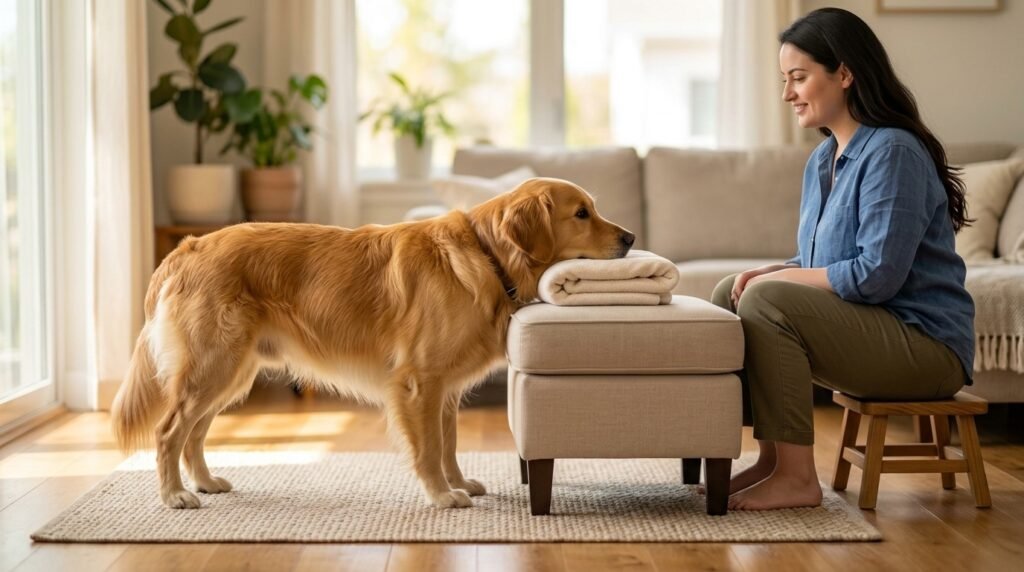
Cooperative care involves teaching participation in routine care. A sustained chin rest on a padded support is one possible starting behavior. Teach the position separately, with no grooming or examination at first.
Once the position is comfortable, introduce a tiny, easy handling action while your dog maintains it. Pause when they lift their head or move away. Avoid holding the head in place or immediately asking for another repetition after withdrawal.
A quick nose touch does not automatically give permission for a lengthy procedure. The start-and-pause pattern must be taught, and the handler must pay attention throughout. You should still stop if the dog looks uncomfortable while maintaining the position.
These exercises are appropriate for practice that can safely stop. They do not replace a veterinary plan for urgent or painful care. Ask a qualified professional to help introduce cooperative care if your dog struggles with close contact or has a bite history.
5. Introduce equipment separately from using it
Break equipment routines into parts. Seeing a harness, hearing its buckle, having straps touch the body, and wearing it are different experiences. A dog may be comfortable with one and worried about another.
Place the item at a comfortable distance and reward relaxed interest without requiring an approach. Later, practice one easy movement of the item. Add contact only after those earlier steps are comfortable.
For an overhead harness, voluntary movement toward the opening can be practiced gradually. Do not follow the dog’s head with the harness or use food to push through hesitation. Ask about an alternative design if the overhead movement remains difficult, and have fit checked.
For brushing, first show a stationary brush. A later step might be one light stroke on a comfortable, tangle-free area. Do not pull through mats as a desensitization exercise; painful coat problems need an appropriate grooming or veterinary plan.
6. Keep a record and change one thing at a time
Write down what happened rather than relying on whether a session felt successful. Useful notes include the location, equipment, body area, length of contact, and what your dog did immediately afterward.
A simple entry might read: “On the living-room mat, accepted one brief shoulder touch, then stayed loose and chose to remain.” Another might read: “Turned away when the brush moved closer; stopped before contact.” Both entries help plan the next session.
Increase only one feature at a time. If you move your hand closer, keep contact duration and the environment unchanged. If you practice with a different person, make the handling step much easier.
A pause is a useful outcome, not a failed lesson. You are learning where practice is manageable. Avoid repeatedly testing a sensitive area to see whether enough progress has happened; improvements elsewhere do not prove that area is now comfortable.
7. Get the right support before risk escalates
Seek professional help for snapping, biting, intense freezing, repeated fear, or necessary care that cannot be completed safely. Start with your veterinarian, especially when sensitivity is new or linked to a particular body area.
For complex cases, ask about a board-certified veterinary behaviorist or a qualified behavior consultant working with your veterinarian. Ask every trainer about their methods and experience with handling sensitivity. Credentials are helpful information, but they do not answer every question about practice.
The AVSAB guide to choosing a trainer outlines how to evaluate methods and qualifications. Look for a plan that explains medical coordination, safety management, achievable starting steps, and what to do when the dog wants to stop.
Do not accept promises of a complete cure within a fixed number of sessions. Your dog’s needs may include ongoing adaptations as well as training.
Adapt Common Handling Situations
Petting and reaching over the head
Let your dog initiate optional interaction and use brief pauses. If head contact causes avoidance, do not repeatedly try to get them used to it during casual petting. Use a comfortable alternative or enjoy time together without touching.
If a visitor ignores those instructions, create separation with a gate or another comfortable area. Your dog should not have to manage an overly persistent person. Children should not conduct desensitization exercises or investigate sensitive areas.
Paw wiping and nail care
Separate approaching a leg, touching it, holding a paw, presenting a towel, and using nail equipment. These are different skills. Practice only what is comfortable, and do not assume that offering a paw on cue means permission to grip it.
For a dog who avoids paw contact, ask your veterinarian or groomer about practical care between training sessions. Necessary nail care should not be postponed indefinitely, but forcing a struggle at home can create further problems. Have a safe interim plan.
Harnesses and collars
Prepare before a walk so time pressure does not turn dressing into a chase. Practice equipment skills outside the moment when you urgently need to leave. Check that straps are not catching hair, pinching, or rubbing.
If a dog growls when you reach for the collar, stop rehearsing that approach. Use management arranged in advance and obtain professional advice. Grabbing harder or more quickly is not a training solution.
Ears, mouth, and grooming
New sensitivity around ears or the mouth deserves veterinary assessment. Do not insert objects, pry the mouth open, or clean a painful area to find out what is wrong. Follow the treatment and handling instructions provided for that dog.
Tell a groomer about sensitive areas, triggers, and past reactions before the appointment. Agree on when they should pause and contact you. Booking a service should not mean consenting to force through every procedure regardless of distress.

Mistakes That Can Make Touch Sensitivity Worse
The American Veterinary Society of Animal Behavior’s training position recommends reward-based methods and advises against aversive training. For handling concerns, the practical aim is to make care manageable without adding fear or pain.
Punishing warnings. Scolding a growl does not address why contact feels uncomfortable. Stop safely and reassess rather than trying to remove the warning sound.
Holding on until the dog gives up. Becoming still after struggling is not proof of relaxation. Do not use exhaustion or inability to escape as the measure of a successful exercise.
Distracting through unwanted contact. Food should support appropriate training, not conceal that a dog is being restrained or touched beyond their comfort. Notice body language even when the dog continues eating.
Trying every body area in one session. Success with shoulder contact does not justify moving directly to ears, toes, and tail. These areas may require separate plans, and some may be painful.
Blaming yourself or assuming betrayal. A dog can trust you and still find a procedure uncomfortable. Focus on what needs to change. Our discussion of habits that can damage a dog’s trust provides related context for keeping interactions predictable.
Track Progress and Plan Necessary Care
There is no universal timetable for helping a dog sensitive to touch. Progress may be uneven, and improvement in one location or with one person may not transfer automatically. Illness, fatigue, or changes in the routine can alter what feels manageable.
Look for voluntary participation: easier approaches, looser posture, less avoidance, and willingness to return after a pause. Do not count “allowed a longer procedure” as progress if the dog remained tense throughout it.
The following examples illustrate recordkeeping, not required stages or deadlines:
| Observation | What to consider next |
|---|---|
| Comfortable with the brush visible across the room | Repeat before moving it slightly closer |
| Accepts one brief shoulder stroke and remains loose | Practice again before adding duration |
| Moves away when the towel approaches a paw | Stop; return to an easier step and review the plan |
| Suddenly reacts to a previously comfortable touch | Pause training and contact the veterinarian |
Necessary treatment cannot always wait for training to catch up. Speak to your clinic about options before care becomes overdue. The AAHA behavior-management guidelines emphasize health assessment and collaboration among owners, veterinarians, and behavior professionals.
Depending on the case, a veterinarian may recommend adjustments to the visit, pain treatment, prescribed medication, or sedation for a necessary procedure. Those decisions belong to the veterinary team. Do not give human medication or copy another dog’s prescription.
A successful plan may mean shorter grooming appointments, different equipment, a less busy clinic visit, or ongoing professional support. Comfortable management is a worthwhile outcome even if your dog never enjoys every type of touch.
Frequently Asked Questions
Why is my dog suddenly sensitive to touch?
Pain, injury, illness, or a recent unpleasant experience may contribute. Stop optional contact with the sensitive area and contact your veterinarian, especially when the change is sudden or localized. Do not repeatedly touch the area to test it. Severe pain or other urgent symptoms need prompt veterinary care.
Can a dog sensitive to touch learn to enjoy petting?
Some dogs become more comfortable with suitable treatment and gradual training, but enjoyment is not guaranteed. Let your dog choose optional petting and respect preferences about where and how they are touched. The practical goal is safer necessary care and comfortable interaction, not acceptance of every touch.
Should I punish my dog for growling when touched?
No. Pause the interaction and allow space. Growling can communicate discomfort, and punishment can add fear without resolving the cause. Arrange veterinary assessment when the reaction is new or localized, and seek qualified behavior help when handling creates a risk of snapping or biting.
How long does handling desensitization take?
There is no fixed deadline. The cause, medical needs, previous learning, environment, and size of the training steps all matter. Measure relaxed, voluntary participation rather than days completed. If sensitivity worsens, progress stalls, or care cannot be performed safely, ask your veterinary and behavior team to reassess.
Conclusion
Helping a dog sensitive to touch begins with understanding what the reaction may be telling you. Check for medical discomfort, notice early changes in body language, and stop treating every approach as an invitation to pet.
Build comfort through small, predictable exercises, suitable rewards, and opportunities to pause. Keep necessary care coordinated with professionals and avoid forcing contact to prove that a dog can tolerate it. Progress can take different forms, including better handling skills, equipment changes, or a safer care routine tailored to your dog.