By Sarah
You open the front door on a cold January morning, and your dog steps onto a sidewalk dusted white with road salt. Three minutes later, he lifts one paw, then another, and looks back at you. Something on the ground is hurting him, and you can see it in the way he walks.
Dog winter paw care is mostly about that moment: spotting trouble early and keeping salt, ice, and cold off the pads. Paw pads look tough, but they are living skin. Cold dries them out, salt stings small cracks, and ice balls form between the toes. A short routine before and after each walk prevents most of it.
This guide gives you seven ways to protect your dog’s paws from cold and salt, all winter long, starting today.
Quick Answer
Protect your dog’s paws in winter with three habits: put a barrier on the pads before walks, using paw balm or booties; rinse or wipe the paws after walks to remove road salt; and check pads and toes for cracks, redness, or ice. Shorten walks in cold weather, and call the vet if a crack bleeds or your dog limps.
Why Winter Is Hard on Your Dog’s Paws
A paw pad looks like armor, but it is skin. It carries your dog’s weight, flexes with every step, and touches the ground all day. In winter the same pad meets frozen pavement, ice, and grit, with no fur coat to hide behind.
Cold air pulls moisture out of skin, and heated indoor air does the same. Pads turn dry, rough, and tight, and small cracks open up. Each walk on salted ground stings them more, and dogs hide pain well, so you may not notice until a crack bleeds.
Some dogs feel it sooner. Short-haired dogs, small dogs, puppies, and seniors lose heat faster and have thinner pads. Long-haired dogs get ice balls between their toes. Whatever the build, winter asks more of the paws than any other season.
What Road Salt and Ice Melt Do to Paws
Cities spread salt and de-icers to keep sidewalks safe for people. The most common are sodium, calcium, and magnesium chloride. On a dog’s paws they do the opposite of safe: the crystals lodge between the toes, dry out the pads, and sting any small crack.
The bigger risk comes after the walk. Dogs lick their paws clean, and that is how the chemicals get swallowed, the reason dog winter paw care ends at the front door. A few licks cause only drooling or a mild stomach upset.
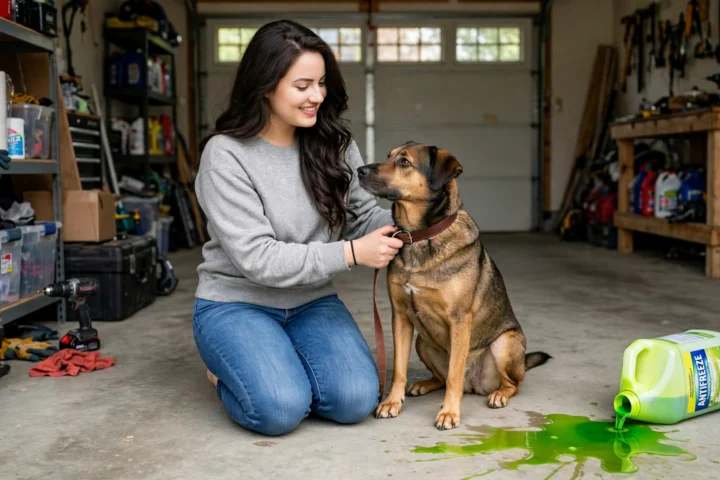
More can bring vomiting, diarrhea, thirst, and weakness. The ASPCA notes no rules govern “pet safe” labels, so the label alone proves nothing. Antifreeze is worse: sweet-tasting, lethal in small amounts, and a spill can look like a puddle to a thirsty dog.
Way 1: Check Paws Before Every Walk
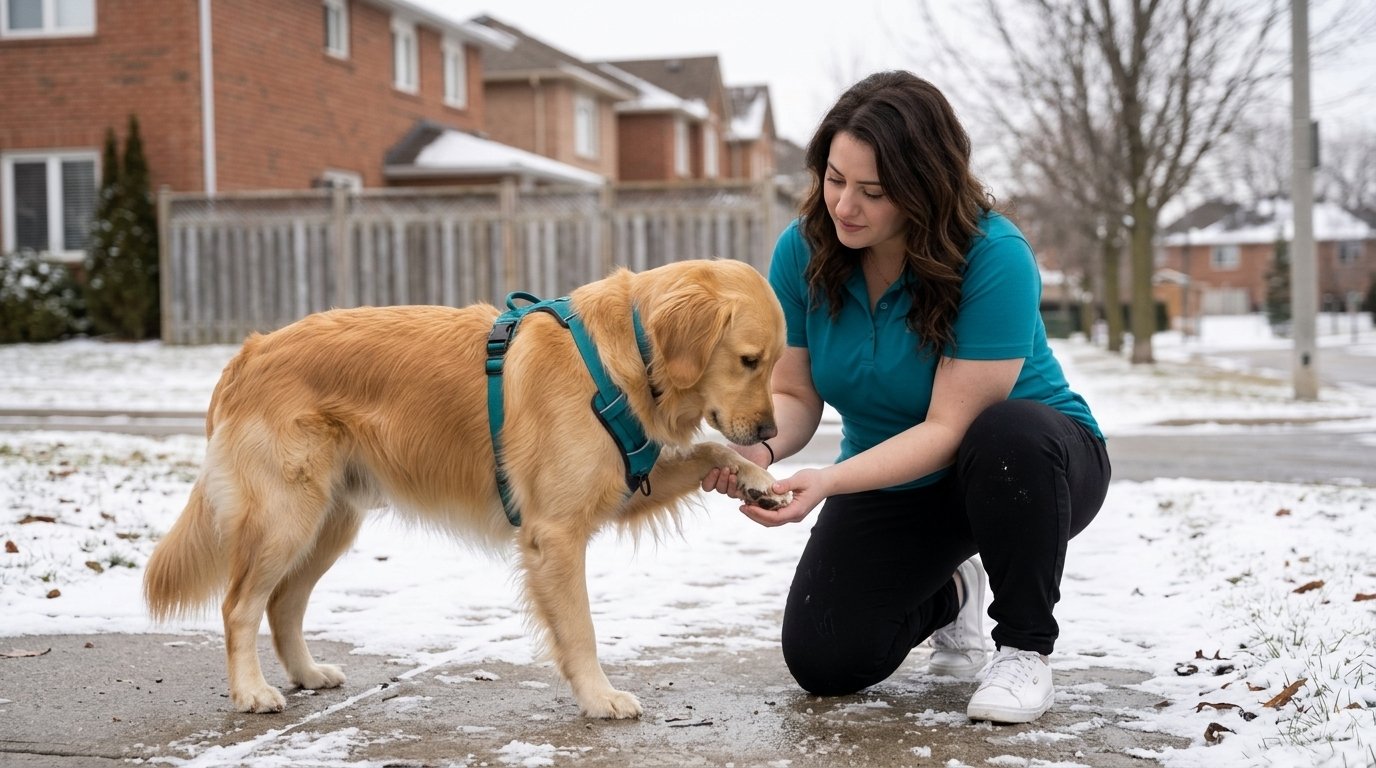
Make the paw check part of putting the leash on, the first step of dog winter paw care. Lift each paw, look at the pads, and spread the toes gently. You are looking for cracks, redness, swelling, or anything stuck in the fur.
It takes thirty seconds, and it tells you whether today is a balm day, a bootie day, or a short-walk day. Watch how your dog stands: favoring one paw or licking it again and again means something hurts.
Dogs are good at hiding pain, so a small change in the way they walk is worth a closer look. Keep the check calm and quick, with a treat after each paw. If you find a cut or a deep crack, leave it alone and call your vet.
Way 2: Trim the Fur Between the Toes
Long fur between the toes is where winter starts its trouble. Snow packs into it, melts a little, freezes again, and forms hard ice balls. Each step then presses a cold lump against soft skin.
A short trim stops most of it, and it is one of the easiest wins in dog winter paw care. Use blunt-tipped scissors or a small trimmer, and cut the hair level with the pads. Work slowly, with a treat to keep your dog still.
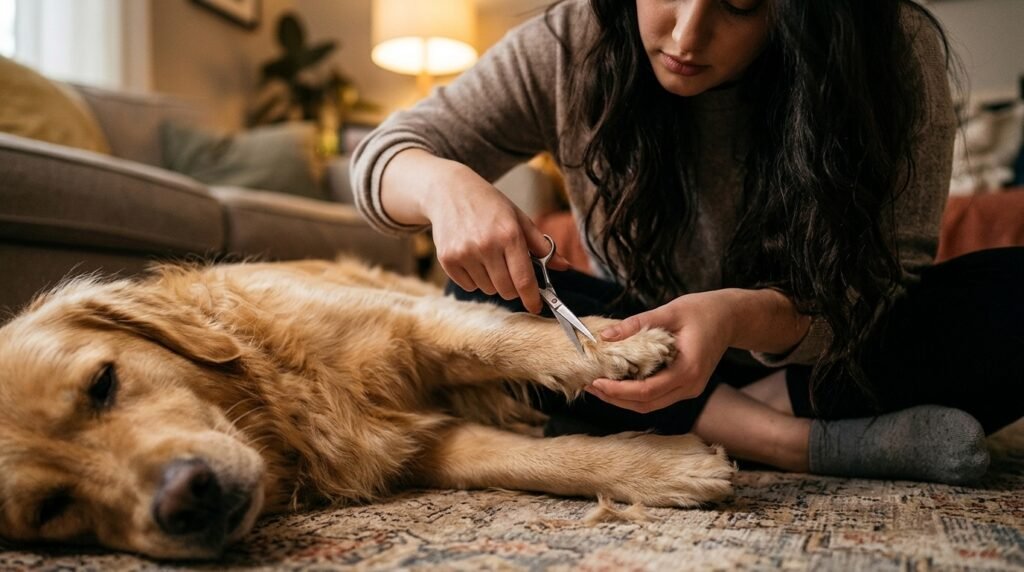
Do this every few weeks through winter, or ask your groomer to do it. Short nails help too: long nails spread the toes apart, which lets more salt and ice in. Neat paws are simply harder for winter to hurt.
Way 3: Use Paw Balm as a Barrier
Paw balm is wax and oils rubbed into the pads before a walk. It does not make the paw waterproof, but it puts a barrier between the skin and the salt, ice, and grit. It helps most on mild days.
Apply a thin layer to each pad and between the toes, then wait a minute before heading out. Choose a balm made for dogs, with a short list of simple ingredients. Your dog will lick some of it, so skip strong scents and essential oils.
The AKC shares a simple DIY paw balm recipe using olive oil, shea butter, and beeswax. A store-bought balm works just as well. Either way, balm is only one layer, and it is the simplest habit in dog winter paw care.
Way 4: Use Booties on Salted or Icy Ground
Booties are the most complete barrier you can buy. They cover the paw, so salt, ice, and slush never touch the skin. PetMD calls them the most reliable way to protect paws in winter. They matter on salted sidewalks.
Fit is everything. A loose bootie twists and falls off in the snow, and a tight one rubs the paw raw. Measure the paw and test the fit indoors first. Most dogs need a few days to accept them, and that training is the hardest part of dog winter paw care.
Take them off as soon as you are home, and clean them before the next walk. If your dog flatly refuses boots, do not force it. A balm, a shorter walk, and a good rinse are a fine backup plan.
Way 5: Shorten Walks When It Is Very Cold
No walk is worth a cold injury. Cold tolerance varies by coat, body fat, age, and health, and the AVMA advises shorter walks in very cold weather. Short-haired dogs, puppies, and seniors feel the cold first.
Watch for the signs: lifting paws one after another, slowing down, shivering, or turning toward home. When you see them, head home. Knowing when to turn back is the heart of dog winter paw care.
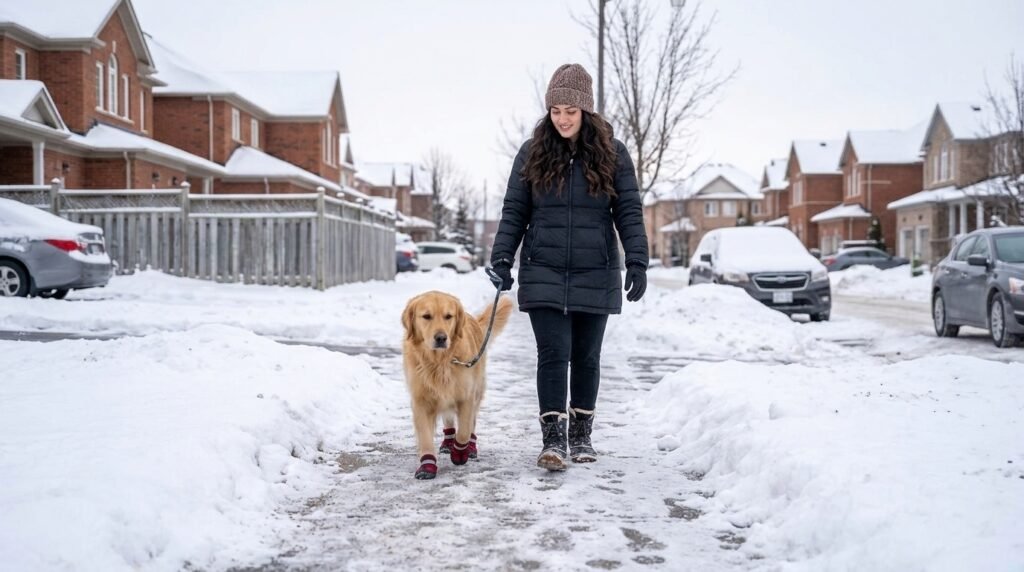
Indoor play can fill the gap on the coldest days. Fetch down a hallway, a puzzle feeder, or a short training session burns energy without freezing paws. Your dog will not mind a shorter walk nearly as much as sore feet. For older dogs, our guide to senior dog fall care has more tips.
Way 6: Rinse and Dry Paws After Every Walk
This is the single most important habit in dog winter paw care. The moment you come inside, rinse each paw with lukewarm water, never hot, and dry it well with a towel. Get between the toes, where salt crystals and ice hide.
Keep a towel and a basin by the door so the routine takes a minute. On long walks, carry a towel to wipe stinging paws before you get home. The ASPCA recommends washing and drying your pet’s feet after each winter walk.
Dry paws matter as much as clean ones, because damp skin between the toes stays cold and gets irritated. While you dry, look again at the pads: a daily check catches cracks and redness early, when a little balm and rest can fix them.
Way 7: Keep Paws Moisturized Through Winter
Winter air is dry indoors and out, and dry pads crack. After the rinse, when the paws are clean and dry, rub in a thin layer of balm. It seals in moisture and softens rough pads. Do this daily through the cold months.
A little goes a long way. Too much balm leaves greasy prints on your floor and gets licked off in minutes. A pea-sized amount per paw, rubbed in well, is enough. That daily habit is dog winter paw care at its simplest.
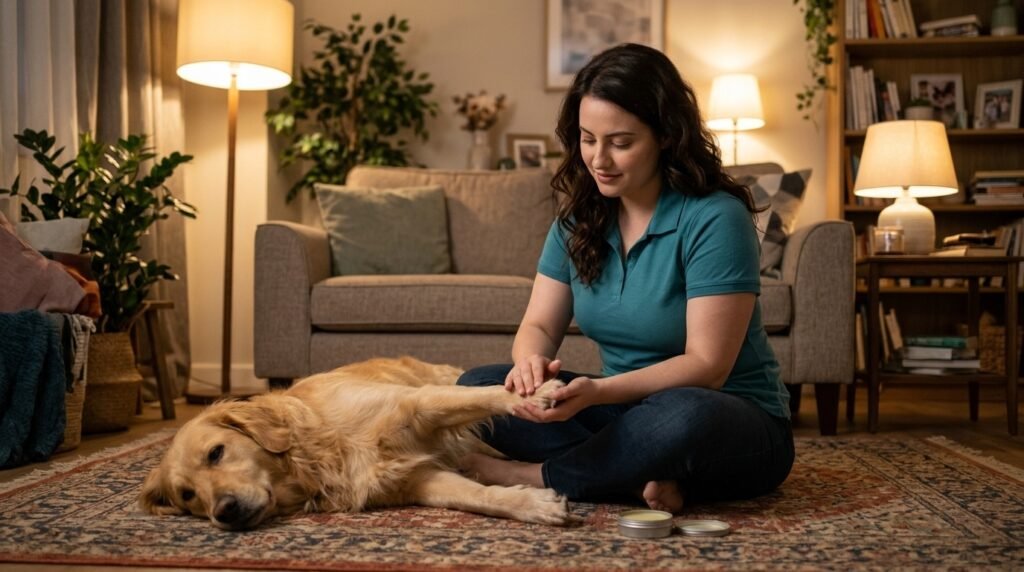
Keep baths short and rare in winter, because frequent washing strips the skin’s natural oils. When you do bathe your dog, use a gentle shampoo and dry the paws fully. Warm, humid air at home helps too.
Warning Signs: When Paws Need a Vet
Most winter paw trouble is fixed at home with rest and balm. Some is not. Call your vet if a crack bleeds, a cut looks deep, or the paw is swollen, hot, or oozing. See our guide to first aid for a paw pad injury.
Frostbite is the quiet danger in dog winter paw care. The skin turns pale, gray, or bluish and feels cold or brittle, and signs can show up days later. Never rub a frostbitten paw, and never warm it with a heating pad or hot water.
Ongoing licking or chewing is another red flag. It can mean infection, an allergy, or something stuck deep in the pad. Your vet can find the cause. Our dog first aid kit checklist covers what to keep on hand.
What to Do If Your Dog Licks Salt Off Its Paws
It happens fast. You turn away for a second, and your dog has licked its paws clean after a salted walk. Do not panic. Rinse the paws with lukewarm water, dry them, and watch your dog for a few hours.
A few licks usually cause only drooling or a mild stomach upset. Worry about vomiting, diarrhea, heavy thirst, weakness, wobbling, or tremors. If you see any of those, or if your dog ate de-icer from the bag, call your vet or ASPCA Poison Control at (888) 426-4435.
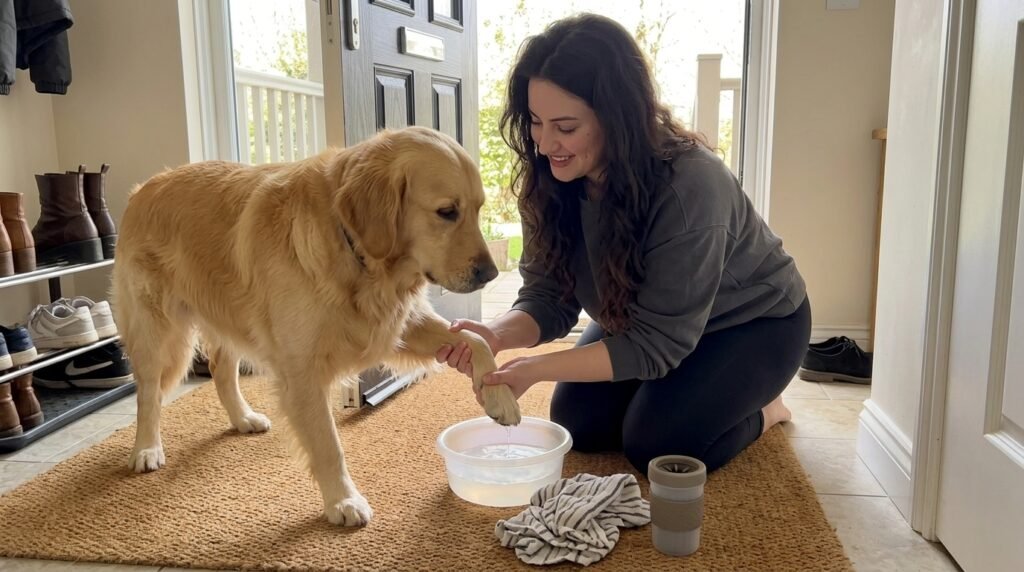
Prevention is the whole point of dog winter paw care. Rinse paws the moment you come inside. Store de-icer bags away, and choose pet-friendly ice melt for your own steps. If licking keeps happening, read why dogs lick their paws.
FAQs
Can I put Vaseline on my dog’s paws in winter?
Yes, the ASPCA lists petroleum jelly as a pre-walk protectant you can massage into the pads. It helps block salt and chemicals. Wipe the paws after the walk too, since your dog may lick some of it off, and a large amount can upset the stomach.
Do dogs need booties in winter?
Not every dog, but booties are the best protection on salted or icy ground, and they are the first thing most dog winter paw care guides recommend for city dogs. They help most for short-haired, small, and senior dogs, and for any dog with cracked pads. If your dog refuses them, paw balm and a quick rinse after walks are a good backup.
How do I get snowballs out of my dog’s paws?
Soak a towel in warm water and hold it against the paw to melt the ice, instead of pulling the snowball out by hand. Then dry between the pads. Trimming the fur between the toes keeps new ice balls from forming.
Is road salt toxic to dogs?
Yes, in the amounts a dog can swallow. Rock salt irritates paws and can cause dangerously high sodium levels if eaten. A few licks off the paws usually cause only mild stomach upset, but eating de-icer from the bag is an emergency. Call your vet or ASPCA Poison Control right away.
Conclusion
Dog winter paw care is not a big project. It is a two-minute habit at the door: check, protect, walk, rinse, dry. Do it every day, and your dog’s paws will stay soft, whole, and comfortable through the coldest months.
Start tonight. Put a towel and a basin by the door, trim the fur between the toes, and pick up a balm or booties before the next cold snap. The first snowy walk after that will feel different, for both of you.
If anything looks wrong, a crack that bleeds, a limp that lasts, or vomiting after a salty walk, call your vet. If your dog is limping, our guide on why your dog might be limping but not crying can help.