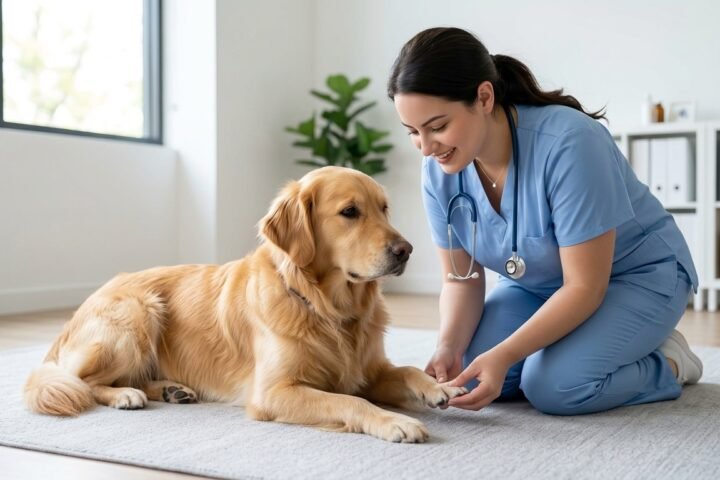
Giving medication to a dog can quickly turn into a challenge. Some dogs happily eat almost anything, while others can detect a tiny pill hidden inside their favorite treat. If your dog runs away when they see a medicine bottle, spits out pills, or refuses liquid medication, you are not alone.
Learning how to give a dog medicine safely can make the process less stressful for both you and your pet. The best approach depends on the type of medication, your dog’s temperament, and whether the medicine can safely be given with food.
Before trying any technique, carefully check the prescription instructions. Some medications must be given on an empty stomach, while others should not be crushed, split, or mixed with food. If you are unsure, contact your veterinarian or pharmacist first. Veterinary guidance from Cornell University College of Veterinary Medicine and VCA Animal Hospitals also emphasizes following the specific instructions for the medication.
Here are nine safe and practical ways to make medication time easier.
Table of Contents
1. Check the Medication Instructions Before You Start
The first step in how to give a dog medicine safely is understanding exactly what your dog has been prescribed.
Before opening the bottle or preparing a pill, check:
- The correct dose
- How often the medication should be given
- Whether it should be given with food
- Whether it must be given on an empty stomach
- Whether the medication requires refrigeration
- Whether the pill can be split
- Whether the medication can be crushed or mixed with food
Never assume that every pill can be crushed. Some medications are specially formulated, and changing their form may affect how they work. Texas A&M veterinary guidance specifically warns against crushing medication unless a veterinarian or pharmacist has approved it.
Also, never give your dog leftover medication or human medicine unless a veterinarian specifically instructs you to do so. Human and pet medications can be dangerous when given incorrectly.
Pro Tip
Prepare everything before calling your dog. Having the pill, syringe, treats, and instructions ready can make the process faster and calmer.
2. Hide the Pill in a Small, Tasty Treat
For many dogs, the easiest method is hiding medication inside something delicious.
Depending on your veterinarian’s instructions, you may be able to use:
- A pill pocket
- A small amount of canned dog food
- A soft dog treat
- Peanut butter that does not contain xylitol
- A small piece of approved food
- Another veterinarian-approved soft food
The key is to use a small amount of food rather than mixing the medication into an entire meal. If your dog refuses the food, you will know that the full dose was not taken.
Veterinary guidance commonly recommends hand-feeding the medicated treat and watching your dog afterward to make sure the pill was actually swallowed.
Try the Three-Treat Method
Some owners have success using this sequence:
- Give your dog a normal treat.
- Quickly give the treat containing the medication.
- Immediately follow with another normal treat.

The fast sequence may encourage your dog to swallow before investigating the medicated treat too closely.
3. Use a Pill Pocket or Soft Food Wrapper
A pill pocket can be useful for dogs that can smell or taste medication through regular food.
Place the pill inside the pocket and close it completely so the medicine is hidden. Soft food can also be molded around certain pills when your veterinarian confirms that giving the medication with food is appropriate.
However, watch your dog carefully.
Some clever dogs will eat the treat and spit out the pill later. Check the area after medication time, especially if your dog has a habit of hiding unwanted food.
If food masking repeatedly fails, you may need to try a different method rather than continuing to make medication time frustrating.
4. Learn How to Give a Dog a Pill Directly
Sometimes, hiding medication simply does not work. In that situation, direct pill administration may be necessary.
When learning how to give a dog medicine directly, remain calm and avoid rushing.
A general approach recommended by veterinary sources is to:
- Prepare the pill before bringing your dog over.
- Place your dog in a quiet, safe area.
- Gently hold the muzzle from above.
- Carefully open the mouth.
- Place the pill toward the back of the tongue without forcing your fingers too far into the mouth.
- Close the mouth gently.
- Return your dog’s head to a normal position.
- Allow your dog time to swallow.
- Reward your dog afterward.
Cornell and VCA both provide detailed veterinary guidance for direct oral medication techniques.
Important Safety Note
Do not force your hand deep into your dog’s mouth. If your dog becomes extremely fearful, struggles aggressively, growls, or attempts to bite, stop and contact your veterinarian for help.
A veterinarian may be able to demonstrate the technique or recommend another formulation.
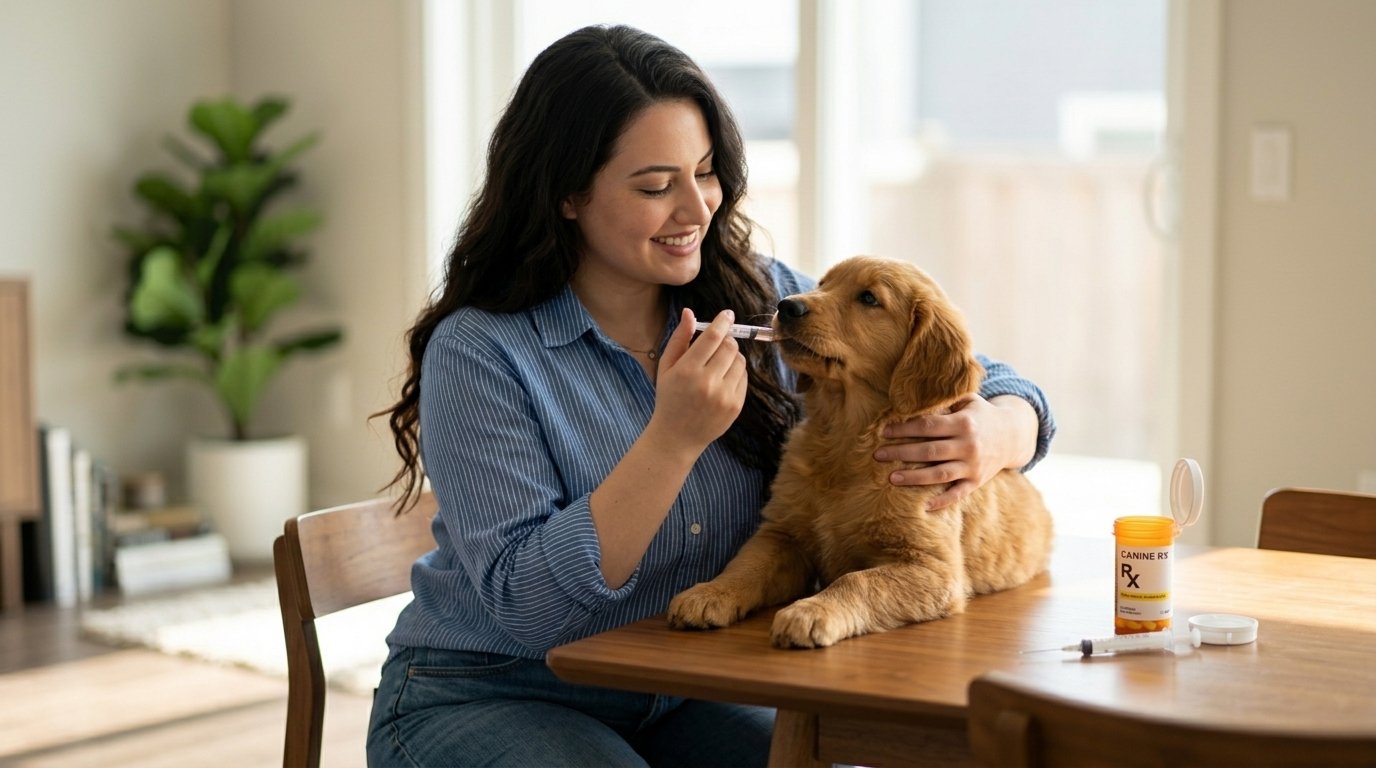
5. Give Liquid Medicine Slowly and From the Side
Liquid medication requires a different technique.
The safest general approach is to use the syringe or dropper provided or recommended for the medication.
When giving liquid medicine:
- Measure the exact prescribed dose.
- Keep your dog in a calm position.
- Gently lift the lip.
- Place the syringe into the side of the mouth, between the cheek and teeth.
- Aim the medication toward the side of the mouth rather than directly down the throat.
- Give small amounts slowly.
- Pause and allow your dog to swallow and breathe.
Do not squirt liquid rapidly into your dog’s mouth. Giving too much too quickly can cause coughing, gagging, or inhalation of the medication.

VCA specifically advises placing liquid medication toward the side of the mouth and administering it slowly rather than directing it straight down the throat.
For a more detailed veterinary reference, see VCA’s guide to giving liquid medication to dogs.
6. Keep Medication Time Calm and Predictable
Your dog can quickly develop negative associations with medication.
If every medicine session involves chasing, grabbing, and stress, your dog may begin hiding when they see the medicine container.
Try to create a predictable routine.
You can:
- Give medication at approximately the same time each day when appropriate
- Use a calm voice
- Avoid chasing your dog
- Prepare everything before approaching them
- Keep the process brief
- Reward cooperation immediately afterward
Veterinary guidance notes that dogs may respond to an owner’s anxiety, so remaining calm can help make the process easier.
This is also where positive reinforcement can be extremely useful. You can reward your dog with praise, petting, play, or an appropriate treat after medication time.
Good Manners Training in 7 Days: A Proven, Essential Guide for Your Dog
7. Never Crush or Split Medication Without Approval
One of the most important rules when learning how to give a dog medicine is this:
Do not crush, split, open, or alter medication unless your veterinarian or pharmacist says it is safe.
Some medications:
- Are designed to release slowly
- Have protective coatings
- Must stay intact for proper absorption
- Should not be exposed to certain foods
- Can become unsafe or less effective when altered
If your dog refuses a tablet, ask your veterinarian whether there is another option.
Depending on the medication, alternatives may include:
- A flavored liquid
- A chewable formulation
- A compounded medication
- A different tablet size
- Another administration method
Cornell notes that alternative formulations may sometimes be available when direct administration is difficult.
8. Watch Your Dog to Make Sure the Full Dose Was Taken
Do not assume that medication disappeared just because your dog closed their mouth.
Some dogs are experts at pretending to swallow.
After giving medication, watch for signs that your dog may have:
- Spit out the pill
- Hidden the medication
- Dropped part of the dose
- Vomited shortly afterward
If you are giving liquid medicine, some dogs may allow a small amount to escape from their mouth.
Do not automatically give another full dose if you are unsure how much was swallowed. Depending on the medication, giving a second dose could result in too much medication.
VCA advises against re-medicating unless you are certain that none of the liquid medication was swallowed.
When in doubt, contact your veterinarian and explain what happened.
9. Ask Your Veterinarian for Help if Your Dog Keeps Refusing
Sometimes the problem is not your technique.
Your dog may dislike the taste, feel nauseated, have mouth pain, or simply become extremely stressed by medication.
If your dog consistently refuses medication, ask your veterinarian about alternatives.
Possible options may include:
- Flavored medication
- Liquid formulations
- Compounded medication
- Chewable versions
- A different administration method
- Demonstration of safe handling techniques
Veterinary sources note that compounding or alternative formulations may sometimes make medication easier to administer, although availability depends on the medication and individual situation.
Never stop a prescribed medication or change the dose on your own unless your veterinarian instructs you to do so.
Common Mistakes to Avoid When Giving Your Dog Medicine
Even with the best intentions, a few mistakes can make medication time more difficult.
Avoid:
Forcing medication too aggressively
This can create fear and increase the risk of injury to both you and your dog.
Mixing medicine into a full meal
If your dog does not finish the meal, you may not know how much medication was consumed.
Giving a second dose automatically
If your dog spits out part of a dose or you are unsure what was swallowed, contact your veterinarian before repeating the medication.
Crushing pills without approval
This can change how some medications work.
Using unsafe foods
Always make sure the food you use is appropriate for your dog and compatible with the medication.
Giving human medication
Never assume that a medication safe for people is safe for dogs.
What If My Dog Won’t Take Medicine in Food?
If your dog discovers the hidden pill every time, try changing the method rather than repeatedly using the same trick.
You may be able to:
- Use a smaller amount of food.
- Try a veterinarian-approved pill pocket.
- Use the three-treat technique.
- Ask whether the medication can be given in another form.
- Learn a direct administration technique from your veterinarian.
- Ask whether a flavored or compounded option is available.
If your dog suddenly refuses food along with medication, especially when they normally have a good appetite, contact your veterinarian because the underlying illness may also be affecting their willingness to eat.
How to Make Future Medication Easier
The goal should not only be getting today’s medicine into your dog. You also want to prevent medication time from becoming a long-term battle.
A few habits can help:
- Keep your behavior calm.
- Avoid chasing your dog.
- Use positive reinforcement.
- Keep the process short.
- Reward cooperation.
- Store medications safely.
- Follow the same routine when appropriate.
- Ask for veterinary help before the situation becomes stressful.

Safe medication storage is important as well. Keep medications out of reach of pets and children, store them according to label instructions, and keep human and pet medications clearly separated.
FAQ: How to Give a Dog Medicine
How do you give a dog a pill that refuses to eat it?
You can try a veterinarian-approved pill pocket, a small amount of appropriate food, or direct administration. If your dog continues to refuse the pill, ask your veterinarian whether another formulation is available.
Can I crush my dog’s medicine and put it in food?
Only if your veterinarian or pharmacist confirms that it is safe. Some medications should never be crushed, split, or altered because doing so can affect how the medication works.
How do I give a dog liquid medicine without choking them?
Place the syringe into the side of the mouth and administer the medication slowly in small amounts, allowing your dog time to swallow and breathe. Do not squirt liquid directly toward the back of the throat.
What should I do if my dog spits out its medicine?
Do not immediately give another full dose unless you know that none of the medication was swallowed. Contact your veterinarian for instructions if you are unsure.
Can I mix my dog’s medication with peanut butter?
Possibly, but only if the medication can be given with food and the peanut butter is safe for dogs. Avoid products containing xylitol, which is toxic to dogs.
Final Thoughts on How to Give a Dog Medicine
Learning how to give a dog medicine can take patience, especially if your dog is suspicious of pills or dislikes having their mouth handled.
Start by following the medication instructions exactly. If the medicine can safely be given with food, a small treat or pill pocket may be the easiest option. For liquid medication, administer it slowly from the side of the mouth. If your dog repeatedly refuses medication, becomes fearful, or makes administration unsafe, contact your veterinarian rather than forcing the situation.
With the right technique, preparation, and positive reinforcement, medication time can become a much easier part of your dog’s routine.