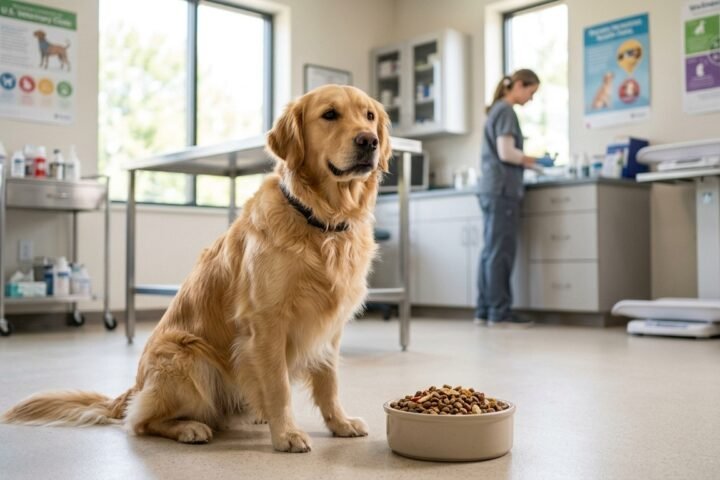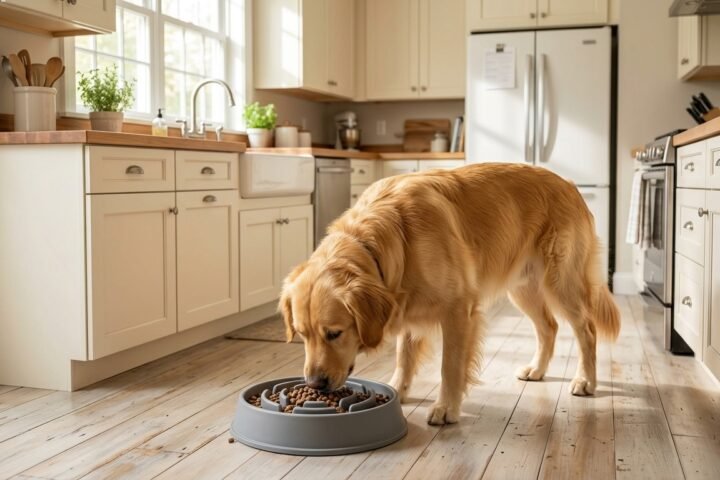
Wet vs dry dog food does not have one winner for every dog. Either format can provide complete, balanced nutrition when it is properly formulated for your dog’s life stage. Wet food supplies substantially more moisture and is often softer and more aromatic. Dry food is usually more calorie-dense, economical per calorie, convenient to measure, and easier to use in training toys.
The better wet vs dry dog food choice depends on your dog’s age, body condition, chewing comfort, appetite, medical history, and calorie needs—as well as your budget and daily routine. Some dogs do best on one format, while others can eat a carefully portioned combination. Here is how to compare the choices without getting distracted by package claims.
Table of Contents
Wet vs Dry Dog Food at a Glance
Wet food is commonly sold in cans, trays, or pouches. Dry food, often called kibble, has had most of its water removed. That difference in moisture affects almost everything else: the volume needed to deliver a certain number of calories, the cost per day, storage after opening, and how the food feels in a dog’s mouth.
| Factor | Wet dog food | Dry dog food |
|---|---|---|
| Typical moisture | About 75%–78% for canned food | About 10%–12% |
| Calories by volume | Usually lower because water adds volume | Usually higher because nutrients and calories are concentrated |
| Palatability | Often stronger-smelling and appealing | Varies; may be less tempting to some dogs |
| Texture | Soft and easier to chew | Firm, crunchy pieces |
| Cost per calorie | Usually higher | Usually lower |
| After-opening storage | Refrigerate and use promptly as directed | Reseal and store in a cool, dry place |
| Portioning and travel | Can be less convenient | Easy to weigh, pack, and use in food toys |
| Best use cases | Added dietary moisture, appetite support, chewing difficulty | Budget efficiency, convenience, training, calorie-dense meals |
The moisture figures above are not marketing estimates. The FDA’s explanation of complete and balanced pet food notes that canned food is typically 75%–78% moisture, while dry food is typically 10%–12% moisture.
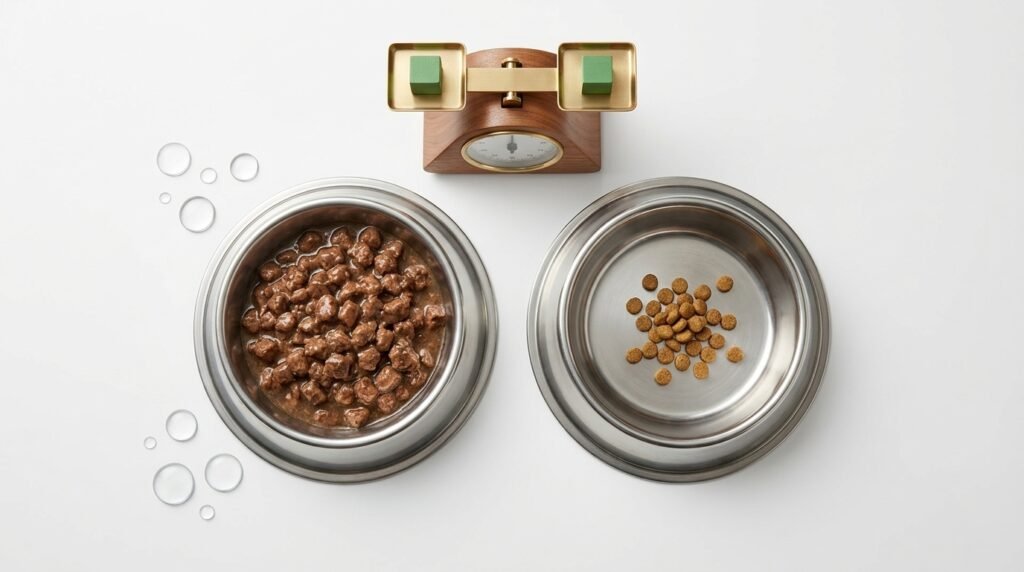
That does not mean wet food is nutritionally diluted or dry food is automatically richer in every nutrient. Water changes the numbers printed on the guaranteed analysis. In a wet vs dry dog food label comparison, protein, fat, and fiber should be assessed on a dry-matter basis.
Nutritional Quality Matters More Than Food Format
The first question in any wet vs dry dog food decision should not be, “Which format looks healthier?” It should be, “Is this a nutritionally adequate food for my dog?”
Look for a nutritional adequacy statement saying the food is complete and balanced for the appropriate life stage, such as growth, adult maintenance, or all life stages. According to the FDA, that claim generally means the product meets an AAFCO nutrient profile or passed an AAFCO feeding trial. A topper, treat, or complementary product may look like a meal but may not be designed to serve as the sole diet.
Use this label checklist:
- Nutritional adequacy: Confirm that the food is complete and balanced for your dog’s life stage.
- Calorie content: Find kilocalories per can, tray, pouch, cup, or kilogram. Calories—not container size—are essential for portions and costs.
- Feeding directions: Treat these as a starting point, then adjust with veterinary guidance according to body condition and weight trend.
- Guaranteed analysis: Compare similar-moisture foods directly. Convert wet and dry products to dry matter before comparing nutrient percentages.
- Manufacturer information: Favor companies that can explain formulation, quality control, and who develops their diets. The WSAVA nutrition toolkit provides useful questions for evaluating pet foods without endorsing a particular brand.
Do not judge quality only by the first ingredient or emotionally appealing words such as “premium,” “holistic,” or “natural.” Our guide to understanding dog food fillers explains why an ingredient’s nutritional function and the complete formula matter more than fear-based label reading.
How to compare wet and dry labels fairly
Suppose a canned food lists 10% protein and 78% moisture. Its dry matter is 22% because 100 minus 78 equals 22. Divide 10 by 22 and multiply by 100: the food is about 45.5% protein on a dry-matter basis.
Now suppose a kibble lists 25% protein and 10% moisture. Its dry matter is 90%. Divide 25 by 90 and multiply by 100: it is about 27.8% protein on a dry-matter basis.

This example does not prove that the canned food is better. It shows why as-fed numbers can mislead in a wet vs dry dog food comparison. Nutrient percentages also do not reveal digestibility, ingredient quality, total calories, or whether the nutrient balance suits a particular dog.
Moisture, Calorie Density, Portions, and Weight
Moisture is the largest physical difference in wet vs dry dog food. A dog eating canned food takes in water with every meal. That can be useful for an animal that does not drink enthusiastically, although every dog must still have constant access to fresh water.
Dry food contains much less water, so more calories fit into a smaller volume. This can be convenient for a highly active dog that needs substantial energy, but it also makes casual overpouring easier. A small-looking scoop can contain many calories.
Wet food often gives a larger-looking portion for the same calories. Some dogs may feel more satisfied by that meal volume, but wet food is not automatically a weight-loss food. Recipes vary widely. The correct comparison is calories in the amount actually served.
For consistent portions:
- Use a kitchen scale when practical; grams are more repeatable than an unlevel measuring cup.
- Record all food, treats, chews, toppers, and table bites.
- Check your dog’s body condition every few weeks rather than relying only on the number on the scale.
- Ask your veterinarian for a calorie target if your dog is underweight, overweight, growing, pregnant, nursing, highly active, or medically complex.
If you are unsure how calories translate into daily portions, rely on the product’s calorie statement and ask your veterinarian for an individualized target rather than making cup-to-can guesses.
Benefits and Limitations of Wet Dog Food
Wet food can be an excellent primary diet or a useful part of a mixed plan. In the wet vs dry dog food debate, its advantages come mostly from water content, aroma, and texture—not from an inherent ability to provide better nutrition than kibble.
Potential benefits
More dietary moisture: The high water content increases the amount of fluid consumed with meals. A veterinarian may recommend a moisture-rich feeding strategy for some individual health conditions, but do not make that medical decision from a general article.
Strong aroma and palatability: Wet diets are often appealing to picky dogs and dogs with reduced appetite. Warming a refrigerated portion slightly to room temperature can enhance aroma, provided it is handled safely and is not served hot.
Soft texture: A soft food may be more comfortable for dogs with missing teeth, mouth discomfort, or difficulty chewing. Sudden reluctance to chew, dropping food, facial swelling, bleeding, or bad breath warrants a veterinary dental examination rather than merely changing texture.
Larger meal volume per calorie: Because much of the product is water, an equivalent calorie allowance often occupies more bowl space than kibble. This may help some dogs feel satisfied.
Potential limitations
Higher daily cost: Cans and pouches are commonly more expensive per calorie, especially for large dogs. Comparing price per container exaggerates or hides the difference; calculate price per 100 calories instead.
Shorter life after opening: Open wet food must be covered, refrigerated, and used within the manufacturer’s stated time. Food left in the bowl can dry out or support microbial growth, so discard leftovers according to label guidance and local conditions.
More packaging and handling: Large dogs may require several containers per day. That means more storage space, waste, and bowl cleanup.
Easy to overfeed as a topper: Adding wet food to a full kibble ration adds calories. It must replace part of the dry allowance, not simply sit on top of it.
Benefits and Limitations of Dry Dog Food
Dry food is popular because it is practical, stable, and generally affordable. A fair wet vs dry dog food assessment recognizes that well-formulated kibble can be just as complete and balanced as a canned diet.
Potential benefits
Lower cost per calorie: Large bags are usually economical for medium and large dogs or multi-dog homes. Calculate the true daily cost from the food’s calorie content and your dog’s daily intake.
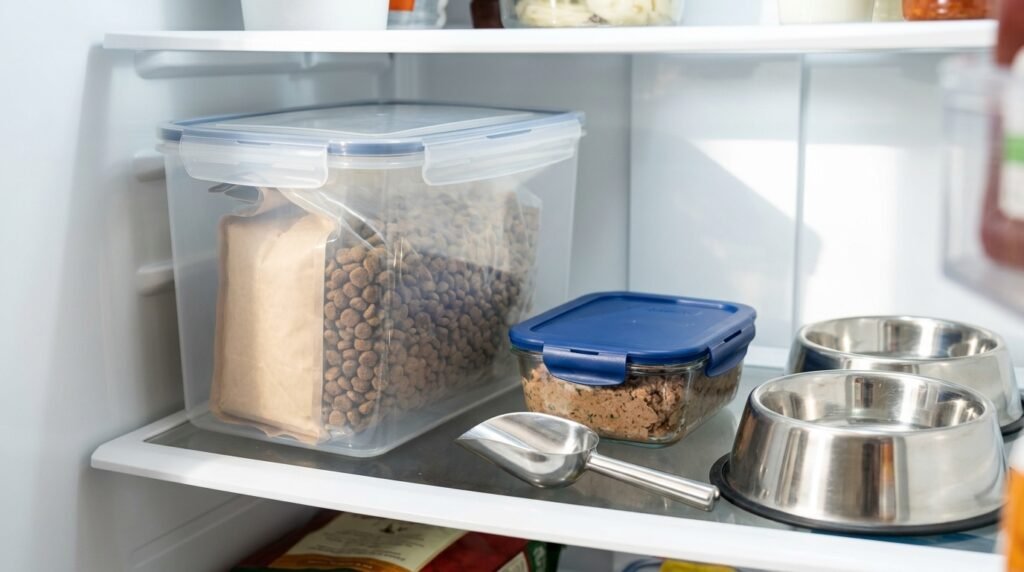
Convenient measurement and storage: Kibble is easy to weigh, pack for travel, and divide between meals. Keep it in its original bag—so the lot number and expiration information remain available—and place the closed bag inside a clean, lidded container.
Useful for training and enrichment: Part of the daily ration can go into puzzle feeders, scatter-feeding games, or reward-based training. Count those pieces as food, not free treats.
Calorie concentration: Dogs with high energy needs can receive more calories in a smaller volume. The same feature requires careful measurement in dogs prone to weight gain.
Potential limitations
Low dietary moisture: Dogs eating kibble must drink enough water separately. Fresh water should always be available; contact a veterinarian if drinking or urination changes noticeably.
May be hard to chew: Dogs with oral pain or certain jaw problems may struggle with hard pieces. Soaking kibble changes texture but does not treat the underlying problem.
Can become stale or rancid: Air, heat, moisture, and time degrade food. Buy a bag size your dog can finish within the manufacturer’s recommended period after opening, reseal it, and store it away from heat and humidity.
Ordinary kibble is not a complete dental program: Crunchiness alone does not guarantee meaningful plaque control. Certain specially designed dental diets have evidence for specific claims; the Veterinary Oral Health Council’s accepted product list identifies products awarded its seal. Most dogs still need home dental care and veterinary examinations.
Cost, Storage, and Everyday Convenience
Price tags do not give a fair wet vs dry dog food comparison because package sizes and calorie densities differ. Use this formula:
Cost per 100 calories = package price ÷ total package calories × 100
If a $3 can contains 400 calories, it costs $0.75 per 100 calories. If a $60 bag contains 12,000 calories, it costs $0.50 per 100 calories. A dog needing 800 calories daily would cost about $6 per day on the example canned food or $4 per day on the example kibble. These numbers are illustrations only; calculate them from the foods you are considering.
Remember that the cheapest food per pound may not be the cheapest per day, and a more expensive product is not automatically nutritionally superior. Also consider whether your dog reliably eats the food, whether the bag will remain fresh, and whether a special medical diet is required.
Safe storage habits
For dry food:
- Keep the product in its original bag, tightly closed.
- Place that bag inside a pest-resistant container rather than pouring food directly into an old bin.
- Store it in a cool, dry location—not a hot garage or humid porch.
- Wash and fully dry the storage container between bags.
- Retain the lot code until the food is finished in case of a recall.
For wet food:
- Check cans and pouches for swelling, leakage, broken seals, or severe dents.
- Refrigerate opened food promptly in a covered container.
- Follow the label’s after-opening time and temperature directions.
- Use clean utensils and wash bowls after meals.
- Discard food that smells abnormal or has been left out too long; when in doubt, throw it away.
The FDA maintains current pet food recalls and withdrawals and explains how consumers can report food-related problems.
How to Choose for Your Dog’s Needs
The most useful wet vs dry dog food choice is individualized. Start with complete and balanced nutrition, then consider the following factors.
Puppies
Choose a diet labeled complete and balanced for growth, including the appropriate statement for the expected adult size. Puppies need carefully controlled energy and nutrients; adult-maintenance food is not an adequate substitute. Either texture can work if the puppy can eat it comfortably and receives the correct calories.
Healthy adult dogs
For most healthy adults, wet, dry, or a measured combination can work. Base the decision on body condition, preference, budget, schedule, and how well the dog does over time: stable weight, normal stool, healthy skin and coat, good energy, and reliable appetite.
Senior dogs
Age alone does not dictate canned food. Some seniors enjoy kibble and maintain healthy teeth and appetite; others benefit from softer texture or stronger aroma. A new appetite change, weight loss, increased thirst, or chewing difficulty deserves veterinary assessment because it may reflect illness rather than pickiness.
Picky eaters
Wet food’s smell may encourage eating, but repeatedly upgrading the bowl after refusal can unintentionally teach a healthy dog to wait for extras. Maintain a predictable routine and rule out pain, nausea, dental disease, and other health problems if appetite changes. A dog that refuses food and seems ill, repeatedly vomits, has a swollen abdomen, appears weak, or cannot keep water down needs prompt veterinary care.
Dogs with weight concerns
Format alone does not cause or cure obesity. Total calorie intake is decisive. Wet food’s volume may help some dogs, while precisely weighed kibble may be easier for other households. Work with your veterinary team on a target weight, calorie allowance, treat budget, and recheck schedule.
Dogs with medical conditions
Kidney, urinary, gastrointestinal, pancreatic, heart, endocrine, allergy, and dental conditions can change the appropriate nutrient profile or texture. Do not select food solely because an internet list says wet or dry is “best” for a diagnosis. Veterinary therapeutic diets are formulated for particular purposes and should be chosen with professional guidance.
Owners considering home-prepared food should also understand that format and nutritional adequacy are separate questions. Review our vet-informed homemade dog food guide before replacing a complete commercial diet with a recipe.
Can You Mix Wet and Dry Dog Food?
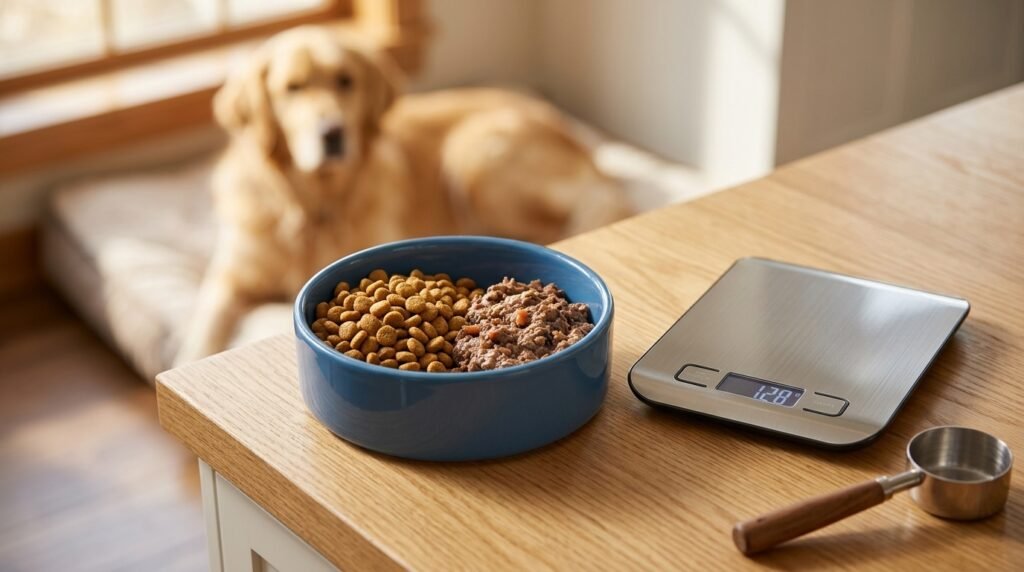
Yes, many healthy dogs can eat both formats, provided each product is appropriate and the total ration supplies the right calories. This wet vs dry dog food compromise can add moisture and aroma while keeping some of kibble’s convenience and lower cost.
The critical rule is substitution. Do not serve the full recommended dry portion plus the full recommended wet portion.
Suppose your dog needs 600 calories daily. You decide to provide 25% from wet food and 75% from dry food:
- Wet-food target: 600 × 0.25 = 150 calories
- Dry-food target: 600 × 0.75 = 450 calories
Use each label’s calorie content to convert those targets into cans, pouches, cups, or—preferably—grams. Recheck weight and body condition because label directions are estimates.
When introducing a new product, change gradually unless your veterinarian instructs otherwise. A common approach is to increase the new food over about seven days while decreasing the old food, but sensitive dogs may need longer. The PawMindTips dog food transition guide provides a structured switching schedule and signs to monitor.
Stop the transition and call your veterinarian if your dog develops repeated vomiting, persistent diarrhea, blood in vomit or stool, marked lethargy, facial swelling, hives, breathing difficulty, or refusal of food and water. Breathing difficulty, collapse, or rapidly progressing facial swelling is an emergency.
FAQs About Wet vs Dry Dog Food
Is wet food or dry food healthier for dogs?
Neither format is universally healthier. In wet vs dry dog food, a complete and balanced product that fits the dog’s life stage, calorie needs, health, and tolerance can be appropriate in either form. Evaluate the formulation and the individual dog rather than assuming moisture level determines quality.
Is it okay to feed a dog wet food every day?
Yes. The wet vs dry dog food question does not prevent daily wet feeding if the product is complete and balanced for the dog’s life stage, correctly portioned, safely stored, and suitable for that dog’s health. Toppers and supplemental foods should not replace a complete diet unless a veterinarian directs otherwise.
Does wet dog food cause dental problems?
In a wet vs dry dog food comparison, wet food does not automatically cause dental disease, and ordinary kibble does not replace brushing or veterinary dental care. Some specially formulated dental diets have validated benefits, but texture alone is not a full dental plan.
Can I switch from dry food to wet food immediately?
When changing your wet vs dry dog food routine, a gradual transition is usually easier on the digestive system. Replace a small portion of the old diet with the new one and increase it over about a week, or more slowly for sensitive dogs. Follow veterinary instructions when a rapid medical diet change is necessary.
Conclusion
The right answer to wet vs dry dog food is the format—or measured combination—that delivers complete and balanced nutrition, appropriate calories, safe handling, and a good fit for your individual dog. Wet food offers moisture, aroma, softer texture, and more volume per calorie. Dry food usually offers lower cost per calorie, convenient storage, easy portioning, and usefulness in training and enrichment.
Compare calorie content rather than package size, compare unlike nutrient labels on a dry-matter basis, and monitor body condition and digestive tolerance. If your dog has a medical condition, unexplained appetite or weight changes, trouble chewing, or persistent digestive signs, ask your veterinarian to guide the decision.