
If you’re wondering, why is my dog breathing fast, the first thing to consider is what your dog was doing just before you noticed it. Fast breathing can be completely normal after exercise, excitement, heat, or stress. But breathing that stays unusually fast while your dog is resting or sleeping can sometimes point to pain, heart or lung disease, airway problems, or another medical issue.
The key is to look at more than the speed of your dog’s breathing. You should also consider breathing effort, gum color, posture, behavior, and other symptoms.
In this guide, you’ll learn how to tell normal fast breathing from potentially abnormal breathing, how to count your dog’s resting respiratory rate, seven possible causes, and the warning signs that mean your dog needs prompt veterinary attention.
Table of Contents
Is Fast Breathing Normal for Dogs?
Yes, dogs can breathe much faster than normal for short periods without being sick.
After running, playing, getting excited, feeling stressed, or becoming overheated, a healthy dog may pant rapidly. Breathing should generally begin to settle once the dog is calm, cool, and resting.
For a calm or sleeping dog, veterinary sources commonly describe a resting respiratory rate around 15–30 breaths per minute. VCA Animal Hospitals notes that a resting or sleeping rate consistently above 30 breaths per minute is considered increased, although your veterinarian may use a different threshold for an individual dog. VCA’s guide to measuring a dog’s resting breathing rate
That means the question isn’t simply, “Is my dog’s breathing fast?”
A better question is:
“Is my dog’s breathing faster than expected for the situation, and is my dog having difficulty breathing?”
For example:
- Fast breathing immediately after a game of fetch can be normal.
- Panting during a hot afternoon may be expected.
- Faster breathing during excitement may be temporary.
- Rapid breathing that continues while your dog is sleeping deserves more attention.
- Fast breathing combined with obvious breathing effort can be an emergency.
Merck Veterinary Manual explains that an increased breathing rate can occur in healthy animals after vigorous exercise or anxiety, but it can also be associated with respiratory disease and other serious problems. Merck Veterinary Manual: Clinical Signs of Respiratory Disease in Animals
If your dog regularly seems unusually tired during normal activity, don’t automatically assume they simply need more exercise. Instead, consider whether their exercise tolerance has changed. You can also review our guide on how much exercise a dog needs to understand normal activity expectations.
How to Check Your Dog’s Breathing Rate at Home
If you’re asking why is my dog breathing fast, measuring the breathing rate while your dog is calm or asleep can give you useful information.
You don’t need special equipment.
Step 1: Wait Until Your Dog Is Calm
Choose a time when your dog is:
- Resting quietly
- Sleeping
- Not playing
- Not excited
- Not immediately coming in from outside
- Not actively panting from heat or exercise
A sleeping dog is often easiest to measure because excitement can temporarily increase breathing.
Step 2: Watch the Chest
Look at your dog’s chest.
One complete rise and fall equals one breath.
You can watch from a short distance without disturbing your dog.

Step 3: Count for 30 Seconds
Count the number of complete breaths in 30 seconds.
Then multiply that number by two.
For example:
- 8 breaths in 30 seconds = 16 breaths/minute
- 12 breaths in 30 seconds = 24 breaths/minute
- 15 breaths in 30 seconds = 30 breaths/minute
- 20 breaths in 30 seconds = 40 breaths/minute
VCA recommends counting resting or sleeping breaths and repeating measurements when necessary rather than relying on one isolated reading. VCA’s Home Breathing Rate Evaluation
Step 4: Look at the Effort, Not Just the Number
This is extremely important.
A dog can have a breathing rate that doesn’t look dramatically high but still be struggling to breathe.
Watch for:
- Strong abdominal movement
- Chest and belly working unusually hard
- Neck stretched forward
- Elbows held away from the body
- Open-mouth breathing while resting
- Noisy breathing
- Difficulty settling down
- Refusing to lie down
Merck describes this type of posture as a sign of respiratory distress. Dogs may stand with their elbows away from their body, extend their head and neck, or alter their posture to make breathing easier. Merck Veterinary Manual: Respiratory Disease Signs
Track the Pattern
One elevated reading does not automatically tell you what is happening.
If your dog is otherwise comfortable, you can repeat the measurement after they have been resting quietly.
If the resting rate remains consistently elevated, contact your veterinarian.
If fast breathing is accompanied by obvious difficulty breathing, abnormal gum color, weakness, collapse, or other severe symptoms, seek emergency veterinary care.
Why Is My Dog Breathing Fast? 7 Possible Causes
There are many possible explanations for rapid breathing. Some are temporary and harmless, while others require veterinary evaluation.
Here are seven important possibilities.
1. Exercise, Heat, or Excitement
The most obvious reason for fast breathing is physical activity.
Dogs rely heavily on panting to help regulate body temperature. After running, playing, walking, or getting excited, their breathing can become much faster.
Heat can also cause rapid panting.
This is particularly important during warm weather. If your dog has been outside, exercising, or playing in hot conditions, move them to a cooler environment and allow them to rest.
However, don’t assume all heavy panting is simply heat-related.

If your dog continues breathing rapidly after they’ve cooled down and rested, or if they develop weakness, confusion, vomiting, collapse, or significant breathing difficulty, veterinary attention is needed.
If you’re planning summer activities, our guide on how much exercise a dog needs can help you think about activity levels, rest periods, and environmental conditions.
2. Stress, Anxiety, or Fear
Emotional stress can make a dog’s breathing noticeably faster.
Common triggers include:
- Thunderstorms
- Fireworks
- Car rides
- Veterinary visits
- New environments
- Separation from an owner
- Unfamiliar people or animals
- Loud noises
A stressed dog may also pace, tremble, hide, whine, lick their lips, yawn, or have difficulty settling.
If your dog’s rapid breathing consistently appears during stressful situations, the underlying anxiety may deserve attention.
For dogs that become nervous easily, our guide on how to help a nervous dog explains practical ways to create a calmer environment and build confidence.
Likewise, if breathing changes mainly occur when your dog is left alone, understanding the signs of separation anxiety in dogs may help you identify whether stress is contributing to the behavior.
But anxiety should not automatically be blamed for unexplained rapid breathing. A dog can be stressed because they are uncomfortable or sick, so persistent symptoms should be evaluated rather than dismissed as behavioral.
3. Pain or Discomfort
Dogs may breathe faster when they are experiencing pain.
Sometimes the source is obvious, such as an injury. In other cases, the cause may be difficult to recognize.
Possible accompanying signs include:
- Restlessness
- Difficulty getting comfortable
- Whining
- Reluctance to move
- Changes in posture
- Reduced appetite
- Trembling
- Panting without recent exercise
Some dogs hide pain surprisingly well, so a change in breathing may be one of the clues that something is wrong.
PetMD notes that pain is among the conditions that can cause heavy breathing in dogs, along with respiratory and cardiovascular problems. PetMD: Dog Breathing Heavy? Why It Happens and When to Worry
Do not give your dog human pain medication unless a veterinarian specifically instructs you to do so. Some medications that are safe for people can be dangerous for dogs.
4. Respiratory or Lung Problems
Problems affecting the nose, throat, airways, or lungs can cause rapid breathing.
Examples include:
- Pneumonia
- Bronchitis
- Airway inflammation
- Tracheal problems
- Foreign material in the airway
- Certain lung diseases
- Fluid affecting the lungs or chest
- Other respiratory disorders
Fast breathing may occur along with coughing, nasal discharge, wheezing, unusual respiratory sounds, shallow breathing, or reduced exercise tolerance.
Merck Veterinary Manual lists tachypnea, or increased breathing rate, along with labored breathing, coughing, abnormal respiratory sounds, and exercise intolerance among signs associated with respiratory disease. Merck Veterinary Manual: Clinical Signs of Respiratory Disease in Animals
This is one reason you shouldn’t judge your dog’s condition based on breathing rate alone.
For example, 35 breaths per minute in a relaxed dog with completely comfortable breathing may mean something different from 25 breaths per minute accompanied by obvious abdominal effort.
5. Heart Disease
Heart problems can sometimes cause changes in breathing.
When the heart isn’t functioning normally, fluid can accumulate in or around the lungs in certain conditions. This can make breathing faster or more difficult.
A persistent increase in resting or sleeping respiratory rate can be an important clue in dogs with heart disease.
VCA specifically notes that an increased resting or sleeping breathing rate can be an early sign associated with developing heart failure, which is why veterinarians may ask owners to monitor breathing rates at home. VCA’s Home Breathing Rate Evaluation
Other possible signs of heart disease can include:
- Coughing
- Reduced exercise tolerance
- Weakness
- Fainting or collapse
- Difficulty breathing
- Restlessness
- Reduced ability to perform normal activities
A dog with known heart disease may benefit from having their sleeping respiratory rate tracked consistently according to their veterinarian’s recommendations.
6. Anemia or Reduced Oxygen Delivery
Another possible explanation for rapid breathing is a problem with the blood’s ability to carry oxygen.
Anemia means there are fewer red blood cells or less hemoglobin available to transport oxygen. The body may compensate by increasing breathing and heart rate.
Potential causes of anemia in dogs are numerous, including blood loss and certain diseases.
You may also notice:
- Pale gums
- Weakness
- Reduced stamina
- Lethargy
- Faster heart rate
- Decreased interest in normal activity
Because many different conditions can cause anemia, rapid breathing associated with weakness or pale gums should not be treated as something to monitor indefinitely at home.
A veterinarian may need to perform a physical examination and blood testing to determine what is happening.
7. Other Medical Conditions
Fast breathing is a symptom rather than a diagnosis.
That means there are many other possible causes besides the seven broad categories above.
Depending on the dog’s history and other signs, veterinarians may consider conditions involving:
- The airways
- Lungs
- Heart
- Blood
- Pain
- Infection
- Hormonal disorders
- Trauma
- Toxins
- Abdominal or chest problems
For example, severe trauma can affect breathing even when an injury isn’t immediately obvious.
Merck notes that veterinary evaluation of respiratory disease may involve a detailed history, physical examination, and diagnostic testing such as chest imaging or oxygen-related measurements depending on the patient’s condition. Merck Veterinary Manual: Diagnostic Techniques for Respiratory Disease
This is why searching for a single cause online can be misleading. The same symptom—rapid breathing—can occur with very different problems.
Fast Breathing vs. Labored Breathing: What’s the Difference?
This distinction is one of the most important things dog owners can learn.
Fast breathing means the dog is taking breaths more frequently than expected.
Labored breathing means the dog appears to be working harder than normal to move air.
A dog can have one without the other, although they can occur together.
Signs of potentially labored breathing include:
- Belly visibly pushing with each breath
- Strong chest movement
- Neck extended forward
- Elbows positioned away from the body
- Open-mouth breathing at rest
- Noisy or abnormal breathing
- Difficulty lying down
- Restlessness or inability to settle
- Blue, gray, purple, or unusually pale gums
- Collapse or severe weakness
Merck identifies open-mouth breathing, abnormal gum color, and characteristic posture changes as observable signs of respiratory distress. These signs can indicate severe impairment of breathing and may precede respiratory failure. Merck Veterinary Manual: Clinical Signs of Respiratory Disease
If your dog is visibly struggling to breathe, don’t spend a long time trying to determine the exact respiratory rate first.
The effort and associated symptoms matter more.
When Is Fast Breathing an Emergency?
Some situations require immediate veterinary attention.
Go to an emergency veterinarian or contact an emergency veterinary service immediately if your dog has rapid breathing together with signs such as:
- Obvious difficulty breathing
- Blue, purple, gray, or very pale gums
- Collapse
- Severe weakness
- Inability to lie down comfortably
- Neck stretched out while trying to breathe
- Strong abdominal breathing
- Open-mouth breathing at rest
- Severe or rapidly worsening breathing
- Loss of consciousness
- Frothy or unusual fluid from the mouth or nose
- Suspected choking or airway obstruction
Merck Veterinary Manual considers breathing difficulty one of the problems that can require immediate emergency treatment. Merck Veterinary Manual: Evaluation and Initial Treatment of Dog and Cat Emergencies
PetMD similarly advises immediate veterinary evaluation when a dog has unexplained heavy breathing, especially when accompanied by abnormal gum color, weakness, collapse, an extended neck, inability to settle, or other concerning symptoms. PetMD: Dog Breathing Heavy? Why It Happens and When to Worry
What Should You Do While Getting Help?
If your dog appears to be struggling to breathe:
- Stay as calm as possible.
- Keep your dog quiet and minimize activity.
- Move them away from excessive heat.
- Avoid forcing food or water.
- Do not give medications unless directed by a veterinarian.
- Call the veterinary hospital while preparing to leave.
- If possible, take a short video of the breathing pattern for the veterinarian, but do not delay emergency care to record it.
Breathing emergencies can deteriorate quickly, so professional assessment should take priority over trying home remedies.
What If My Dog Is Breathing Fast but Acting Normal?
This is one of the most confusing situations for owners.
A dog may appear completely normal while breathing faster than expected.
If your dog has just exercised, played, become excited, or experienced stress, temporary fast breathing may be normal.
But if your dog is quietly resting or sleeping and the breathing rate remains consistently elevated, don’t ignore it simply because they are eating, walking, and behaving normally.
VCA recommends repeating an elevated resting or sleeping measurement and contacting a veterinarian if the increase remains consistent. VCA’s Home Breathing Rate Evaluation
Pay attention to the trend.
For example, if your dog’s normal sleeping respiratory rate has historically been around 18–22 breaths per minute but suddenly begins measuring around 35–40 repeatedly, that change is worth discussing with your veterinarian.
The exact number matters, but a meaningful change from your dog’s normal pattern can also be important.
What Will a Veterinarian Check?
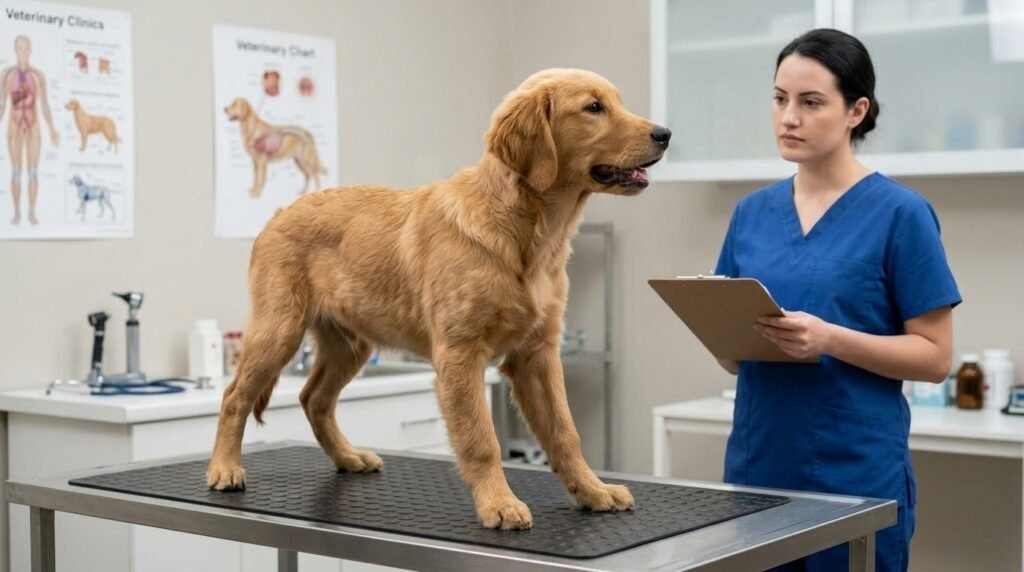
If your dog has persistent rapid breathing, the veterinarian will first try to determine whether the problem involves the lungs, airways, heart, blood, pain, or another body system.
The evaluation may include:
- Medical history
- Physical examination
- Heart and lung auscultation
- Respiratory rate and effort assessment
- Gum color assessment
- Blood testing
- Chest X-rays
- Other imaging
- Oxygen measurements
- Additional tests based on the suspected cause
Merck notes that chest and neck X-rays may be useful when airway obstruction is suspected, while chest imaging is commonly used when dogs show lower respiratory signs such as rapid shallow breathing or difficulty breathing. Merck Veterinary Manual: Diagnostic Techniques for Respiratory Disease
The exact tests depend on the dog’s symptoms and how stable they are.
If the dog is in significant respiratory distress, stabilization and oxygen support may take priority over extensive diagnostic testing.
How to Monitor Your Dog’s Breathing at Home
If your veterinarian recommends monitoring your dog’s resting or sleeping respiratory rate, consistency is more useful than random measurements.
Try to measure at approximately the same time each day when your dog is relaxed.
Record:
- Date
- Time
- Breaths per minute
- Whether your dog was asleep or awake
- Any coughing
- Changes in breathing effort
- Other unusual symptoms
A simple log can help you and your veterinarian identify a trend.
This can be particularly useful for dogs that already have diagnosed heart or respiratory conditions.
Don’t become overly focused on a single number, though. Always consider the entire picture.
If your dog’s breathing rate is elevated and they appear uncomfortable, weak, distressed, or abnormal in another way, contact a veterinarian promptly.
FAQs
1. Why is my dog breathing fast while resting?
Fast breathing while resting can have several possible causes, including pain, stress, respiratory disease, heart disease, heat, or other medical problems. A calm or sleeping dog generally has a lower respiratory rate than a dog that has just exercised. If the breathing remains consistently elevated while your dog is resting, contact your veterinarian for advice.
2. How many breaths per minute is normal for a sleeping dog?
A commonly cited resting or sleeping respiratory rate for dogs is about 15–30 breaths per minute. VCA considers a consistently higher rate abnormal, although the appropriate threshold can vary between individual dogs and medical conditions. VCA’s Home Breathing Rate Evaluation
3. Should I worry if my dog is breathing fast but acting normal?
Not necessarily, especially if your dog has recently exercised, become excited, felt stressed, or been exposed to heat. However, persistent rapid breathing during quiet rest or sleep should not be dismissed simply because your dog appears normal. Measure the resting rate again and contact your veterinarian if it remains elevated.
4. When should I take my dog to the vet for fast breathing?
Seek immediate veterinary care if fast breathing is accompanied by obvious breathing difficulty, blue or gray gums, collapse, severe weakness, open-mouth breathing at rest, strong abdominal effort, an extended neck, inability to settle, or other signs of respiratory distress. Difficulty breathing can be an emergency. Merck Veterinary Manual: Evaluation and Initial Treatment of Dog and Cat Emergencies
Conclusion
If you’re asking why is my dog breathing fast, don’t judge the situation based on breathing speed alone.
First consider what your dog was doing. Exercise, heat, excitement, and stress can temporarily increase breathing. Once your dog is calm, however, breathing should generally become slower and more comfortable.
For a resting or sleeping dog, counting breaths can provide useful information. A rate that stays consistently elevated deserves a conversation with your veterinarian, particularly if it represents a clear change from your dog’s usual pattern.
Most importantly, watch for breathing effort and emergency warning signs. Strong abdominal movement, an extended neck, open-mouth breathing at rest, abnormal gum color, collapse, or obvious difficulty getting air are much more concerning than a mildly elevated number alone.
When in doubt—especially if your dog appears to be struggling to breathe—don’t wait for the symptom to resolve on its own. Breathing difficulty can be an emergency, and prompt veterinary care can make a critical difference.