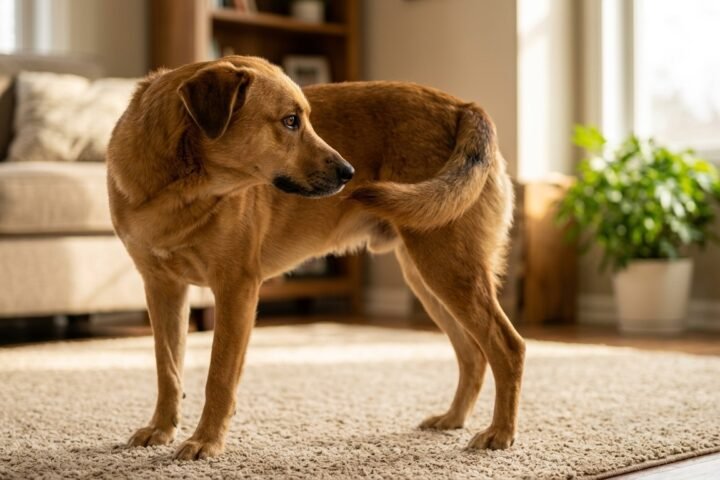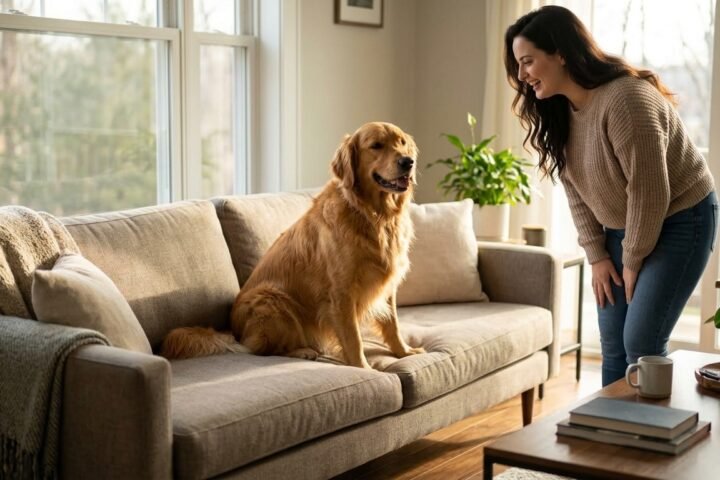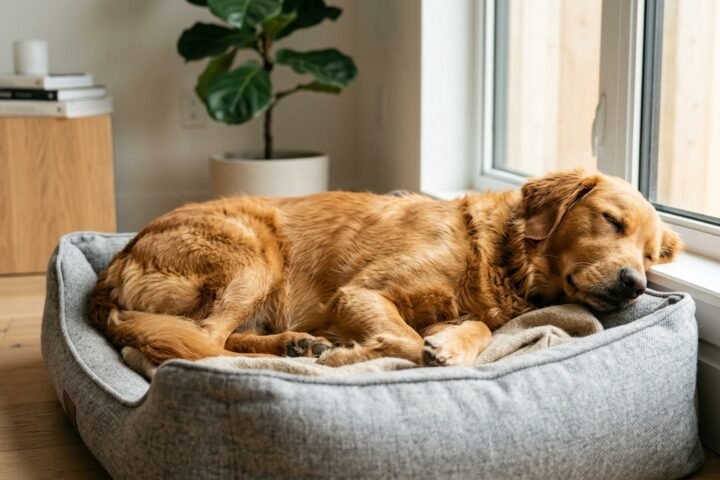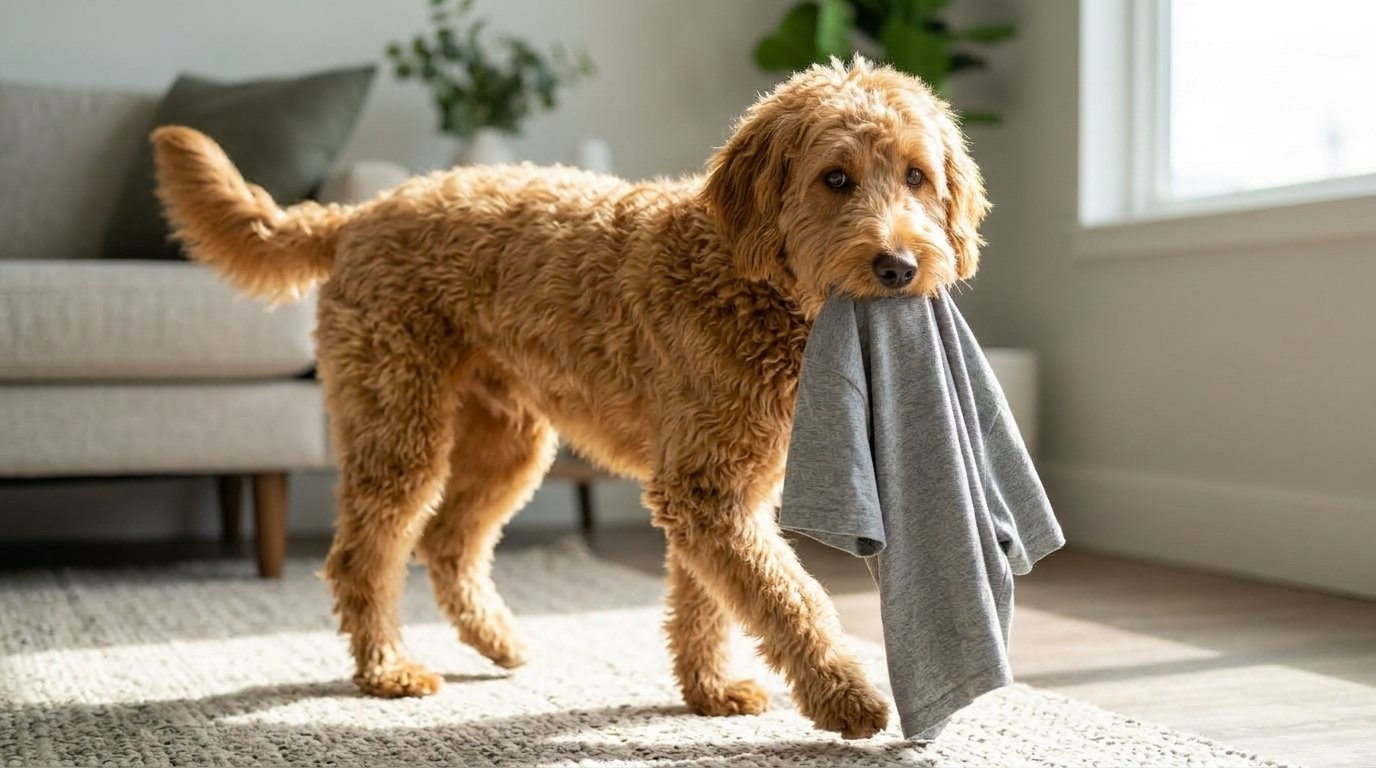
Dogs steal clothes because familiar smells, soft textures, play, and attention can make laundry rewarding. Some carry a shirt to their bed; others grab socks to start a chase. If you’re wondering, “Why does my dog steal my clothes?”, watch what happens before and after they take an item.
Start by keeping laundry out of reach, avoiding chase games, and practicing a reward-based “drop it” cue with safe toys. Clothing theft alone does not mean separation anxiety. If your dog swallows a sock or other fabric, contact your veterinarian promptly rather than waiting for symptoms.
Table of Contents
Why Does My Dog Steal My Clothes?
One common reason is that your clothes carry your familiar scent
Dogs experience their environment through an exceptionally powerful sense of smell, so an item that seems ordinary to you can contain a large amount of information for your dog. Dirty shirts, socks, underwear, and workout clothes can carry particularly familiar personal scents. AKC explains that dogs are often attracted to clothing because of the information and familiar scent it carries.
But scent is only part of the picture.
If your dog takes your shirt and quietly carries it to their bed, the behavior may be very different from a dog that grabs a sock, waits for you to chase them, and then turns it into a game.
Look at the whole sequence:
What happens before the theft → what your dog does with the clothing → how you respond → what happens afterward.
That pattern can reveal the motivation.
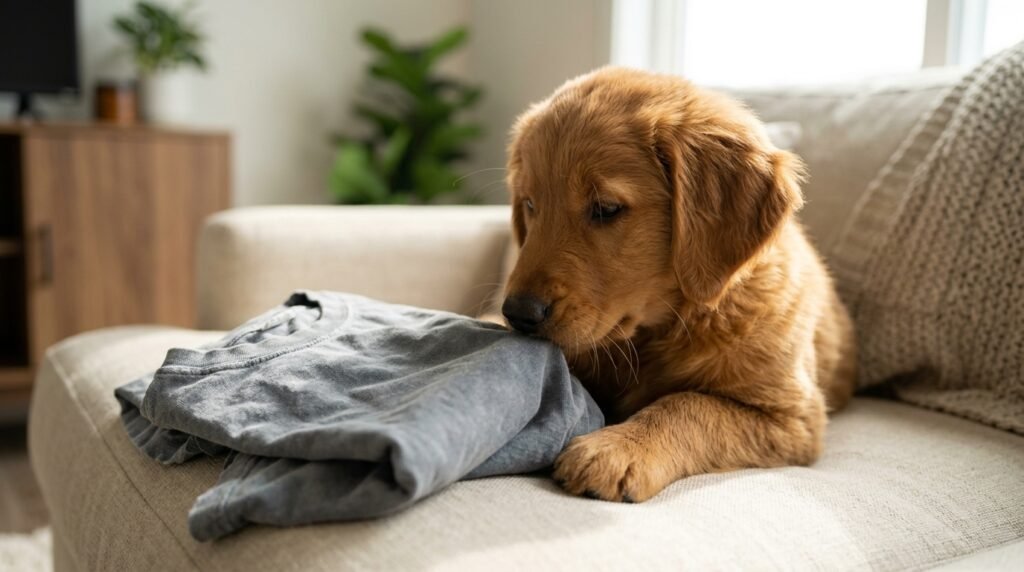
7 Reasons Your Dog May Steal Your Clothes
1. Your clothes smell strongly like you
Your dog may simply be attracted to your scent.
A worn shirt or pair of socks carries odors that tell your dog something about you. For a human, a dirty sock is something to wash. For a dog, it can be a highly recognizable object associated with a trusted person.
This is especially likely when your dog:
- Sniffs the clothing carefully
- Carries it without destroying it
- Takes it to their bed
- Lies beside it
- Chooses worn clothes over other household objects
This does not necessarily mean your dog is anxious or overly dependent.
Sometimes the simplest explanation is that your scent is familiar and interesting.
That same scent-based attachment can help explain why some dogs follow their owners around the house. If you have noticed similar behavior, you may also find our guide to why dogs follow their owners everywhere useful.
2. Your scent makes your dog feel comfortable
Some dogs seem to use familiar-smelling objects as a source of comfort.
This can happen when you are away from home, during changes in routine, or when your dog is resting alone.
A sweatshirt on the couch may become more attractive than an ordinary blanket because it smells like the person your dog knows best.
However, it is important not to jump from “my dog likes my scent” to “my dog has separation anxiety.”
Those are not the same thing.
A relaxed dog may enjoy sleeping on your shirt while you are away and still be perfectly comfortable spending time independently.
A dog with genuine separation-related distress may show much stronger signs when left alone, such as persistent vocalization, pacing, destructive behavior, escape attempts, or inability to settle. If you notice those patterns, our guide to separation anxiety in dogs can help you understand the difference.
3. Your dog has learned that stealing clothes gets attention
Sometimes the clothing is not the real reward.
You are.
Imagine this sequence:
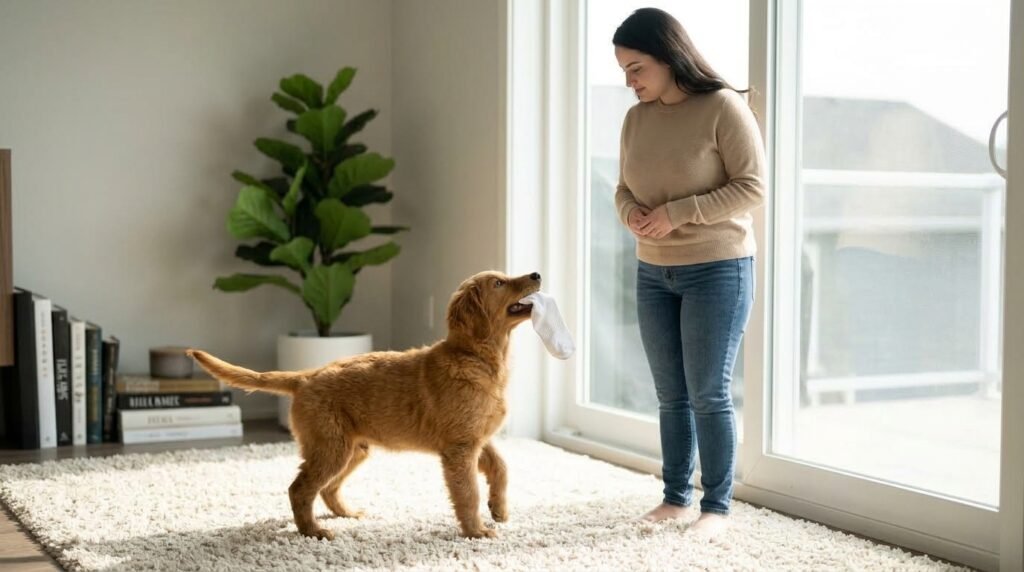
Your dog grabs your sock.
You say, “Hey!”
Your dog runs.
You follow.
Your dog dodges around the couch.
You reach for the sock.
Your dog pulls away.
From your perspective, you are trying to get your property back.
From your dog’s perspective, you may have just started a fantastic game.
Veterinary behavior guidance notes that stealing can continue because dogs enjoy the chase and attention they receive when owners try to retrieve the object.
This creates a simple learning pattern:
Steal clothing → human reacts → exciting interaction begins.
If this happens repeatedly, your dog may start stealing clothes specifically because the behavior reliably produces attention.
That is one reason chasing your dog around the house usually is not the best response.
4. Your dog wants to play
Clothing can be an unusually convenient toy.
It is soft.
It moves easily.
It smells interesting.
And when your dog grabs it, you may immediately become involved.
For some dogs, especially young or energetic dogs, the entire sequence becomes a game.
This is particularly likely if your dog steals clothes and then:
- Runs away from you
- Bounces around
- Invites you to chase
- Drops the clothing and grabs it again
- Tries to start tugging
- Looks excited rather than fearful
The answer is not necessarily to punish the behavior.
Instead, provide better opportunities for play and teach your dog that appropriate toys are more rewarding.
Dogs naturally explore objects through sniffing, mouthing, and chewing. VCA notes that chewing can serve several normal functions, including exploration, play, teething, and satisfying a natural chewing urge.
5. Your dog enjoys chewing soft objects
Some dogs are simply enthusiastic chewers.
Clothing happens to have an appealing texture.
Socks, underwear, sleeves, and other fabric items can be easy to grab and manipulate with the mouth.
Puppies may be especially interested because they are constantly exploring their environment and developing preferences for objects they can chew.
But an important distinction exists between chewing and eating.
If your dog chews your shirt and spits out the pieces, you still need to manage the behavior. If your dog routinely swallows fabric, the safety concern becomes much greater.
Repeated ingestion of non-food objects can be associated with pica or other behavioral or medical problems. VCA explains that pica involves persistent ingestion of non-food items and that swallowed materials can cause gastrointestinal obstruction and other complications.
6. Your dog is bored or needs more appropriate enrichment
Sometimes your clothes are simply the most interesting thing available.
If your dog has few opportunities to explore, sniff, chew, play, train, or solve simple problems, household objects can become entertainment.
That does not automatically mean your dog needs dramatically more exercise.
Instead, consider whether their day contains a healthy mix of:
- Physical activity
- Sniffing opportunities
- Short training sessions
- Interactive play
- Safe chewing
- Food-based enrichment
- Rest
- Social interaction
Your dog’s needs will vary according to age, health, breed tendencies, and individual temperament.
Try rotating appropriate toys instead of leaving every toy available all the time. A toy that has disappeared for a week can become interesting again when it returns.
You can also create simple scent games, practice basic cues, or use an appropriate food puzzle.
The goal is to give your dog legal ways to investigate, chew, and make choices.
7. Anxiety, insecurity, or another issue may be involved
Clothing theft by itself does not diagnose anxiety.
However, the behavior deserves more attention when it appears alongside other signs of distress.
For example, consider whether your dog:
- Becomes distressed when you prepare to leave
- Searches for your clothing immediately after you leave
- Vocalizes or paces when alone
- Damages doors or windows
- Cannot settle without you
- Shows sudden changes in behavior
- Becomes unusually clingy
- Repeatedly destroys or swallows clothing
A dog may use a familiar scent as part of a comfort-seeking pattern, but that does not mean every dog that steals laundry has separation anxiety.
Context matters.
If you are seeing fear, anxiety, or a major change in behavior, focus on the complete pattern rather than trying to diagnose the cause from clothing theft alone.
Why Does My Dog Prefer Socks and Underwear?
Socks and underwear are common targets because they can carry strong, familiar human scents and are small enough for dogs to grab and carry easily.
Workout clothes may also be attractive because they can retain strong personal odors.
That does not mean your dog understands the human distinction between “clean” and “dirty.”
Your dog is responding to sensory information, texture, accessibility, and learned associations.
Some dogs also discover that stealing a sock produces a dramatic reaction from their owner.
That can make socks especially valuable—not because the dog understands their importance, but because the interaction surrounding them has become rewarding.
This is also why repeatedly yelling at your dog may make the problem worse.
Is Stealing Clothes a Sign of Separation Anxiety?
Not necessarily.
A dog can steal your clothing without having separation anxiety.
For example, a dog may grab your T-shirt because:
- It smells like you.
- It is soft.
- It is fun to carry.
- It is easy to chew.
- You react dramatically.
- The dog wants something to do.
A dog with separation anxiety is more likely to show a broader pattern of distress related to being separated from an attachment figure.
Your dog might steal your clothes and still happily sleep in another room.
That is very different from a dog who becomes panicked whenever you leave.
If you suspect anxiety, look at what happens when you actually leave, not only what your dog does with your laundry.
For more information about recognizing nervous behavior, you can also read how to help a nervous dog feel safe at home.
When Stealing Clothes Becomes Dangerous
The biggest concern is not usually the theft itself.
It is swallowing the clothing.
Fabric can become dangerous if a dog tears pieces off and ingests them. Socks, underwear, shoelaces, and other laundry can create choking hazards or intestinal blockages. AKC specifically warns that swallowed laundry can create serious risks.
Watch especially closely if your dog:
- Tears fabric into pieces
- Swallows socks or underwear
- Repeatedly eats non-food objects
- Guards stolen clothing
- Vomits after swallowing an object
- Develops reduced appetite
- Becomes unusually tired
- Shows abdominal discomfort
- Has difficulty passing stool
If you know your dog swallowed clothing, contact your veterinarian promptly for advice rather than waiting for symptoms to appear.
If your dog repeatedly consumes non-food objects, veterinary evaluation is particularly important because pica can have behavioral and medical contributors.
How to Stop Your Dog From Stealing Your Clothes
The most effective approach combines management, redirection, and training.
1. Remove easy access to laundry
This is the simplest step.
Keep:
- Dirty laundry in a secure hamper
- Clean clothes in closets or drawers
- Socks off the floor
- Underwear inaccessible
- Laundry-room doors closed when necessary
You should not expect a dog to repeatedly resist a highly rewarding temptation when you can simply remove access.
ASPCA also recommends keeping clothing and laundry inaccessible when dogs are developing inappropriate chewing habits.
2. Do not turn theft into a chase game
If your dog grabs a harmless piece of clothing and you immediately chase them, you may accidentally reward the behavior.
Instead, stay calm.
Call your dog cheerfully or offer something better, such as an appropriate toy or a small reward.
When the dog releases the clothing, reward the choice.
3. Teach “drop it”
“Drop it” can be extremely useful when your dog already has an object.
Start with an appropriate toy rather than your favorite shirt.
Let your dog hold the toy.
Present a high-value reward.
When your dog releases the toy, mark the behavior and reward them.
Then repeat.
Over time, your dog learns:
Giving something up makes good things happen.
This is much safer than repeatedly forcing objects out of your dog’s mouth.
For a step-by-step practice plan, follow our guide to how to teach a dog to drop it
4. Teach “leave it”
“Leave it” is useful before your dog picks something up.
Begin with an easy, low-value item and gradually increase the difficulty.
Reward your dog for turning away from the object and choosing you instead.
VCA recommends positive reinforcement and cues such as “leave it” and “drop it” when addressing inappropriate ingestion behaviors.
5. Give your dog better things to do
If your dog steals clothes because they are fun, make appropriate activities more rewarding.
Try:
- Durable chew toys
- Food puzzles
- Scent games
- Short training sessions
- Fetch
- Tug with rules
- Supervised chewing
- Toy rotation
You can also provide a predictable daily routine with appropriate exercise and enrichment. A consistent routine can make it easier for dogs to understand what happens next and when they have opportunities for activity and rest.
6. Reward calm independence
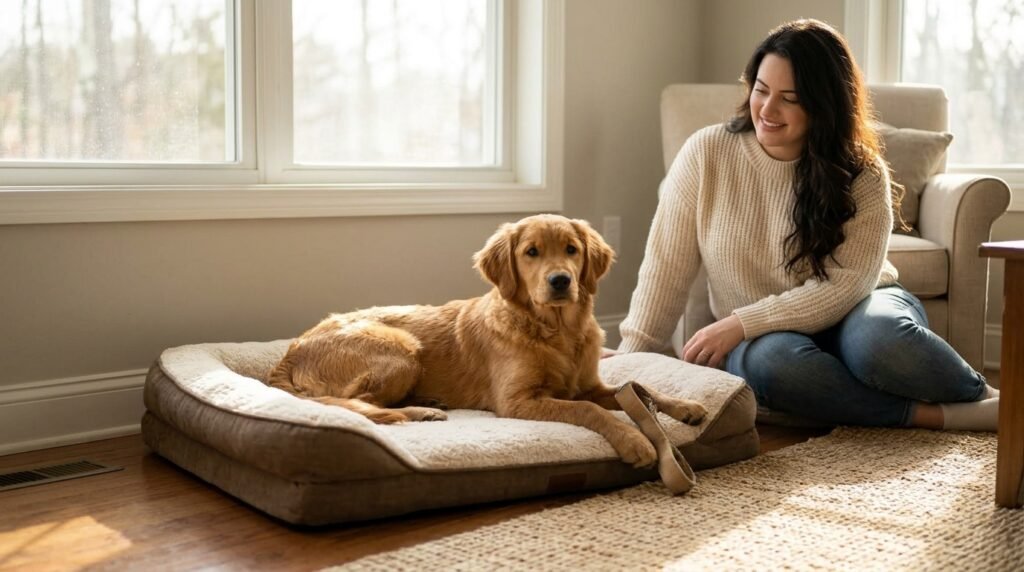
If your dog quietly settles on their own bed instead of searching for your clothes, reward that behavior.
You might offer:
- Calm praise
- A small treat
- A safe chew
- A food puzzle
- Quiet attention
The goal is not to punish attachment.
It is to teach your dog that relaxing independently is rewarding too.
What Should You Do If Your Dog Already Has Your Clothes?
First, check your dog’s body language. If they freeze, stiffen, growl, or guard the clothing, keep your distance, keep children away, and do not reach for the item or corner your dog. Seek help from a qualified reward-based behavior professional.
If your dog is relaxed and not guarding:
- Stop chasing and stay calm.
- Offer a high-value treat or suitable toy without reaching toward their mouth.
- Let your dog release the clothing voluntarily.
- Reward the release and encourage your dog to move away.
- Pick up the clothing once your dog is safely away from it.
Practice exchanges separately with safe toys, and prevent access to laundry between sessions. VCA’s guidance on stealing and keep-away explains why chasing can reinforce the behavior.
If your dog has swallowed any fabric, contact your veterinarian promptly.American Veterinary Society of Animal Behavior for dog training and behavior modification.
When Should You Talk to a Veterinarian or Behavior Professional?
Consider professional help when:
- The behavior begins suddenly.
- Your dog repeatedly swallows clothing.
- Your dog shows signs of illness.
- Your dog becomes highly distressed when alone.
- Your dog guards clothing aggressively.
- The behavior is becoming compulsive.
- Your dog injures themselves trying to obtain or protect objects.
- Training and management are not improving the problem.
Sudden behavior changes should not automatically be labeled as a training problem. Medical issues, pain, anxiety, and other factors can sometimes affect behavior.
Your veterinarian can help determine whether a medical issue needs to be considered. A qualified behavior professional can help if the problem is primarily behavioral.
FAQs
Why does my dog steal my clothes and run away?
Your dog may have learned that stealing clothes starts an exciting chase or gets your attention. Clothing may also be attractive because it smells like you and is easy to carry. Avoid chasing and teach a reward-based “drop it” or trade behavior instead.
Is stealing clothes a sign of separation anxiety?
Not by itself. A dog that enjoys carrying your shirt is not necessarily anxious. Look for broader signs of distress when you leave, such as persistent vocalization, pacing, destructive behavior, escape attempts, or inability to settle.
How do I stop my dog from stealing my clothes?
Keep laundry inaccessible, avoid chasing, provide appropriate toys and enrichment, and teach “leave it” and “drop it” with rewards. Management is especially important while your dog is learning the new behavior.
What if my dog ate a sock?
Contact your veterinarian promptly for guidance. Do not assume the sock will pass safely. Fabric can cause gastrointestinal obstruction, and the risk depends on the object, your dog’s size, and other circumstances.
Conclusion
So, why does my dog steal my clothes? Usually, there is more than one possible explanation.
Your clothing may smell strongly like you. It may provide comfort, satisfy your dog’s desire to chew, offer entertainment, or reliably get your attention. In some cases, anxiety or another behavioral issue may also contribute.
The most useful clue is what your dog does with the clothing.
A dog that quietly carries your shirt to their bed is showing a very different pattern from a dog that steals socks to start a chase or repeatedly swallows fabric.
Start by preventing access to laundry, giving your dog appropriate alternatives, and teaching “leave it” and “drop it” through reward-based training. If your dog guards objects, repeatedly eats fabric, or shows significant distress, involve a veterinarian or qualified behavior professional.
Your dog’s clothing habit may look strange, but once you understand the motivation behind it, the solution becomes much clearer.