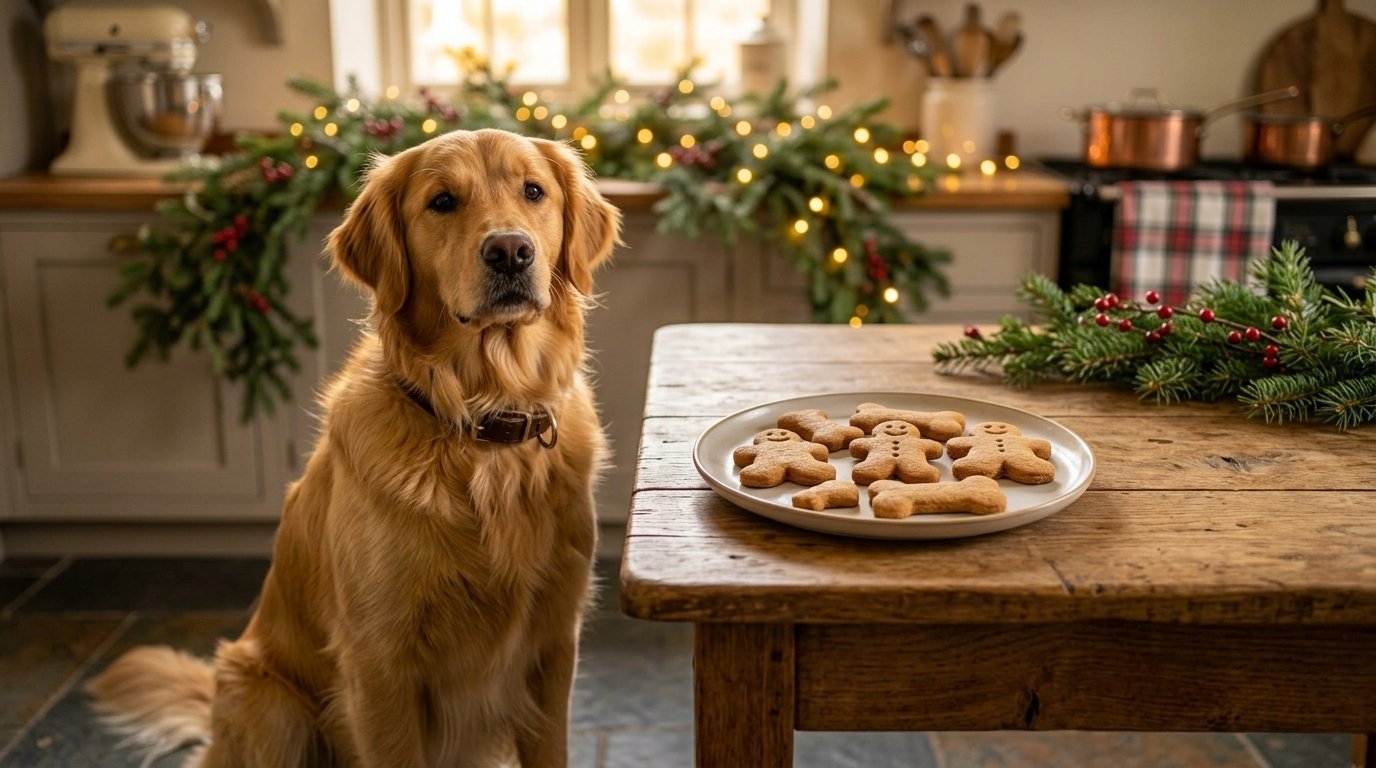
Holiday baking is more enjoyable when your dog can safely join the celebration. These dog-friendly gingerbread treats capture the warm aroma of ginger and cinnamon without the chocolate, nutmeg, sugary icing, or mystery decorations found on many cookies made for people. The recipe uses pumpkin and unsweetened applesauce for moisture, oat and whole-wheat flour for structure, and only a small amount of blackstrap molasses for classic gingerbread color and flavor.
These dog-friendly gingerbread treats are still extras—not a balanced meal or a health supplement. Make them small, introduce one gradually, and count every cookie within your dog’s daily treat allowance. If your dog has allergies, diabetes, pancreatitis, a prescription diet, or another medical condition, ask your veterinarian before changing their menu.
Table of Contents
Can Dogs Eat Regular Gingerbread?
Traditional gingerbread is not a sensible choice for dogs. A small accidental bite of a plain cookie may not always cause a problem, but recipes vary widely, and some contain ingredients that can be dangerous. Human gingerbread may include nutmeg, chocolate, raisins, high levels of sugar and fat, or sugar-free sweeteners. Decorative candies and icing add another layer of uncertainty.
The FDA’s list of potentially dangerous items for pets includes chocolate, grapes and raisins, fatty foods, salt, and xylitol. Those ingredients have no place in dog-friendly gingerbread treats. Nutmeg should also be left out: it contains myristicin, and AKC’s nutmeg safety guidance describes potentially serious effects after harmful exposure.
Rather than trying to judge whether a human cookie is “probably fine,” bake a separate batch with a short, known ingredient list. If your dog steals gingerbread, save the package or recipe, estimate how much was eaten, and check for xylitol, chocolate, raisins, macadamia nuts, nutmeg, or other concerning ingredients. Contact a veterinarian or pet poison service promptly if any are present or if your dog develops vomiting, weakness, tremors, collapse, unusual behavior, or seizures.
PawMindTips’ guide to dangerous dog food ingredients can help you recognize hazards that hide in baked goods and other snacks.
Ingredients for Dog-Friendly Gingerbread Treats
This recipe for dog-friendly gingerbread treats favors familiar ingredients and moderate spice. Read every label before you begin, even if you have bought the product before.
Dry ingredients
- 1½ cups oat flour
- 1 cup whole-wheat flour, plus a little extra for rolling
- 1 teaspoon ground ginger
- ½ teaspoon ground cinnamon
Wet ingredients
- ½ cup plain pumpkin puree
- ¼ cup unsweetened applesauce
- 1 large egg
- 1 tablespoon blackstrap or unsulphured molasses
- 1 tablespoon melted coconut oil or a neutral vegetable oil
- 1–3 tablespoons water, only as needed
Use plain pumpkin puree, not pumpkin-pie filling. Pie filling can contain added sugar and spices that are unnecessary for dogs. Choose unsweetened applesauce, and do not use a product containing xylitol.
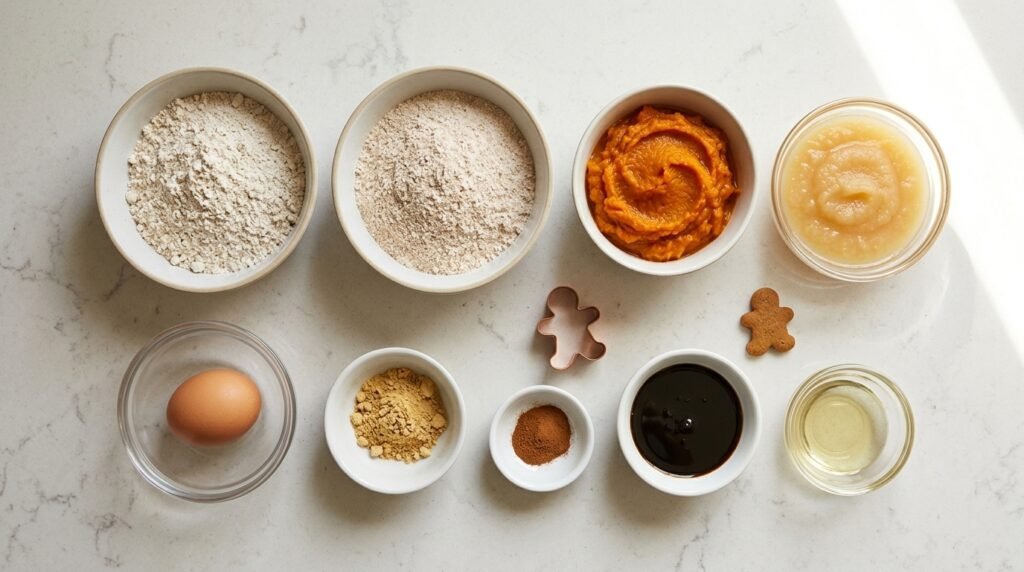
Ground cinnamon is listed by the ASPCA as non-toxic to dogs, but that does not mean unlimited amounts are appropriate. Cinnamon powder can irritate the mouth or airways when inhaled, and concentrated cinnamon oil is a different product. Keep the quantity modest, mix it into the dough, and avoid essential oils entirely. The AKC’s cinnamon guidance also advises caution with large amounts and cinnamon-containing human baked goods.
Molasses contributes sugar, so more is not better. One tablespoon is enough to provide a familiar gingerbread note across an entire batch. These dog-friendly gingerbread treats are intentionally less sweet than human cookies.
Easy Dog-Friendly Gingerbread Treats Recipe
Prep time: 20 minutes
Chill time: 20 minutes
Bake time: 18–24 minutes
Oven: 325°F
Yield: Approximately 50–70 small treats, depending on cutter size and thickness
Equipment
- Two mixing bowls
- Whisk or fork
- Sturdy spoon or silicone spatula
- Rolling pin
- Parchment paper or silicone baking mat
- Small cookie cutter, preferably 1–1½ inches wide
- Baking sheet
- Wire cooling rack
Instructions
- Preheat the oven. Set the oven to 325°F. Line a baking sheet with parchment paper or a silicone mat.
- Combine the dry ingredients. Whisk the oat flour, whole-wheat flour, ginger, and cinnamon in a large bowl. Break up any flour lumps so the spice disperses evenly.
- Combine the wet ingredients. In a second bowl, stir together the pumpkin, applesauce, egg, molasses, and oil until evenly blended.
- Form the dough. Add the wet mixture to the dry mixture. Stir until a firm dough begins to form. If dry crumbs remain after thorough mixing, add water one teaspoon at a time. The dough should hold together without feeling wet or sticky.
- Chill briefly. Shape the dough into a disk, cover it, and refrigerate for 20 minutes. Chilling makes the dough easier to roll and helps the cut shapes hold their edges.
- Roll and cut. Lightly flour the work surface and rolling pin. Roll the dough to about ¼ inch thick. Cut small shapes and transfer them to the prepared sheet. They will not spread much, so a little space between cookies is sufficient.
- Bake. Bake for 18–24 minutes. Smaller or thinner cookies will finish first. Look for dry surfaces, firm edges, and lightly browned bottoms rather than the deep color used to judge human gingerbread.
- Cool completely. Move the cookies to a rack. Do not offer one while warm; the center may be hotter than it feels on the surface.
- Test one serving. Give your dog a small piece the first time and watch for digestive upset before offering more on another day.

Do not taste-test hot dough or allow your dog to lick the mixing bowl. Raw flour can carry germs, and raw egg is not needed in your dog’s bowl. Once fully baked and cooled, the dog-friendly gingerbread treats should be dry enough to handle but not rock-hard.
How to Get the Right Dough and Cookie Texture
Flour absorbency varies, and pumpkin puree differs in moisture from brand to brand. Treat the water measurement as an adjustment, not an automatic addition.
If the dough crumbles when pressed, knead it briefly first. Then add one teaspoon of water, mix completely, and reassess. Adding several tablespoons at once can turn a workable dough into a sticky one.
If the dough sticks to your hands and rolling pin, dust it lightly with oat or whole-wheat flour and chill it for another 10 minutes. Avoid adding a large amount of flour, which can make dog-friendly gingerbread treats dense and difficult to chew.
For a softer cookie, roll the dough slightly thicker and begin checking near the lower end of the baking range. Softer cookies are useful for many senior dogs but contain more residual moisture, so refrigerate or freeze them and use them quickly.
For a crunchier cookie, roll to an even ¼ inch and bake until firm. You can then turn off the oven, crack the door, and leave the cookies inside for 30–45 minutes as the oven cools. Watch closely the first time because ovens differ. A dry cookie may keep its texture longer, but homemade dog-friendly gingerbread treats still lack commercial preservatives.
Choose a size suited to your dog. Tiny pieces work better for training, while a large decorative gingerbread person may silently deliver several portions at once. You can also cut a larger cookie into multiple servings after baking.
Safe Substitutions and Ingredients to Avoid
Substitution can be helpful, but baking ingredients do not always exchange cup for cup. Change one item at a time so you can correct the texture.
Flour options
Oat flour is easy to make by blending plain rolled oats into a fine powder. If your dog tolerates wheat, the whole-wheat flour in this recipe improves structure. For a wheat-free version, replace the wheat flour with additional oat flour, but expect a more delicate dough. Add the final liquid slowly and use simple shapes.
“Gluten-free” does not automatically mean appropriate for every dog. Check packaged flour blends for sweeteners, chocolate flavoring, macadamia ingredients, or other additions. A dog with a suspected food allergy needs veterinary assessment rather than a series of random substitutions. The overall diet—and the dog’s response to it—matters more than marketing labels.
Pumpkin and applesauce options
If your dog has previously tolerated pumpkin but not applesauce, you can replace the applesauce with an equal starting amount of pumpkin and add water only if needed. If pumpkin is unavailable, plain mashed cooked sweet potato may work, but its moisture and density vary. Never use sweetened pie filling.
Optional peanut butter
Peanut butter is not required. If you use it as a thin decoration, select a plain product and read the label for every name used for xylitol, including birch sugar. The FDA warns that xylitol poisoning can begin rapidly and may cause vomiting, weakness, collapse, difficulty standing, seizures, liver failure, and bleeding problems. A suspected exposure is an emergency; do not wait for symptoms.
Peanut butter is also calorie-dense. A heavy layer of “icing” can contain more calories than the small cookie beneath it. Skip decoration when the goal is a light training reward.
Never add these ingredients
- Xylitol or any sugar-free sweetener blend
- Nutmeg
- Chocolate, cocoa, or chocolate chips
- Raisins, grapes, or currants
- Macadamia nuts
- Alcohol-based extracts in generous amounts
- Candy melts or icing unless every ingredient has been screened and your veterinarian considers it appropriate
- Cinnamon or other essential oils
If you are unsure about an ingredient, leave it out. A plain cookie in a fun shape is festive enough.
How Many Gingerbread Treats Can a Dog Have?
The correct serving depends on the dog’s size, daily calorie requirement, medical history, usual diet, and the dimensions of each cookie. “One cookie” is not a useful universal serving because cutters and recipes vary.
The AAHA weight-management guidance recommends that treats account for no more than 10% of a pet’s total daily calories. The remaining calories should come from a complete and balanced diet. For a dog on a veterinarian-prescribed calorie plan, use the limit your veterinary team set—even if it is lower.
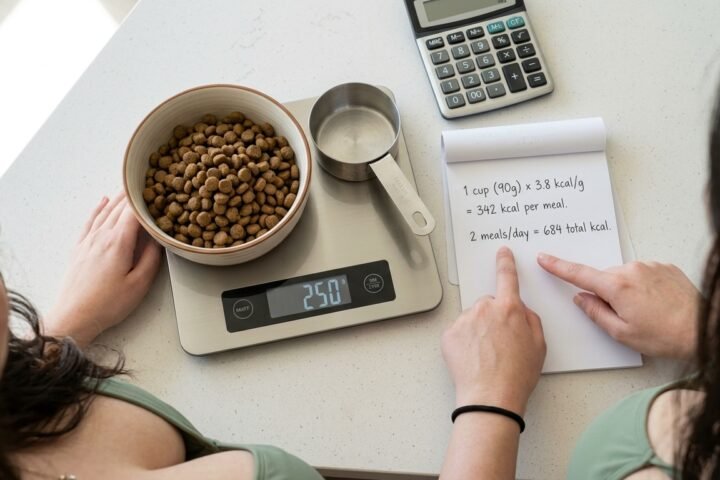
Make dog-friendly gingerbread treats in 1-inch shapes and break them into smaller pieces. A small dog may receive only a fraction of a cookie, while a larger, active dog may be able to fit more within its allowance. On baking day, estimate the recipe’s calories from the exact product labels, add them together, and divide by the number of cookies produced. That gives a more useful estimate per treat than relying on a generic number.
Treat calories add up across the whole household. Ask family members to draw the day’s portions from one container so several people do not reward the same dog independently. You can also reserve part of the dog’s regular kibble for training and save one gingerbread bite for a special moment.
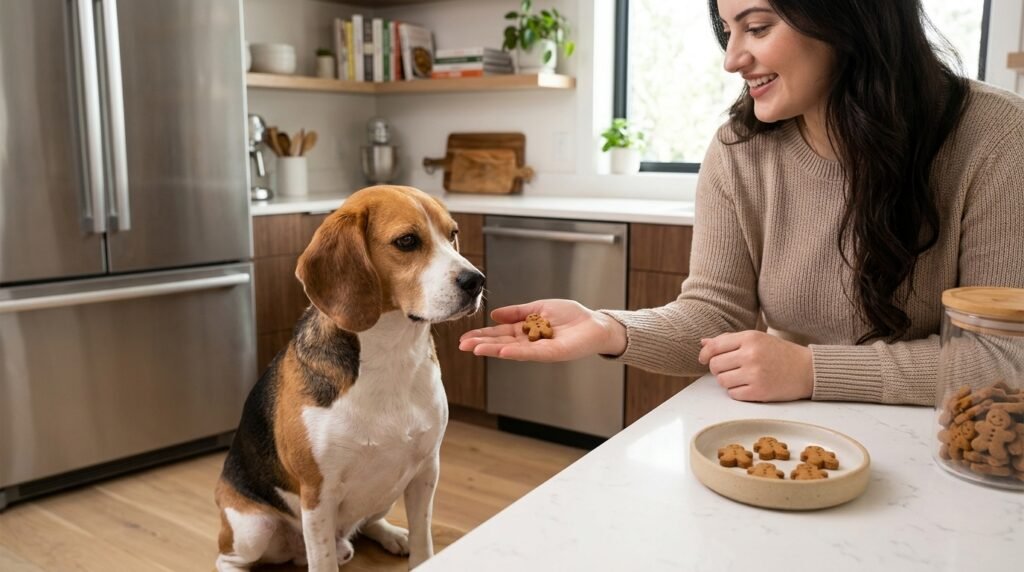
These dog-friendly gingerbread treats should never replace a meal. PawMindTips explains in its vet-informed homemade dog food guide why a collection of wholesome-looking ingredients does not automatically provide complete and balanced nutrition.
Storage, Freezing, and Holiday Gifting
Allow every cookie to cool completely before storage. Trapped warmth creates condensation, which encourages spoilage.
- Room temperature: Keep crisp cookies in an airtight container for up to 3 days in a cool, dry room.
- Refrigerator: Store for up to 7 days in a sealed container.
- Freezer: Freeze in a sealed freezer-safe container for up to 2 months. Separate layers with parchment paper and thaw only the portion you need.
Softer cookies contain more moisture and should go directly into the refrigerator or freezer. Discard any cookie that develops mold, an unusual odor, discoloration, or a tacky surface. When in doubt, throw it away.
For gifting, list every ingredient and the baking date on the package. Add a note saying “for occasional feeding only” and “keep refrigerated.” Do not give homemade treats to a dog whose allergies, medical conditions, or prescription diet you do not know. A decorative sealed jar may look attractive, but it is not a substitute for temperature-safe storage.
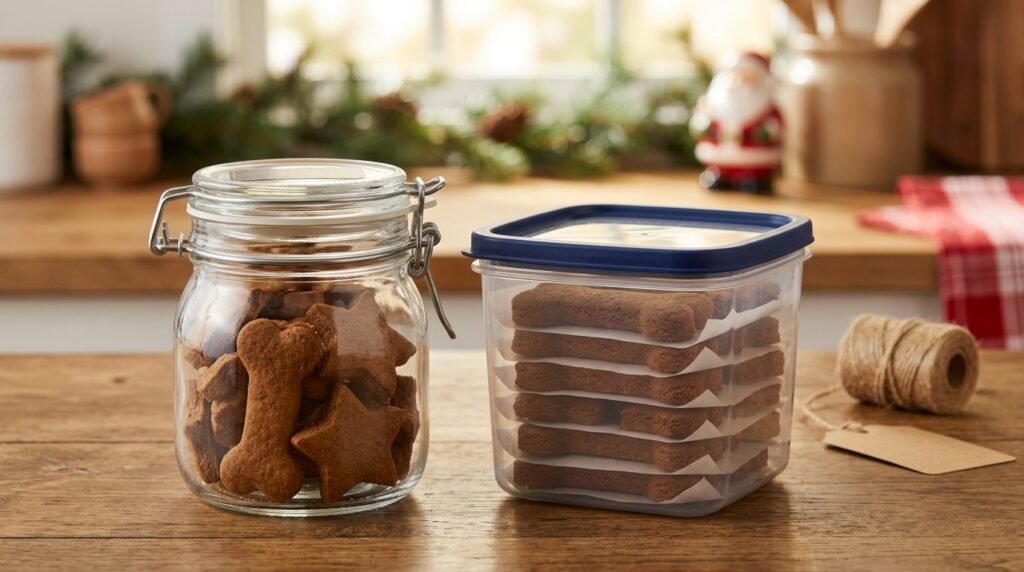
Keep the gift presentation dog-safe too. Remove ribbon, twine, plastic bags, silica packets, and paper tags before a dog can reach the treats. These items can become choking hazards or intestinal foreign bodies.
When These Treats Are Not a Good Choice
Do not serve dog-friendly gingerbread treats simply because each individual ingredient is commonly used in dog recipes. Your dog’s personal health history matters.
Ask your veterinarian first if your dog:
- Has diabetes or needs strict blood-glucose control
- Has pancreatitis or requires a low-fat diet
- Is overweight or on a calorie-restricted plan
- Has chronic kidney, liver, or gastrointestinal disease
- Has a known or suspected food allergy
- Eats a prescription or elimination diet
- Is very young, frail, or recovering from illness
Stop serving the dog-friendly gingerbread treats if your dog develops vomiting, diarrhea, itching, facial swelling, hives, unusual lethargy, or another concerning change. Facial swelling, trouble breathing, collapse, repeated vomiting, tremors, or seizures warrant urgent veterinary attention.
Also consider chewing ability. A very hard cookie may not suit a puppy, a dog with dental disease, or a senior with missing teeth. Soften a small piece with water only immediately before serving; do not moisten an entire stored batch.
FAQs
Can dogs have ginger and cinnamon?
Small culinary amounts of ground ginger and cinnamon are commonly used in dog-treat recipes, and cinnamon itself is not classified as toxic to dogs by the ASPCA. However, concentrated powders can irritate, large amounts are unnecessary, and essential oils should not be used. If your dog has a medical condition or takes medication, ask your veterinarian before offering spiced treats.
Can I use regular human gingerbread cookies instead?
No. Human gingerbread may contain nutmeg, chocolate, raisins, excessive sugar or fat, unsafe decorations, or xylitol. A recipe made specifically for dogs gives you control over every ingredient and portion.
Can I make these gingerbread dog treats without wheat?
Yes, if your dog tolerates oats, you can try an all-oat-flour version. The dough may be more fragile, so chill it well, use a simple cutter, and adjust water one teaspoon at a time. For a diagnosed allergy or an elimination diet, use only substitutions approved by your veterinarian.
How long do homemade gingerbread dog treats last?
Crisp cookies can generally stay in a cool room for up to 3 days or in the refrigerator for up to 7 days. Freeze extras for up to 2 months. Softer treats should be refrigerated immediately, and any treat showing mold, odor, discoloration, or excess moisture should be discarded.
Conclusion
The best dog-friendly gingerbread treats are simple, small, and offered in moderation. This recipe removes common holiday-cookie hazards, keeps sweetness modest, and gives you control over texture and portion size. Check labels carefully, bake the cookies completely, cool and store them safely, and keep all treats within your dog’s daily calorie allowance.
Your dog does not need frosting or an oversized cookie to feel included. One appropriately sized bite, paired with praise and time together, is a safer—and usually happier—holiday tradition.