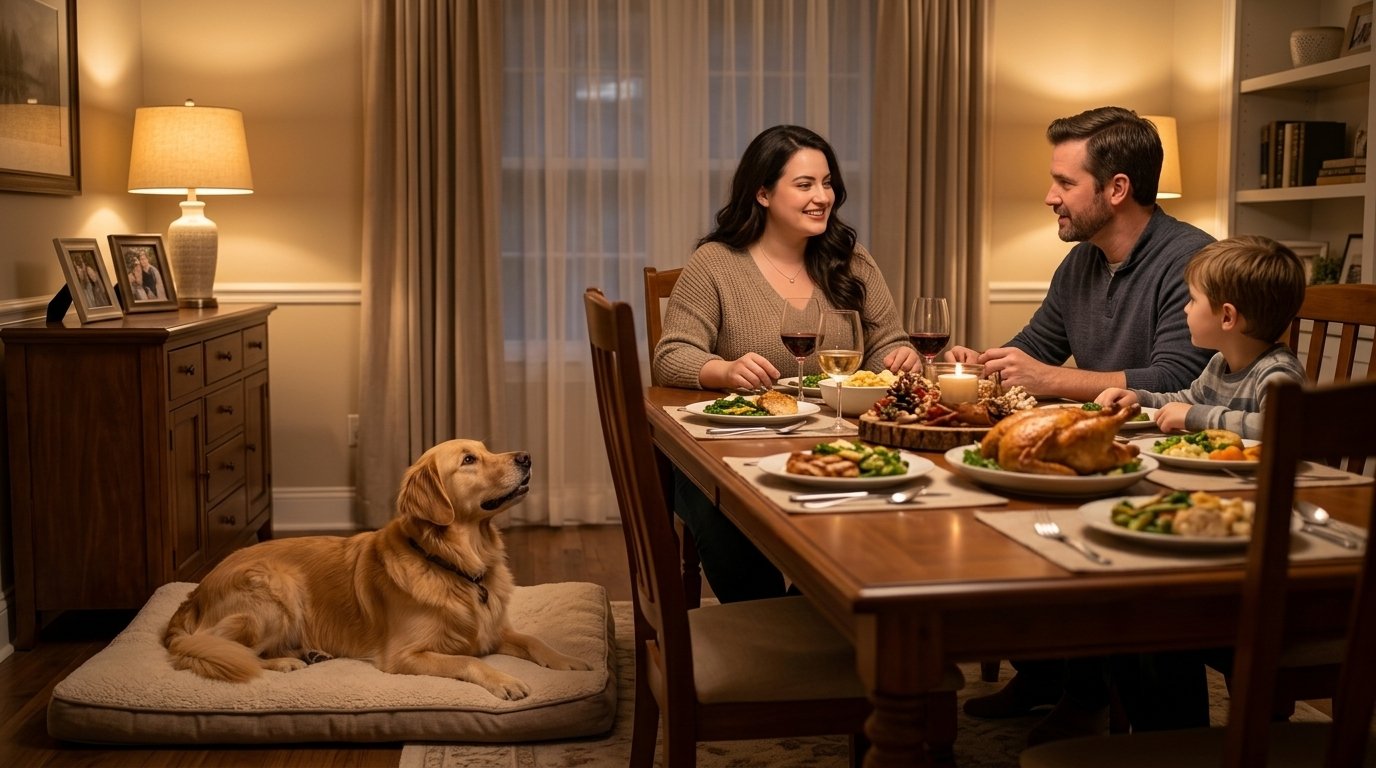
A dog begging for food can turn a relaxed dinner into a cycle of staring, pawing, whining, and slipped table scraps. The solution is to make the table an unrewarding place to ask for food while giving your dog a better job: settling on a comfortable mat. Start practicing away from meals, reward calm behavior on the mat, and ask everyone who shares the table to follow the same rule. You can begin tonight with simple management, then build the skill over short sessions.
Begging is usually a behavior a dog has learned, not a sign that your dog is being “bad.” If a hopeful look sometimes earns a bite or even a lively reaction, trying again makes sense from the dog’s perspective. The plan below covers the family agreement, a step-by-step mat exercise, real dinners, and situations where food-seeking behavior needs a veterinary conversation.
Table of Contents
Why Dog Begging for Food Starts at the Table
Food smells good, and dogs notice patterns. The sound of plates, a person taking a seat, and the first bite can all predict a possible reward. If your dog once received food while hovering beside a chair, the dining area became a promising place to wait. A dog may also seek your attention there. Talking, pushing a nose away, or laughing can make the interaction more interesting, even when no food appears.
An occasional payoff can be especially hard to compete with. If begging works only during weekend meals, or only when a particular guest visits, your dog still has a reason to try at every meal. You do not need to blame the person who gave the first scrap. What matters is making the next mealtime predictable.
Look at the behavior you actually see. A dog who rests quietly a few feet away is making a different choice from one who climbs into a lap or barks at plates. The goal is not to prevent your dog from noticing dinner. The goal is to teach a comfortable alternative that does not interrupt it. AKC’s guide to teaching “go to place” specifically describes a mat or bed as a useful spot for dogs who beg at the table.
Begging also needs context. If your dog has recently become much more food-focused, is stealing food in new ways, or seems distressed, do not assume every change is a training issue. We will cover those signs later. For an otherwise well dog whose interest predictably appears when people eat, a repeatable routine is a sensible place to start.
Set One Mealtime Rule for the Whole Family
Choose a rule that everyone can actually keep: no food goes from a person’s plate, hand, or dining chair to the dog during a meal. This includes a “tiny taste” given after whining stops. Otherwise the dog may learn that waiting and trying again eventually pay off. If you choose to offer a dog-safe food on occasion, put a measured portion in your dog’s own bowl or use it in a separate training session after the meal. It should never be a reward for coming to the table and demanding it.
Tell children and visitors the rule before food is served. A short script works: “Please leave food on the table. We reward her on her mat, and I will handle the treats.” Give a child an easy job, such as placing the mat before dinner, rather than asking them to police the dog. An adult should supervise any child around a dog, food, chews, or dropped scraps.
Decide where your dog will be while you eat. For some homes that is a bed across the room; for others it is a gated room or a crate the dog already enjoys. A dog who cannot yet settle near tempting food is not failing. A gate and a food puzzle can prevent rehearsal of begging while you teach the new behavior at an easier distance. Never use a crate as punishment for asking for food.
Post the rule where family members will see it for a week. Include three actions: keep plates out of reach, cue the dog to the mat before sitting down, and reward quiet settling there. PawMindTips’ broader good manners guide can help the family use the same cues for other daily routines, but dinner deserves its own practice plan.
Consistency does not mean that dogs can never have food humans also eat. It means that human meals stop predicting handouts at the table. Choose dog-appropriate foods carefully, count them in the day’s treat allowance, and serve them in a separate context. The WSAVA guide to feeding treats advises keeping treats to no more than 10% of a dog’s daily calories and notes that table scraps may be unsafe.
Prepare Your Dog and Dining Space Before Dinner
Make the easy choice available before aromas and plates raise the difficulty. Put a nonslip mat or familiar bed at a comfortable distance from the table. It should be close enough that you can reward your dog without leaving your seat, yet far enough that a quick stretch cannot reach a plate. Keep small rewards ready in a container beside you, beyond your dog’s reach. If rewards come from the dining table itself, take care to deliver them to the mat, not to the dog beside your chair.
Meet your dog’s basic needs first. Offer a bathroom break, water, and an appropriate amount of daily food on your usual schedule. You might serve the dog’s meal before yours or put part of that meal in a suitable puzzle feeder during dinner. You do not need to add another full meal or overfeed to solve a behavior problem. The ASPCA’s dog nutrition guidance discusses portions, schedules, and using small pieces as training rewards.
Check that your dog’s chosen activity is safe and realistic. A stuffed food toy can buy a few quiet minutes, but it is a management aid, not a substitute for teaching the mat cue. Choose a size that cannot be swallowed, follow the toy maker’s instructions, and supervise chews. If your dog guards food or chews around people, avoid setting up a child to approach the dog’s resting area and get individual professional advice.
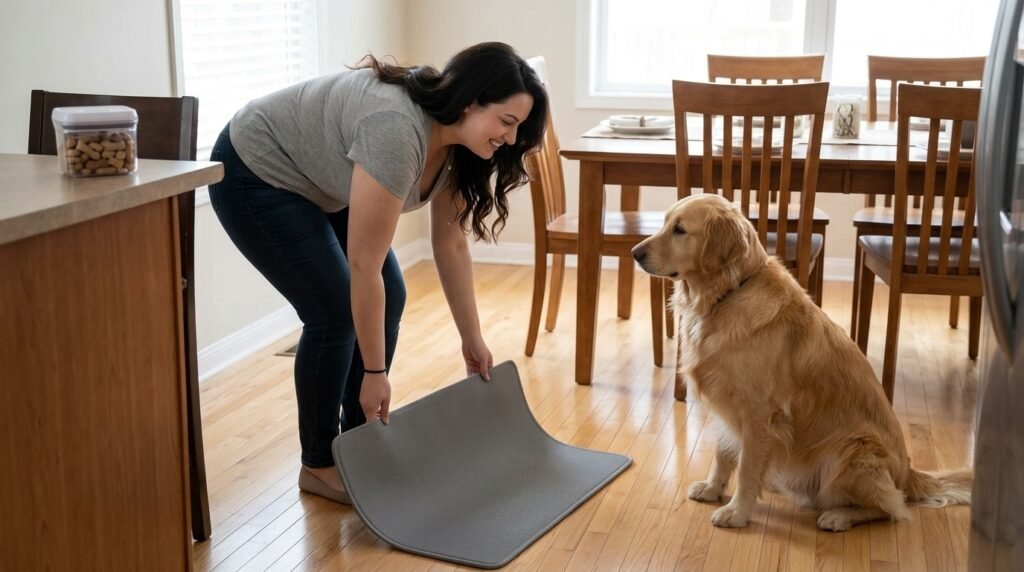
During the first few dinners, simplify your own setup too. Clear food from low coffee tables, push in chairs when you leave, and pick up dropped food promptly. These details prevent an accidental jackpot while the dog is learning. If the dining room is busy, start with a snack at an empty table or one person eating a plain meal. You can add family members and more tempting foods later.
Teach a Mat Cue Away From the Table
Start when no one is eating. Pick a mat that is easy to recognize and comfortable enough for your dog to rest on. Have a few pieces of your dog’s usual food or small training treats. Practice for a couple of minutes, then stop while your dog is still interested.
- Make the mat rewarding. Place it on the floor. When your dog approaches or puts a paw on it, say a short marker such as “yes” and place a treat on the mat. Let your dog step off freely. Repeat until your dog readily returns.
- Build a full-body position. Reward four paws on the mat. If your dog offers a sit or down, place another treat between the front paws. Do not push your dog into position or repeatedly lure with food held at the nose.
- Add a simple cue. When the dog is already choosing the mat, say “mat” or “place” once just before the dog moves toward it. Mark and reward arrival. Use the same word each time.
- Teach a release. After one or two seconds, say “all done” and gently toss a treat away from the mat. The release tells your dog when the exercise ends. Then invite another repetition.
- Build duration gradually. Reward at two seconds, then a few seconds more. At first, give several small rewards while your dog remains settled. If your dog gets up, simply make the next repetition shorter; do not scold or hold the dog in place.
- Add your movement. Sit down, stand up, take one step away, and return to reward on the mat. Practice a plate on a counter before you practice with an actual meal. Change one difficulty at a time: duration, distance, or distraction.
The AKC place-training instructions also recommend adding the cue after the dog understands the action. If you have already taught a stay, use that foundation to help build time on the mat; PawMindTips’ stay-training guide explains the release and gradual distractions.
Keep the exercise voluntary and comfortable. Your dog can lie down, sit, or shift position while remaining on the mat. A relaxed body and steady breathing are better signs of success than a rigid pose with intense staring.
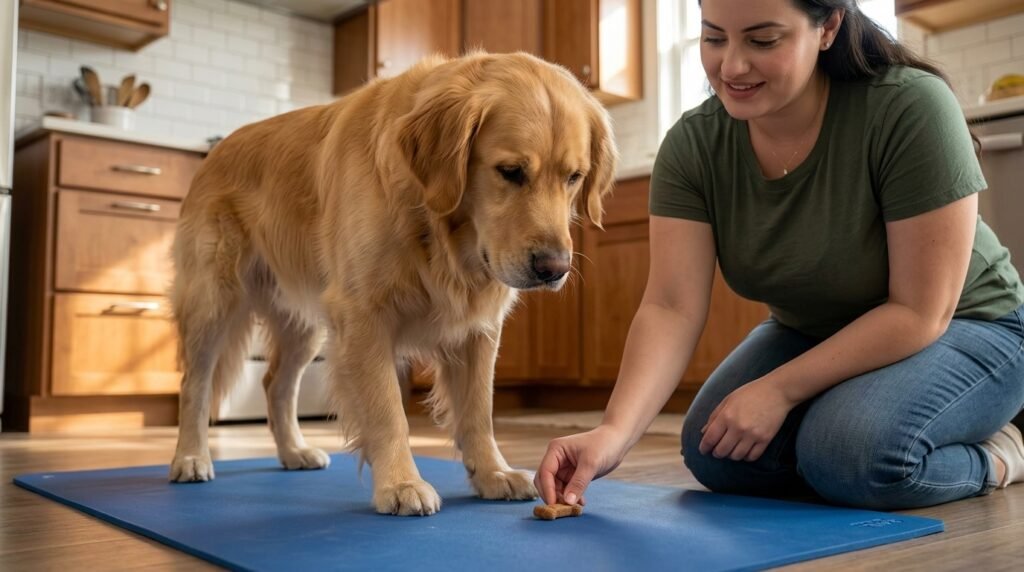
If the dog is panting, barking, trembling, or repeatedly rushing off the mat, the session is too difficult or another need is going unmet. Pause, increase distance from dinner, and try a simpler step later.
Use the Mat During Real Meals
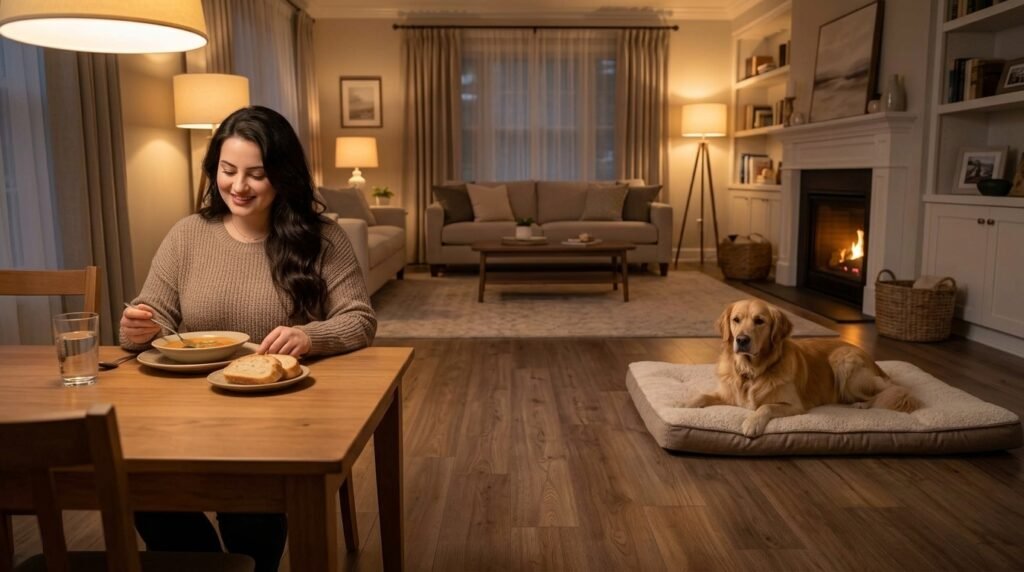
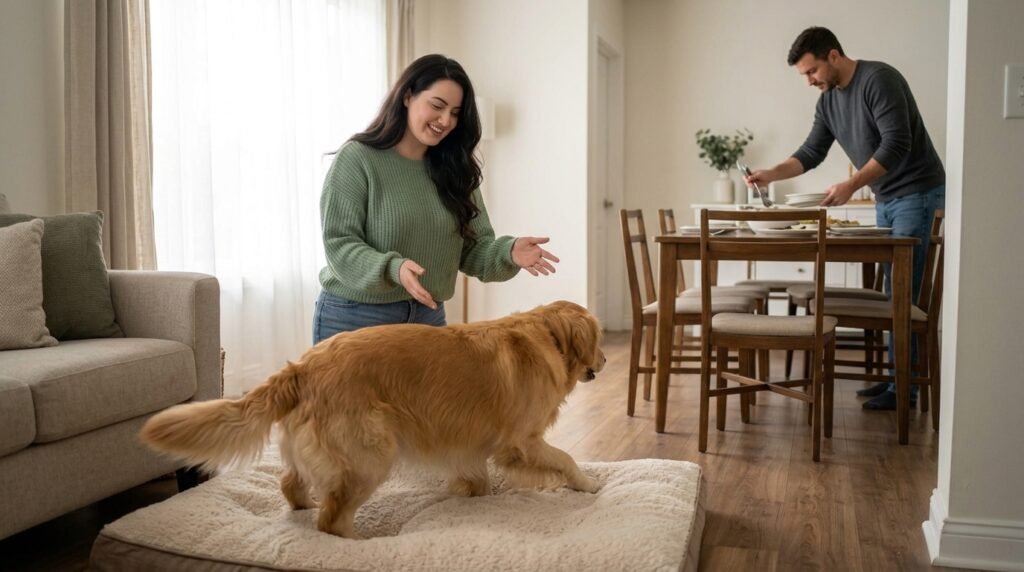
When your dog can go to the mat and remain there briefly while you sit nearby, rehearse with a small, low-stakes meal. Set the mat before food comes out. Cue “mat” once, reward arrival there, and sit down. During the first minutes, quietly deliver small rewards to the mat for staying or settling. You can use measured kibble from the dog’s daily ration if that works for your dog. Continue the meal, then give your release cue when plates are cleared and scraps are inaccessible.
Do not jump straight from a five-second exercise to a 30-minute family dinner. A practical progression might be: one person with an empty plate; one person with a snack; two people eating a short meal; a normal dinner with family conversation; and later a meal with guests. Move forward when the current step feels easy. If your dog repeatedly leaves the mat, shorten the interval between rewards, move the mat farther from the table, or use a gate for that meal.
What if the dog comes to your chair? Stay neutral. Avoid a lecture, a plate scrap, or a tugging match. Block access to food if needed, cue the familiar mat when your dog can respond, and reward back on it. If the dog is too excited to listen, end that training attempt and manage the rest of dinner with a gate or another comfortable area. Practice the easier setup again outside mealtime.
At the end, remove plates before releasing your dog. This prevents the release word from becoming a signal to search the floor for dropped food. Have another calm activity ready if needed. The routine should be predictable: mat first, people eat, dog receives appropriate rewards away from the table, dishes leave, then release.
Your dog may initially try harder to get the old payoff, especially if begging sometimes worked in the past. VCA’s guidance on food-based training supports rewarding the behavior you want; a mat gives you a specific behavior to reinforce rather than waiting silently through an escalating outburst.
If barking or distress increases, reduce difficulty and seek help rather than trying to outlast an overwhelmed dog.
Reward Calm Behavior Without Restarting Begging
Timing and location matter. Reward your dog while they are resting on the mat, ideally before they get up to ask. Place the treat between their paws or use a calm delivery that does not pull them toward your plate. If your dog walks to the table, whines, and then returns to the mat, reward a genuine moment of settling, not the return that follows every demand. Make the next interval easier so the dog can succeed before whining starts.
Use small pieces and keep track of them. The mat exercise should not turn dinner into a second dinner for your dog. Portion out a training allowance from their food or daily treats ahead of time, especially if weight management or a prescription diet is involved. Ask your veterinarian what rewards are suitable if your dog has a medical diet, allergies, or a condition affecting appetite.
As your dog understands the routine, vary the time between rewards gradually. Offer an early reward for getting to the mat, then reward longer stretches of relaxed behavior. You may also give quiet praise or a familiar chew when appropriate. Do not remove food rewards all at once while the meal is still a major distraction. Keep occasional reinforcement in the routine so settling remains worthwhile.
Watch what your attention rewards. If you repeatedly look over at a dog who stares, whines, or paws, the interaction itself may become part of the habit. Instead, notice the moments you want: a dog choosing the bed, looking away from the table, softening their posture, or staying relaxed as a chair moves. According to VCA’s calm and settle training guidance, relaxed body language matters when teaching a dog to settle.
For families who want to share an occasional safe food, make a separate rule: prepare it away from the table, give a small portion in the dog’s bowl or as a planned training reward, and never hand it over in response to begging. PawMindTips’ guide to dog-safe human foods offers examples, but portion size and preparation still matter. Avoid assuming that food safe for people is automatically safe for dogs.
Troubleshoot Setbacks and Special Situations
One family member keeps sharing scraps. Talk about the rule outside mealtime. Give that person a measured dog treat to deliver to the mat before dinner or after dishes are cleared. The dog still gets affection and occasional treats; the table no longer pays for begging. When a guest arrives, explain the routine before handing them a plate.
Your dog whines or barks on the mat. The reward gap may be too long, the mat too close to food, or the dog too wound up to settle. Return to a shorter practice session. Reward a quiet pause and relaxed posture before vocalizing begins. If the dog appears anxious, stop pushing duration and consider a different resting place. Punishing noise can make dinner more stressful without teaching a useful alternative.
The dog waits until children drop food. Seat the dog farther away or behind a gate while young children eat. Sweep or pick up dropped scraps before releasing the dog. This protects the dog from unsafe foods and makes the family rule possible to enforce. A toddler’s unpredictable hands and a dog’s access to food are a poor training setup.
Your dog begs while you cook or snack on the couch. The rule applies wherever you eat. Repeat a simpler version of the mat exercise in that room, or use a portable mat. Do not expect the dog to generalize automatically from the dining room. A dog can learn that a plate on the couch has the same rule, but only after repeated practice there.
Your dog jumps, steals food, or raids counters. Prevent access to unattended food first. Put snacks away, use gates where needed, and supervise. Then teach a separate “leave it” skill and reward choosing the mat. Table manners cannot compete with repeated successful theft. If guarding or aggression appears when you approach food, keep people safe and consult a qualified reward-based professional; do not physically wrestle food away.
You had a good week and then a bad dinner. Look at what changed: visitors, a richer meal, a later feeding time, a tired dog, or fewer mat rewards. Go back to the last easy version for several meals. Progress is better judged across a series of dinners than by one evening. AKC’s mealtime-training guide describes using a dog’s normal food for enrichment and useful behavior practice, which can make the routine easier to maintain.
When Begging Could Signal a Health Concern
Most dinner-table begging reflects a learned opportunity, but a marked change in hunger deserves attention. Call your veterinarian if your dog suddenly seems ravenous, loses weight despite eating, drinks or urinates more than usual, vomits, has diarrhea, or shows another change in energy or behavior. Discuss a recent medication change, new diet, or portion change too. A veterinarian can assess whether the feeding plan or a medical problem needs attention; do not simply increase food based on begging alone.
If your dog swallows a dangerous food, act promptly rather than waiting to see whether symptoms appear. The FDA list of potentially dangerous items for pets includes grapes, raisins, and xylitol. The FDA advises calling a veterinarian, emergency clinic, or poison control if you suspect xylitol exposure. Secure the rest of the food, note what and how much may have been eaten, and contact the appropriate professional for advice. Do not induce vomiting unless a veterinarian or poison specialist specifically instructs you to.
If your dog becomes increasingly distressed around food, guards a resting place or chew, or has bitten or threatened someone, stop the dinner exercise and seek help from your veterinarian and a qualified reward-based behavior professional. The ASPCA’s position on humane training favors reward-based methods and explains how to seek qualified help. This article provides general training information and does not diagnose a medical or behavior condition.
Frequently Asked Questions
How long does it take to stop a dog begging for food?
There is no guaranteed number of days. Some dogs improve after a few consistent meals, while a long-rehearsed habit can take weeks of mat practice and careful management. Track whether your dog can settle farther from the table and for longer, then make the next step only slightly harder. Family consistency matters more than an arbitrary deadline.
Should I completely ignore my dog when they beg at the table?
Do not reward asking at the table with food or lively attention. But simply ignoring a frustrated dog gives them little guidance. Teach and reinforce a comfortable alternative such as resting on a mat, and use a gate or separate space while that skill develops. If your dog is distressed, lower the difficulty rather than waiting for the behavior to stop.
Can I give my dog leftovers after dinner without encouraging begging?
You can choose to offer a small dog-safe portion later, in your dog’s bowl and away from the table, if it fits their diet. Never reward hovering, pawing, or whining with a handout from your plate. Avoid fatty, seasoned, or potentially toxic foods, and include any extra calories in the dog’s daily allowance. Ask your veterinarian about a restricted diet.
What if my dog leaves the mat every time I start eating?
Practice without food first, then with an empty plate and a brief snack. Reward on the mat frequently enough that your dog can succeed. Move the mat away from the table and shorten the session. During a full meal, use a gate or another positive management setup until your dog is ready for a longer settle.
Conclusion
A dog begging for food needs a clear, repeatable mealtime pattern: everyone follows the same no-handouts rule, the dog has a comfortable place to settle, and calm behavior earns timely rewards there. Start with tiny mat sessions away from food, then build toward actual dinners one easy step at a time.
Manage meals that are currently too difficult, and check with your veterinarian if a sudden appetite change or unsafe food exposure raises concern. Small, consistent repetitions make the dinner table easier for the whole household to enjoy.