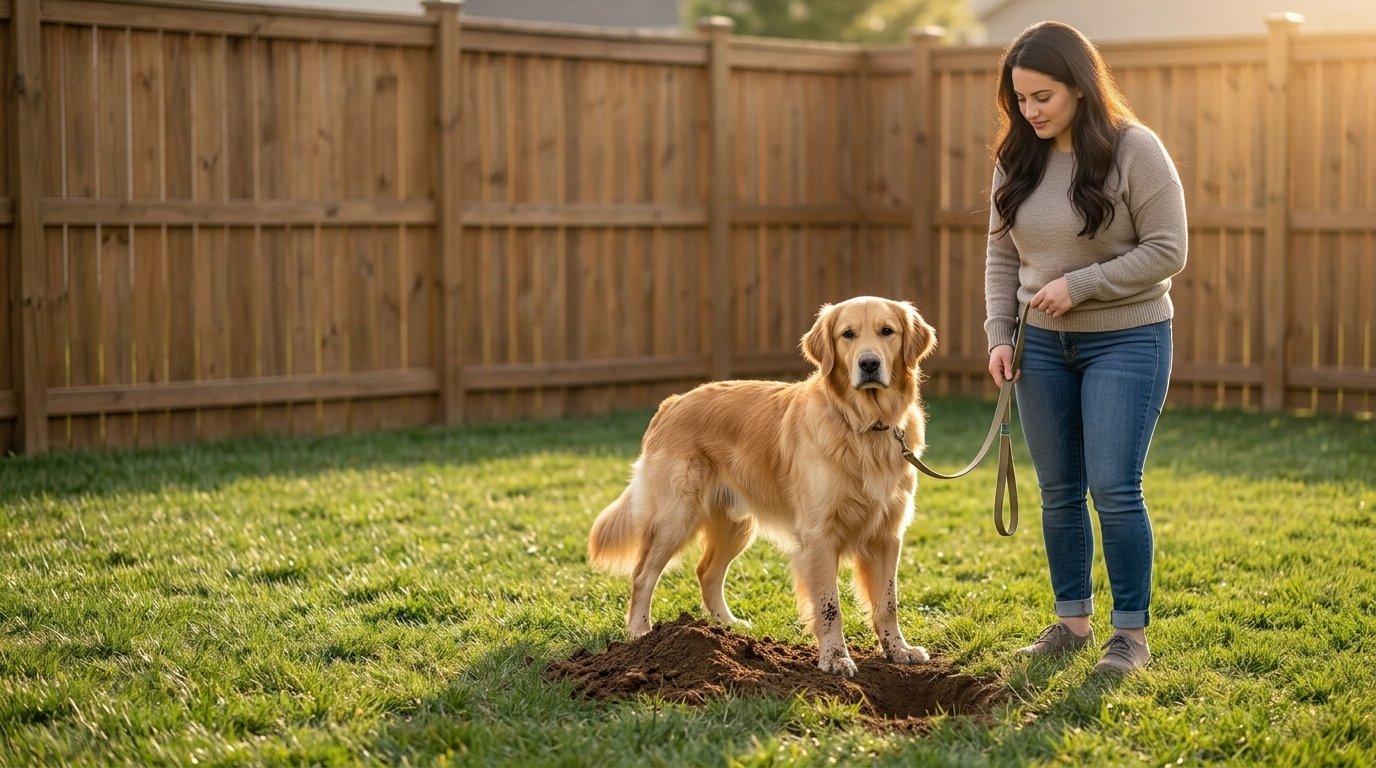
Dog digging holes is usually normal canine behavior that has become inconvenient or unsafe—not a sign that your dog is spiteful. Dogs excavate soil to follow prey, cool themselves, store valued objects, escape, release stress, or simply enjoy a deeply satisfying activity. The most effective response is therefore not punishment. It is identifying what the digging accomplishes, preventing access to vulnerable areas, meeting the underlying need, and teaching your dog where digging is allowed.
You will learn to read yard clues, match the solution to the cause, build a digging zone, and manage fence-line escape safely.
Table of Contents
Why Dog Digging Holes Is Normal—Even When It Is a Problem
Dog digging holes belongs to the normal canine behavior repertoire. The Merck Veterinary Manual’s overview of canine behavior problems distinguishes normal but unwanted behaviors, including digging, from behavior disorders. A dog does not need to be “dominant” or disobedient to damage a lawn.
Some dogs have a strong inherited tendency to excavate. Terriers and Dachshunds were selected for work near the ground, while Northern breeds may make shallow resting places. Still, any dog digging holes can find loose earth, scent, and flying dirt rewarding.
Every successful hole provides practice. If digging produces a cool bed, prey scent, freedom, or attention, it is likely to happen again. A complete plan has three parts:
- Prevent rehearsal in off-limits places.
- Resolve or reduce the reason for digging.
- Reinforce an acceptable alternative.
This is environmental design and skill-building, not a contest of wills.
Read the Clues: Location, Timing, and Body Language
Before trying to stop dog digging holes, keep a simple log for three to five days. Note where each hole appears, when it happens, what occurred immediately beforehand, whether the dog was alone, and what the dog did afterward. A camera can reveal patterns that are easy to miss.
| What you notice | Likely motivation | First response |
|---|---|---|
| Holes follow mole runs, roots, or intense sniffing | Prey or scent exploration | Supervise and address pests safely |
| A shallow body-sized hollow appears in shade on hot days | Cooling | Bring the dog inside; provide shade and water |
| Holes contain toys, chews, or food | Caching | Keep prized items indoors or supervise them |
| Random holes appear after long, quiet periods alone | Boredom or unmet enrichment needs | Add interaction, sniffing, training, and rest |
| Digging occurs at gates or along one fence section | Escape, social access, fear, or reactivity | Prevent access and secure the boundary immediately |
| Digging begins with departures, storms, or frightening sounds | Anxiety or distress | Reduce exposure and seek professional guidance if intense |
| Digging is relaxed, repetitive, and visibly enjoyable | Recreational digging | Provide a legal digging zone |
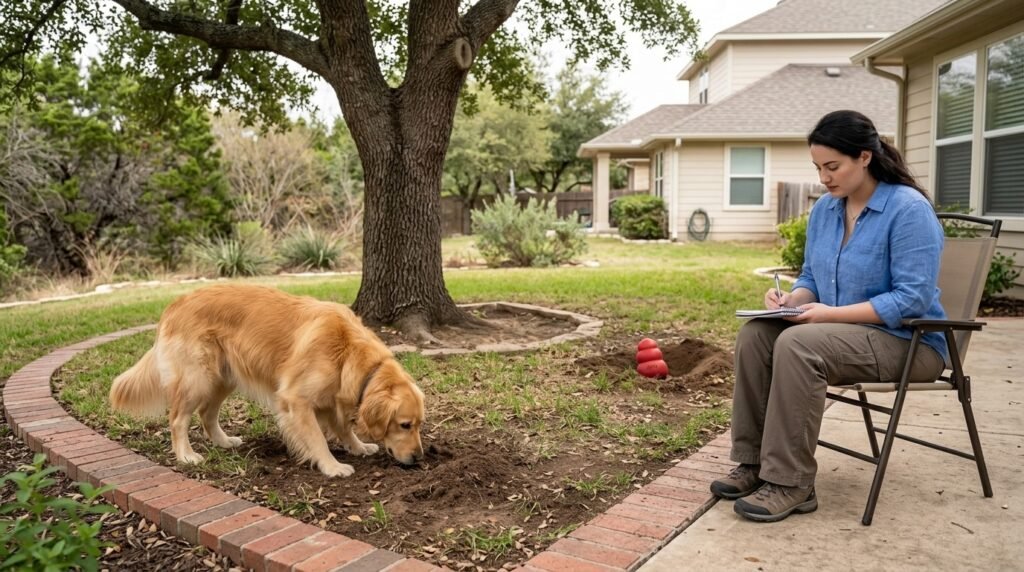
Body language adds context. A loose, bouncy dog digging holes between bouts of play differs from one who pants, paces, vocalizes, or claws frantically at a boundary. PawMindTips’ guide to the signs of a stressed dog can help you evaluate the entire pattern.
7 Reasons Dogs Dig—and What to Do for Each One
There is no single trick for every dog digging in a yard. Match the response to the payoff your dog is seeking.
1. Natural Instinct and Recreation
For many dogs, soil offers scent, texture, and movement. A relaxed dog digging holes in varied locations may enjoy using its nose, feet, and brain at once.
What to do: Give the instinct a permitted outlet. Supervise lawn access during training, interrupt early with a cheerful recall, guide the dog to a digging box or pit, and reward excavation there. The American Kennel Club’s digging guidance similarly recommends channeling the instinct rather than expecting it to disappear.
2. Boredom or Too Little Meaningful Activity
A backyard does not automatically entertain a dog. A dog digging holes after long periods alone may have created its own job. The answer may be balanced sniffing, training, social contact, chewing, and rest—not frantic exercise.
What to do: Add two or three short, purposeful activities across the day: a sniff-focused walk, five minutes of reward-based training, food scattered in grass, a safe food puzzle, or interactive play. Build a sustainable daily dog routine rather than attempting to exhaust your dog in one session. Rotate activities and make calm rest part of the schedule.
3. Hunting Underground Animals
A dog digging holes beside tunnels, roots, sheds, or garden edges may be following prey scent. The dog may freeze, listen, paw rapidly, or return to the same place.
What to do: Block access and use supervised yard time. Ask a qualified pest-control professional for dog-safe exclusion methods. Do not place poison, snap traps, or chemicals where a dog or wildlife can reach them. UC Davis veterinary guidance on digging specifically warns against harmful pesticides and traps and recommends safe pest control.
Scent games can provide a safer substitute. Hide treats or toys above ground, use cardboard-box searches indoors, or teach a simple “find it” cue. This does not remove prey from the property, but it gives the nose an approved task.
4. Cooling Down or Making a Resting Place
Cool, damp soil can feel better than hot grass. A dog digging holes that are broad, shallow, and shaded, then lying in them, may be trying to cool down. Thick-coated dogs may be especially motivated.
What to do: Treat the behavior as a comfort and safety clue. Bring the dog into a cool indoor space, provide fresh water and true shade, and schedule outdoor activity for cooler hours. Do not rely on a dug hole as protection from dangerous heat. If your dog shows heavy panting that does not settle, excessive drooling, weakness, vomiting, confusion, bright or abnormal gums, or collapse, seek emergency veterinary care.
5. Hiding Food, Toys, or Valued Objects
A dog digging holes and carefully covering them may be caching food or toys, particularly when there is competition around a valued resource.
What to do: Offer high-value chews indoors and remove leftovers when the session ends. In a multi-dog home, give valued items separately to reduce competition. Never reach toward a tense dog guarding a hole. If you see freezing, hard staring, growling, snapping, or repeated guarding, involve a qualified reward-based professional.
6. Anxiety, Fear, or Frustration
A dog digging holes during storms, construction, a neighbor dog’s appearance, or the owner’s absence may be trying to cope or escape. Look for pacing, panting, whining, drooling, fence running, or inability to settle.
What to do: Identify and reduce the trigger. Move the dog indoors during storms or predictable neighborhood activity, add visual screening where a trigger is visible, and use a camera when the dog is alone. If digging begins mainly after departures, compare the pattern with the signs of separation anxiety in dogs. Do not leave a distressed dog outdoors to “get used to it.” A veterinarian can rule out medical contributors and help you find a credentialed behavior professional.
7. Escaping to Reach Something Beyond the Fence
A dog digging holes under a fence may follow a scent, seek people or dogs, avoid fear, or reunite with an owner. This is the highest-priority pattern because one escape can lead to traffic injury, fights, or getting lost.
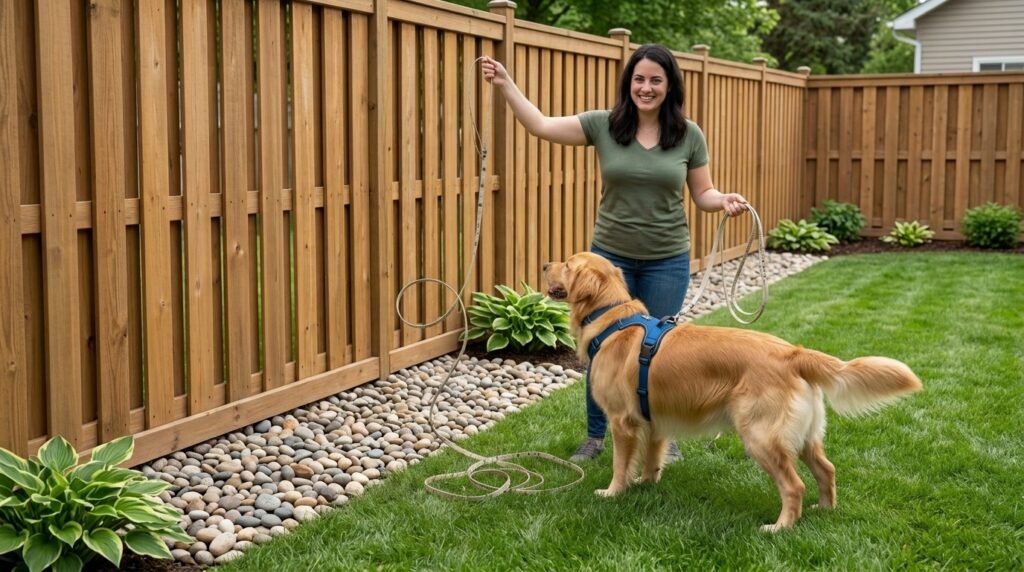
What to do: End unsupervised yard access now. Use a leash or long line attached to a harness while you address the trigger and reinforce the boundary. Inspect the entire perimeter, repair loose boards and gate gaps, and install a humane dig-resistant barrier. Identification tags and a registered microchip add protection but do not replace secure containment.
How to Stop a Dog From Digging Up the Lawn
“Stop” should mean making unwanted digging unlikely while teaching a safer choice—not frightening the dog near holes.
Step 1: Prevent Unsupervised Practice
For the next two weeks, go outside with your dog. A lightweight long line can help at a distance, but hold it or manage it safely; do not tether the dog and walk away. Temporarily fence garden beds and cover fresh repair areas with a stable barrier the dog cannot ingest, tip over, or become trapped beneath.
Step 2: Meet the Cause Before Yard Time
If boredom is likely, take a short sniff walk or do a search game first. If the weather is hot, postpone yard time. If prey is present, restrict that section and arrange safe removal. If a neighbor dog triggers fence running, block the view and use a quieter part of the yard.
Step 3: Interrupt Early and Neutrally
Watch for intense sniffing, scratching, or circling. Before a hole develops, say your recall cue once in a bright tone, move away, and reward the dog for reaching you. Then offer an appropriate activity or guide the dog to its digging zone. Avoid repeating the cue if you know the dog will ignore it; shorten the distance and make the next repetition easier.
Step 4: Reinforce What You Want
Pay for four-foot-on-grass behavior, checking in with you, settling on a mat, sniffing without excavating, and digging in the permitted place. Rewards can include food, play, permission to explore, or access to the digging pit.
Step 5: Adjust the Plan From Evidence
If dog digging holes continues, do not increase punishment. Recheck access, the value of the legal zone, and whether prey, heat, or distress was mistaken for boredom.
How to Build a Designated Digging Area for Dogs
A digging zone must be safe, accessible, and more rewarding than the lawn.
Choose the Location and Container
Choose a shaded spot away from fences, utilities, plants, play equipment, and lawn chemicals. Call your utility-locating service before excavating. A sandbox, sturdy raised bed, or durable hard-sided container should let the dog turn and paw without encountering sharp edges.
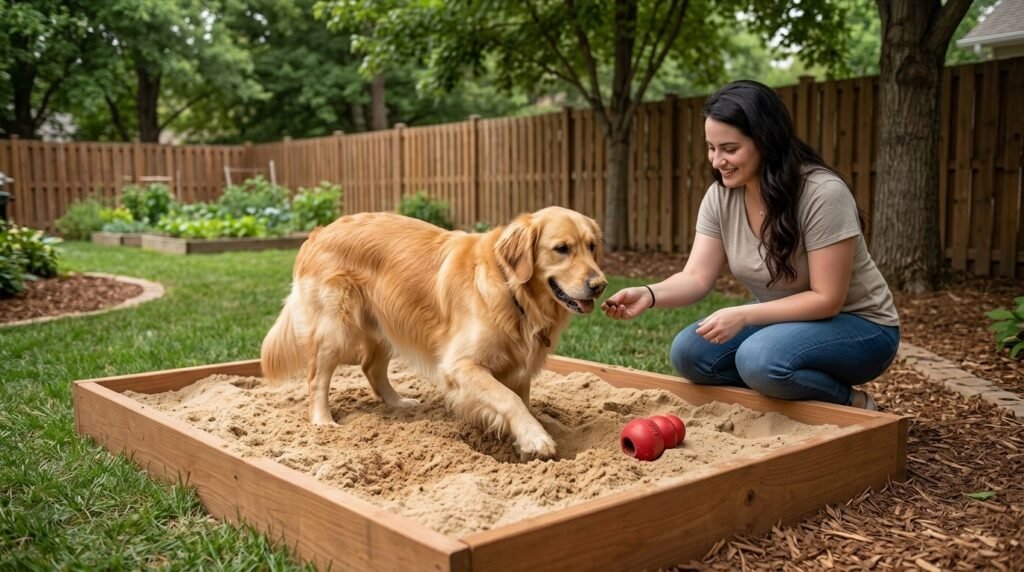
Use clean play sand or dog-safe loose soil. Avoid cocoa mulch, treated material, sharp gravel, splintered wood, unknown compost, and soil that may contain glass, fertilizer, pesticides, or toxic plants. Provide drainage and prevent animal contamination.
Teach the Zone in Small Steps
- Create interest. Let your dog watch you place a favorite toy or a few treats just beneath the surface.
- Add a cue. Say “dig here” once as the dog investigates.
- Reward the first paw movement. Praise and deliver another reward in the pit.
- Build duration gradually. Hide rewards at slightly different depths, never so deep that the dog becomes frustrated.
- Redirect early. If your dog targets the lawn, call the dog away and lead it to the zone without anger.
- Supervise success. During early training, prevent access to other soil so the new habit has a chance to become strong.
- Fade food thoughtfully. Continue to surprise the dog with toys or occasional buried treats while also rewarding the pleasure of digging itself.
Use only dog-safe items and count treats within the daily food allowance. Never bury cooked bones, small objects, batteries, fabric, or anything that could splinter, obstruct the gut, or cause choking.
If your dog ignores the zone, change one variable at a time: location, substrate, size, shade, or reward value. Many failures are design problems, not stubbornness.
How to Stop a Dog Digging Under a Fence Safely
Dog digging holes along a fence requires physical security and behavior work. Training alone is inadequate while escape remains possible.
Immediate Safety Measures
- Keep the dog indoors unless supervised.
- Use a well-fitted harness and held leash or long line in the yard.
- Block access to the problem section with a second temporary barrier.
- Close gate gaps and check latches, loose boards, erosion, and corners.
- Remove climbable objects beside the fence.
- Bring the dog inside when triggers such as wildlife, delivery activity, storms, or neighbor dogs appear.
Never chain a dog near the boundary. Tethering can cause entanglement, injury, frustration, and continued escape attempts.
Permanent Barrier Options
Ask a fence professional about a buried barrier or inward-facing horizontal apron made from rigid, pet-safe material. Cap or bury every cut end. Appropriate depth, materials, and permits depend on the soil, dog, utilities, and local rules. Professionally installed pavers or a concrete footer may suit high-risk sections.
Do not use exposed chicken wire, broken glass, nails, electrified makeshift devices, caustic substances, chili powder, or anything intended to cause pain. The Oregon Veterinary Medical Association’s guidance on digging recommends blocking fence-line areas and limiting unsupervised access while the cause is addressed.
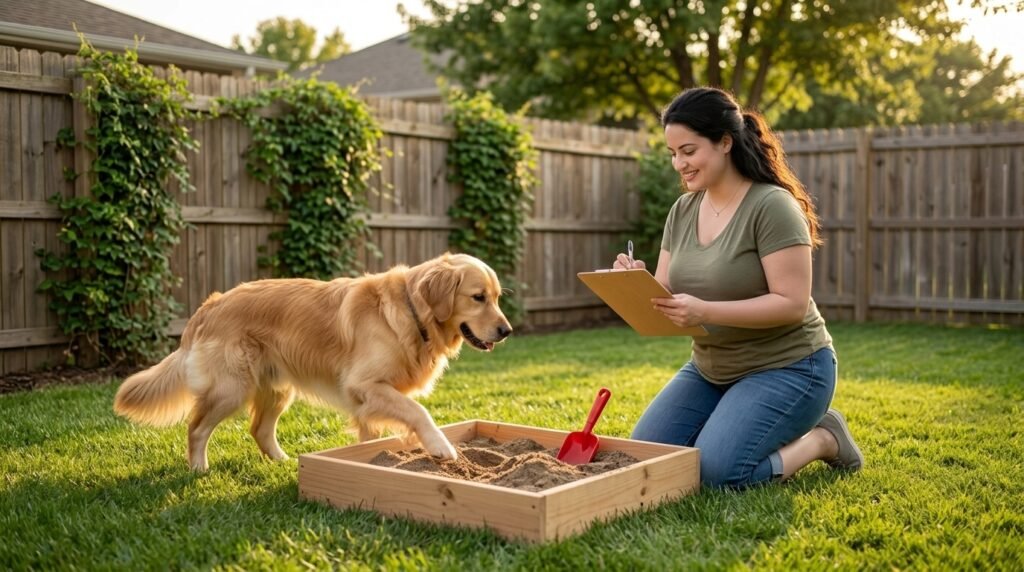
Teach recall and check-ins away from the fence. Reward turns from outside distractions. A secure visual screen may help with passing triggers, but it must preserve ventilation. Never put a digging zone near the boundary.
Common Mistakes That Make Digging Worse
When owners are frustrated by dog digging holes, quick deterrents can create new risks without solving the motivation.
- Punishing after the fact: A dog cannot connect anger now with a hole made earlier. Punishment may instead create fear of the owner or the yard.
- Yelling during digging: Attention can accidentally reinforce recreational digging, while harshness can intensify anxiety-driven behavior.
- Filling holes with feces or irritants: This is unsanitary, may be ingested, and does not meet the need that produced the hole.
- Depending only on exercise: Appropriate activity helps, but extreme exercise can increase arousal or injure a young, senior, or medically limited dog.
- Leaving toys in the yard and walking away: Objects are not a substitute for interaction, and unsupervised toys can create choking or ingestion risks.
- Using a digging box without training: The lawn already has a long reinforcement history. The new area must be actively introduced and rewarded.
- Ignoring sudden behavior change: New, intense, or compulsive behavior deserves closer evaluation.
Positive reinforcement is not permissiveness. Protect landscaping with barriers and supervision while teaching the behavior that earns rewards. Avoid intimidation; protecting the relationship is part of effective training, as explained in habits that destroy dog trust.
When to Call a Veterinarian or Behavior Professional
Most recreational dog digging holes can improve with management, enrichment, and an allowed outlet. Contact your veterinarian when the behavior begins suddenly, increases dramatically, or occurs with physical or behavioral changes.
Seek veterinary guidance if your dog:
- Damages paws, nails, teeth, or skin while digging or escaping
- Pants heavily, drools, seems weak, vomits, becomes confused, or collapses in heat
- Eats large amounts of soil or nonfood material
- Cannot settle, sleeps poorly, or shows repetitive behavior that is difficult to interrupt
- Shows intense fear, separation distress, aggression, or repeated escape attempts
- Has appetite, thirst, mobility, elimination, or other health changes
If the dog is actively overheating, badly injured, having trouble breathing, collapsing, or repeatedly placing itself in immediate danger, contact an emergency veterinarian now. For persistent anxiety or complex escape behavior, ask your veterinarian for referral to a board-certified veterinary behaviorist or another appropriately credentialed, reward-based professional.
A Practical Two-Week Digging Reset
For 14 days, prevent unsupervised yard access and record each attempt. On days 1–3, observe, repair safety problems, and address heat, prey, fence, or anxiety factors.
On days 4–7, add a cause-matched activity before yard time and introduce the legal digging zone in two or three short supervised sessions daily. Reward check-ins and permitted digging generously.
During days 8–14, gradually allow more freedom in secure areas. Never test the dog beside a vulnerable fence; return to closer management after a setback.
Measure progress with facts:
- Number of new off-limits holes
- Number of fence-line attempts
- Successful recalls before digging begins
- Voluntary visits to the digging zone
- Time the dog can remain relaxed in the yard
- Frequency and intensity of stress signals
Improvement rarely means the instinct vanishes. A realistic goal is fewer unsafe attempts, easy redirection, reliable use of the designated area, and a secure boundary.
FAQs
Will vinegar, pepper, or cayenne stop a dog from digging?
Do not use substances intended to irritate a dog’s nose, eyes, mouth, or paws. They can cause distress or injury and do not address the reason for digging. Use access control, cause-specific management, positive reinforcement, and a safe digging zone instead.
Why does my dog dig holes and then lie in them?
A shallow hole may expose cooler soil or create a comfortable resting shape. Move your dog to a cooler environment and provide shade and fresh water. If the weather is warm and your dog has excessive panting, drooling, weakness, vomiting, confusion, or collapse, seek urgent veterinary care.
Can I completely stop dog digging holes?
You can often greatly reduce unwanted digging, but complete suppression may be unrealistic for a strongly motivated dog. Results are usually better when you prevent lawn access during training, solve the underlying trigger, and provide a designated place where digging is permitted.
What is the best way to stop a dog from digging under a fence?
Immediately end unsupervised yard time, use a harness and held leash or long line, block the vulnerable section, and have the fence professionally reinforced with a pet-safe buried barrier or inward apron. Also address the reason the dog wants to escape; a barrier alone may simply move the attempt elsewhere.
Conclusion
The solution to dog digging holes begins with a better question than “How do I punish this?” Ask what the hole gives your dog. Its location, timing, contents, and accompanying body language can point toward recreation, boredom, prey, cooling, caching, anxiety, or escape.
Once you identify the likely cause, prevent unsafe practice, meet the need appropriately, and reward a clear alternative. A well-designed digging zone can protect the lawn without denying a normal behavior, while secure fencing and supervision are essential when escape is possible. If the change is sudden, frantic, injurious, heat-related, or connected with severe distress, involve your veterinarian promptly.