
A healthy dog tongue color is usually pink, although some dogs naturally have blue-black tongues or flat dark spots. What matters most is your dog’s normal appearance. A sudden change to blue, purple, gray, white, very pale, or unusually bright red—especially with breathing trouble, weakness, collapse, overheating, bleeding, or altered responsiveness—can be an emergency.
Do not try to diagnose illness by tongue color alone. Look at the whole dog, compare the tongue with the gums, and consider how quickly the change appeared. This guide explains what may be normal, which changes deserve a veterinary call, and how to give the clinic information that helps it triage your dog quickly.
Table of Contents
Dog Tongue Color at a Glance
Use this table as a triage guide, not as a diagnosis. Indoor lighting, camera filters, food dyes, and natural pigment can all change how a tongue appears.
| Appearance | What it may represent | Recommended action |
|---|---|---|
| Moist pink, close to the dog’s usual shade | Normal circulation for many dogs | Monitor as part of normal care |
| Lifelong blue-black tongue or stable flat dark spots | Normal melanin pigmentation in some dogs | Photograph the baseline and watch for changes |
| Sudden blue, purple, or gray over previously pink tissue | Inadequate oxygenation or impaired circulation, among other serious problems | Seek emergency veterinary care now |
| Pale pink or white | Anemia, blood loss, shock, or poor circulation may be possible | Urgent veterinary assessment; emergency care if sudden or paired with weakness, collapse, or breathing changes |
| Unusually bright or dark red | Heat illness, inflammation, irritation, or other problems may be possible | Move out of heat and contact a vet promptly; emergency care with overheating or neurologic signs |
| Yellow tint | Jaundice may be possible, particularly if the gums or whites of the eyes also look yellow | Arrange prompt veterinary care |
| New, raised, irregular, bleeding, ulcerated, or enlarging dark area | Injury, inflammation, infection, or an oral growth may be possible | Schedule a veterinary oral examination promptly |
One observation is especially important: a new color over a large part of the tongue is different from a small mark that has looked identical for years. If your dog seems distressed, do not spend time comparing charts or taking the perfect picture. Leave for the nearest emergency hospital and call on the way if it is safe to do so.
What Is a Normal Dog Tongue Color?
For many dogs, the normal tongue is moist and pink. The exact shade is not universal. It can look lighter or deeper depending on natural pigment, recent activity, panting, temperature, hydration, circulation, and lighting. A healthy appearance is best defined by what is normal for the individual dog at rest.

Pink also does not mean that every part must be uniform. Freckles or flat black, blue-black, or brown areas can reflect melanin, the same pigment involved in skin and coat color. Chow Chows and Chinese Shar-Pei are especially known for blue-black tongues, and mixed-breed and other purebred dogs can have dark oral pigment or spots. For these dogs, a naturally dark dog tongue color should not be expected to turn pink.
Establish a baseline when your dog is relaxed and healthy:
- Look in bright, neutral daylight rather than under colored bulbs.
- Note the overall tongue and gum shades.
- Record where any flat dark spots sit and roughly how large they are.
- Take a clear, unfiltered photo for comparison.
- Recheck occasionally during routine dental care, without forcing the mouth open.
Your baseline makes future dog tongue color changes much easier to describe. It is also more reliable than comparing your dog with a photo of another breed online.
Color is only one clue
The tongue is part of the oral mucous membranes, so its appearance can offer clues about oxygenation, blood flow, red blood cells, inflammation, and pigment. It cannot confirm the cause. A veterinarian may need an examination, oxygen measurement, complete blood count, imaging, or other testing.
The gums are often easier to inspect than the tongue, particularly in a frightened dog or one that will not safely open its mouth. If much of the mouth is naturally pigmented, look for a normally pink area if one exists. Never place your fingers in the mouth of a struggling, painful, choking, or poorly responsive dog.
How to Check a Dog’s Tongue Safely
First, observe without restraining. Watch the chest and abdomen. Is breathing quiet and comfortable, or is the dog stretching the neck, using the belly forcefully, making unusual sounds, or unable to settle? Check alertness, walking, temperature exposure, and any known trauma or toxin access before focusing on dog tongue color.
If the dog is calm and breathing normally, lift the lip gently and compare the gums with their usual shade. Let the dog open its own mouth rather than pulling the jaw apart. Check in daylight or white light. A phone flashlight can wash out subtle color, while warm household bulbs can make tissue look redder or yellower.
Ask five questions:
- Is the appearance new or has it always been present?
- Is the change across most of the tongue or limited to one spot?
- Do the gums show a similar change?
- Did it begin after exercise, heat exposure, eating, medication, trauma, or possible toxin exposure?
- Is the dog breathing, walking, and responding normally?
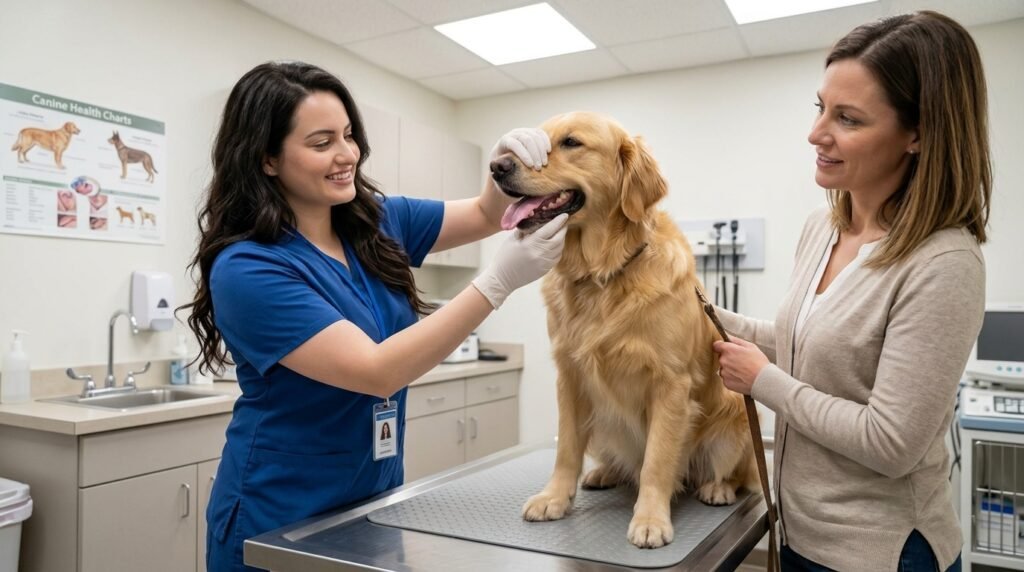
Take a photo only if doing so does not delay care. Include one close image and one wider image showing the mouth. Avoid filters, flash glare, and editing. A photo beside a familiar reference color can help, but the dog’s safety comes first.
Blue or Purple Dog Tongue: Treat a Sudden Change as an Emergency
A lifelong blue-black tongue or stable dark pigmentation can be normal. A sudden blue, purple, or gray cast on tissue that is normally pink is different. It may indicate cyanosis—visible discoloration associated with inadequate oxygen in the blood—or severely impaired breathing or circulation. Possible underlying emergencies include an obstructed airway, serious lung or heart disease, choking, smoke exposure, poisoning, or other critical illness.
The veterinary-reviewed PetMD overview likewise warns that a sudden dark red, purple, or blue-tinged tongue may accompany serious conditions. More importantly, the response should be based on urgency, not an attempt to identify the exact cause at home.
Go to an emergency veterinarian immediately if a blue, purple, or gray dog tongue color is new, particularly with:
- Labored, rapid, noisy, or open-mouth breathing
- Gasping, choking, or repeated unproductive retching
- Collapse, extreme weakness, or inability to stand
- Confusion, poor responsiveness, or seizures
- Facial swelling or hives
- Smoke, electrical, chemical, medication, or toxin exposure
- Trauma to the chest or neck
Keep the dog as calm as possible and limit exertion. Do not put food, water, medication, or your fingers into the mouth of a dog struggling to breathe. Do not attempt a blind finger sweep for an unseen object. Call the emergency clinic while another person drives when possible.
If toxin exposure is possible, bring the package or a photo of the label. In the United States, the ASPCA Animal Poison Control Center provides 24-hour guidance, although fees may apply. Calling poison control should not delay emergency transport when the dog has breathing trouble, collapse, or a rapidly changing tongue.
Pale or White Dog Tongue: Consider Blood Loss and Circulation
A tongue that is much paler than usual or nearly white warrants attention, especially when the gums are also pale. Potential explanations include anemia, active or internal blood loss, shock, or inadequate circulation. This appearance cannot tell you which cause is present or how severe it is.
VCA’s veterinarian-authored guide to anemia in dogs notes that loss of normal pink gum color is a commonly observed sign and that affected dogs may also have low stamina, lethargy, collapse, labored breathing, appetite loss, a faster heart rate, or visible blood loss. The Merck Veterinary Manual overview of anemia in dogs explains that anemia can arise from blood loss, red-cell destruction, or inadequate red-cell production—very different processes that require veterinary diagnosis.
Seek emergency care for a pale or white dog tongue color accompanied by:
- Collapse, fainting, severe weakness, or inability to stand
- Rapid or difficult breathing
- A swollen or painful abdomen
- Recent trauma, surgery, or possible internal bleeding
- Vomit, stool, urine, or saliva containing significant blood
- Black, tar-like stool
- Uncontrolled external bleeding
- Marked lethargy or rapidly worsening behavior
Even if the dog appears stable, a new pale tongue or pale gums deserve a prompt call to a veterinarian. Do not give iron supplements or human medications unless a veterinarian directs you to do so. Anemia in dogs is not automatically an iron-deficiency problem, and unneeded products can be harmful or delay correct treatment.
Unusually Red Dog Tongue: Heat, Irritation, and Inflammation
Some tongues are naturally a strong pink. The concerning change is a tongue that becomes distinctly brighter or darker red than the dog’s baseline, especially when the gums change too. Recent running or excitement may temporarily deepen the color, but it should settle as the dog rests comfortably.

An intensely red tongue with heavy panting, drooling, weakness, vomiting, diarrhea, confusion, stumbling, or collapse can accompany heatstroke. Cornell University College of Veterinary Medicine describes heatstroke as a medical emergency, not a condition to monitor at home until it passes.
Move an overheated dog into air conditioning or shade, begin cooling with cool—not ice-cold—water, and head to a veterinary hospital. Avoid ice baths or wrapping the dog in wet towels, which can interfere with heat loss. Call the clinic for instructions during transport. Even if the dog seems better after cooling, internal injury can still develop and professional evaluation is important.
Redness limited to one area may instead be associated with a bite, burn, foreign material, dental disease, ulcer, infection, or other local inflammation. Look for drooling, pawing at the mouth, bad breath, bleeding, reluctance to eat, dropping food, or pain. Persistent oral discomfort can also lead to repeated licking; PawMindTips explains additional reasons for excessive licking in dogs, but a visible mouth lesion needs a veterinary examination rather than a behavior-only solution.
Yellow, Gray, Brown, or Patchy Changes
Not every important dog tongue color change fits the three main warning colors. A yellow tint affecting the tongue, gums, or whites of the eyes can be associated with jaundice and warrants prompt veterinary attention. Yellow staining only on the tongue may come from food or something the dog licked, so rinse-free observation in natural light and examination of other tissues can help distinguish surface color from a broader change. Do not force water into the mouth.
Gray oral tissue can be as concerning as blue or purple when the dog tongue color is new and diffuse, particularly with abnormal breathing or collapse. Treat that combination as an emergency.
Brown or black discoloration may be normal pigment, staining, damaged tissue, or a lesion. Location and evolution matter more than the color name. A flat mark that has remained unchanged for years is less concerning than a spot that is raised, thickened, painful, ulcerated, bleeding, asymmetrical, or enlarging.
Food can briefly stain a tongue. So can chewing colored toys or contact with other substances. If your dog is completely comfortable and the color wipes away from surrounding fur or fades quickly, note what was eaten. If exposure involved a cleaner, medication, plant, chemical, or unknown product, contact a veterinarian or poison-control service rather than assuming it is harmless staining.
Old Dark Spots vs. a Sudden Dog Tongue Color Change
Natural pigmentation is usually flat, painless, and stable. Owners often first notice a spot after reading about dog tongue color or looking closely during panting, even though it has probably been present for a long time. Old photos can establish whether it is truly new.
A veterinary appointment is appropriate when a dark area:
- Appears suddenly on previously pink tissue
- Grows or changes shape, texture, or color
- Becomes raised, firm, ulcerated, or crusted
- Bleeds without an obvious minor injury
- Produces odor or discharge
- Seems painful or affects eating, drinking, chewing, or swallowing
- Occurs with facial swelling, weight loss, or enlarged lymph nodes
Pigment alone does not prove that a spot is benign, and a concerning oral growth does not have to be black. Veterinarians assess its surface, depth, location, and surrounding tissues and may recommend sampling. Do not scrape, cut, squeeze, or apply peroxide, essential oils, human mouthwash, or topical medication to it.
A useful rule is: stable and longstanding usually allows a scheduled discussion; new and changing needs prompt assessment; diffuse change plus systemic symptoms needs urgent or emergency care.
When Dog Tongue Color Means You Should Call a Vet
Go to an emergency hospital now
Seek immediate care for a sudden blue, purple, or gray tongue; any color change with breathing difficulty; collapse or severe weakness; choking; seizures; significant bleeding; severe trauma; suspected heatstroke; facial swelling with breathing changes; or a suspected toxin exposure with symptoms.
Changes in responsiveness matter too. A poorly responsive dog with an abnormal tongue requires emergency evaluation rather than online monitoring.
Call your veterinarian the same day
Call promptly for new paleness without dramatic symptoms, persistent unusual redness, yellow oral tissues, a painful mouth, new drooling, reduced appetite, recurrent bleeding, or a new lesion. The clinic may direct you to urgent care based on the dog’s history and accompanying signs.
Arrange a routine examination
A stable, flat pigmented spot in a dog that feels well can usually be documented and discussed at a routine visit. Schedule sooner if you cannot confirm that it is old, or if its size, border, height, surface, or color changes.
Dogs sometimes lick their lips during nausea, discomfort, or stress. The PawMindTips guide to signs of a stressed dog may help with context, but stress should not be used to explain away a new oral-color change or physical illness.
What to Tell the Veterinarian About a Tongue Color Change
Call before arriving when possible. When reporting a dog tongue color change, start with the most urgent fact: “My dog’s normally pink tongue suddenly looks blue, and breathing is labored,” is more useful than a long history before mentioning respiratory distress.
Provide these details:
- Normal baseline: usual tongue and gum color, including longstanding spots
- Timing: when you first noticed the change and whether it was sudden, intermittent, or progressive
- Distribution: the whole tongue, edges, underside, one spot, gums, lips, or whites of the eyes
- Appearance: pink, pale, white, blue, purple, gray, bright red, yellow, brown, or black; flat versus raised; dry versus moist; bleeding or ulcerated
- Breathing: rate and effort, unusual noises, coughing, choking, or open-mouth breathing
- Other signs: weakness, collapse, vomiting, diarrhea, drooling, pain, confusion, appetite change, bleeding, or altered walking
- Recent events: exercise, hot environment, trauma, anesthesia, surgery, new medication, smoke, electrical cord chewing, or possible toxin exposure
- Evidence: clear unfiltered photos, a short breathing video if safe, product packaging, medication list, and relevant medical history

Do not delay departure to collect every item when emergency signs are present. Ask whether the hospital wants you to come directly, whether any safe first aid is appropriate, and where to go if the regular clinic is closed.
FAQs
Can a healthy dog have a black or spotted tongue?
Yes. Many healthy dogs have natural melanin pigmentation, including flat black or blue-black spots, and Chow Chows and Chinese Shar-Pei commonly have extensively dark tongues. This normal dog tongue color can be photographed so new changes are easier to recognize. A new, raised, bleeding, painful, or enlarging area needs veterinary assessment.
Is a purple tongue always an emergency in dogs?
A naturally blue-black tongue or lifelong dark spot is not automatically abnormal. A sudden purple or blue dog tongue color on tissue that is normally pink—especially with difficult breathing, collapse, or poor responsiveness—is an emergency and may reflect inadequate oxygenation.
Can dehydration change a dog’s tongue color?
Dehydration may make oral tissues feel tacky or dry, but dog tongue color alone cannot confirm dehydration. Marked paleness, intense redness, grayness, blueness, or yellowness should not be attributed to dehydration without veterinary advice, particularly when other symptoms are present.
Should I check my dog’s gums as well as the tongue?
Yes. Comparing the gums and dog tongue color can show whether a change is widespread, and gums are often easier to view. Use your dog’s healthy baseline. Do not force the mouth open, and never let a mouth check delay emergency care for breathing trouble, collapse, or suspected heatstroke.
Conclusion
The safest way to interpret dog tongue color is to compare it with your dog’s established baseline and assess the whole dog. Moist pink tissue and stable natural dark pigmentation can be normal. Sudden blue, purple, gray, white, very pale, or intensely red changes can signal a serious problem, particularly when paired with breathing difficulty, collapse, weakness, overheating, bleeding, or abnormal responsiveness.
Document harmless-looking longstanding spots, arrange a veterinary exam for new or changing focal lesions, and seek emergency help for abrupt diffuse changes with systemic symptoms. Tongue color is a clue—not a home diagnosis—and timely veterinary triage matters more than identifying the exact shade.