Socializing an adult dog is possible, but the process looks different from socializing a young puppy. An adult dog may already have strong emotional associations with unfamiliar people, animals, sounds, or places. The goal is not to force your dog to enjoy every interaction. It is to help them feel safer, recover more easily, and behave calmly when something unfamiliar appears.
Successful socialization often produces a dog who can notice a stranger without hiding, pass another dog without lunging, or explore a new location without becoming overwhelmed. Your dog does not need to greet everyone or play with every dog to be considered well socialized.
The process requires controlled exposure, careful observation, positive reinforcement, and realistic expectations. Moving slowly may feel unproductive, but a series of comfortable five-minute experiences usually builds more confidence than one stressful hour-long outing.
Table of Contents
What Does Socializing an Adult Dog Really Mean?
Socialization is commonly misunderstood as frequent social interaction. Owners may believe their dog needs to meet many strangers, visit crowded places, or play with unfamiliar dogs. For an uncertain adult dog, those experiences can create fear rather than confidence.
Socializing an adult dog means gradually helping the dog form safer emotional associations with situations they will encounter in everyday life. These may include:
- Adults and children
- People wearing hats or uniforms
- Calm unfamiliar dogs
- Cars, bicycles, and shopping carts
- Doorbells and household appliances
- Veterinary clinics and grooming facilities
- Different surfaces, buildings, and neighborhoods
- Being handled for routine care
According to Best Friends Animal Society’s dog socialization guidance, unfamiliar experiences should be presented at an intensity the dog can comfortably handle. Distance, duration, movement, and sound can all change how difficult an experience feels.
A dog who calmly observes another dog from 40 feet away is learning something valuable. A greeting is not required. Calm observation, disengagement, and recovery are legitimate signs of progress.
Socialization Is Not the Same as Friendship
Some adult dogs are naturally social. Others are selective about their companions, and some prefer not to interact with unfamiliar dogs at all. These differences are not automatically behavioral defects.
A realistic goal might be for your dog to:
- Walk past people without retreating or barking
- Remain relaxed while a visitor sits across the room
- Notice another dog and then look back at you
- Enter the veterinary clinic without panicking
- Recover quickly after hearing a sudden sound
Calm neutrality is often safer and more attainable than expecting enthusiastic friendliness.
Assess Your Dog Before Starting Socialization
Before socializing an adult dog, identify what currently makes your dog uncomfortable. Avoid beginning with a busy park or a room full of visitors simply to see what happens.
Observe your dog in familiar, manageable settings and write down:
- The people, animals, sounds, or objects that trigger discomfort
- The distance at which the dog first notices each trigger
- Early stress signals
- Whether the dog can still eat or respond to a familiar cue
- How long recovery takes after the trigger disappears
- Situations the dog already handles comfortably
Dogs usually communicate discomfort before barking, lunging, hiding, or snapping. Early signals can include turning the head away, lip licking, yawning, freezing, closing the mouth, lowering the body, pinning the ears, pacing, scanning, or refusing food.
PawMindTips’ guide to the signs of a stressed dog can help you recognize these quieter warnings. Repeated lip movements can also have behavioral or medical causes, as explained in why dogs keep licking their lips.
Rule Out Pain or Illness
A sudden change in sociability deserves veterinary attention. Pain, impaired vision or hearing, neurological problems, and other health conditions can change how a dog reacts to touch, people, animals, or unfamiliar places.
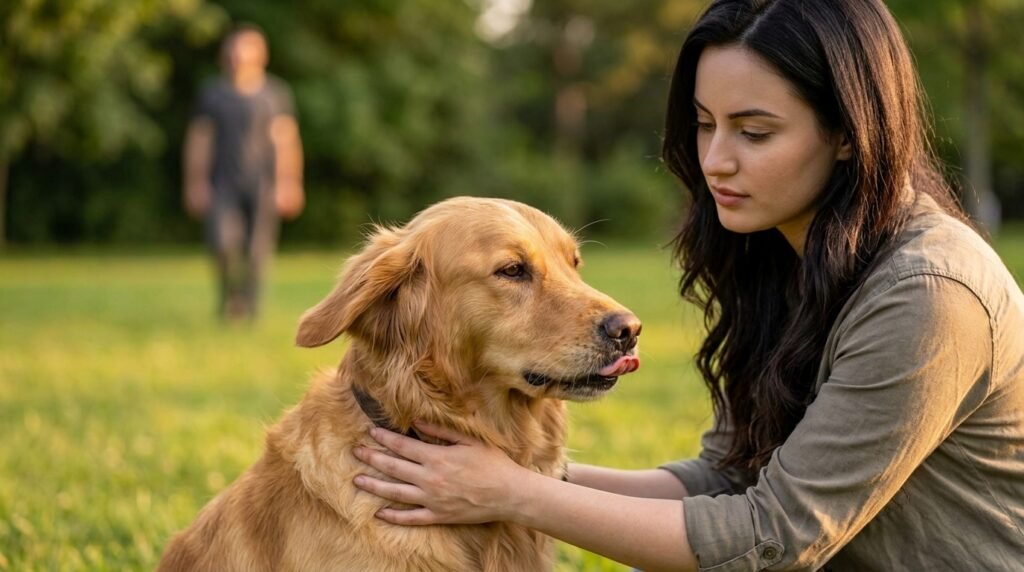
Schedule a veterinary examination if your dog has suddenly become irritable, fearful, unusually withdrawn, touch-sensitive, or aggressive. Training cannot resolve discomfort caused by an untreated medical problem.
9 Safe Steps for Socializing an Adult Dog
A structured plan makes socializing an adult dog safer and easier to measure. Progress through these steps according to your dog’s behavior rather than a fixed deadline.
1. Begin With Decompression and Predictability
A newly adopted dog may need time to feel safe before formal socialization begins. Keep the first days or weeks quiet and predictable.
Provide:
- A comfortable resting area
- Consistent feeding and walking times
- Short walks on familiar routes
- Protection from unwanted visitors
- Plenty of uninterrupted sleep
- Simple enrichment, such as sniffing or food puzzles
Do not immediately take a newly adopted dog to crowded stores, parties, dog parks, or family gatherings. A dog who is still adjusting to the home may not have the emotional capacity to process multiple new experiences.
2. Create a Trigger Hierarchy
List your dog’s triggers from easiest to hardest. For example, a dog worried about strangers might be comfortable seeing one quiet person across the street but unable to cope with someone approaching directly.
A sample hierarchy could be:
- One seated person 50 feet away
- One person walking past at 30 feet
- A person standing sideways at 20 feet
- A familiar helper tossing treats without approaching
- A calm person walking beside the owner
- A person entering the home
- A person speaking to or briefly touching the dog
Begin with a situation in which your dog notices the person but remains capable of eating, sniffing, moving normally, and responding to you.
3. Work Below Your Dog’s Threshold
“Threshold” is the point at which a dog can no longer process the situation calmly. An over-threshold dog may bark, lunge, freeze, flee, growl, refuse food, or become unable to respond to familiar cues.
Distance is one of your most useful tools. If your dog becomes tense when another dog is 20 feet away, begin at 40 or 60 feet. Your starting distance is wherever your dog can remain comfortable—not where you think the dog should be comfortable.
Move farther away when you notice:
- A stiff or lowered body
- Fixed staring
- A tightly closed mouth
- Repeated yawning or lip licking
- Raised hackles
- Frantic scanning
- Refusal of favorite treats
- Attempts to hide or escape
Reducing the difficulty is not rewarding fear. It prevents panic and gives the dog an opportunity to learn.
4. Pair Triggers With Positive Outcomes
When your dog notices a trigger at a manageable distance, offer something your dog genuinely enjoys. This may be small pieces of chicken, a favorite toy, praise, or permission to move away and sniff.
The pattern can be simple:
- The dog notices the trigger.
- You mark the moment calmly with “yes” or a clicker.
- The dog receives a high-value reward.
- The trigger goes away or you increase distance.
- The session ends before the dog becomes overwhelmed.
Over time, the appearance of the trigger can begin to predict something pleasant. This is counterconditioning: changing the dog’s emotional response, not merely suppressing visible behavior.
The American Veterinary Society of Animal Behavior offers position statements and access to veterinary behavior resources supporting humane, evidence-based behavioral care.
5. Keep Sessions Short
An effective session may last only three to ten minutes. Stop while your dog is still comfortable.
A common mistake is continuing because the first few repetitions went well. Stress can accumulate even when individual interactions appear manageable. Eventually, the dog may react to something they handled earlier.
End the session when your dog can still:
- Take food gently
- Respond to a familiar cue
- Sniff and explore normally
- Turn away from the trigger
- Maintain loose, natural body movement
- Recover quickly after a surprise
One calm observation followed by a relaxed walk home can be more valuable than ten increasingly difficult introductions.
6. Give Your Dog Choices
Whenever safety allows, let your dog choose whether to move closer, stay at the current distance, or retreat.
Do not drag your dog toward a stranger, hold the dog in place for petting, or block an escape route. Choice reduces pressure and teaches the dog that you will listen to their communication.
Trust is particularly important when socializing an adult dog with an unknown or difficult history. Repeatedly overriding warning signals can make fear worse. Avoid the patterns discussed in habits that destroy dog trust, including forced contact, intimidation, and inconsistent handling.
7. Reward Calm Observation and Disengagement
Many owners reward only greetings. It is equally important to reward your dog for observing something and then choosing to look away.
Useful behaviors include:
- Looking at a trigger and checking back with you
- Sniffing the ground instead of staring
- Moving behind you for space
- Walking past without pulling
- Resting on a mat while a visitor is present
- Recovering calmly after a sound
- Choosing not to interact
These behaviors demonstrate emotional regulation. They are often more useful in daily life than direct social contact.
8. Increase Only One Difficulty at a Time
Social situations contain several variables: distance, duration, movement, sound, number of people or dogs, and the familiarity of the location.
Change only one variable at a time. If you move closer to the trigger, keep the session short. If you visit a new place, begin at a greater distance than you used in a familiar location.
A dog who remains calm around one person in the backyard may struggle with the same person at the front door. Dogs do not automatically apply a learned response to every environment, so practice in several carefully selected settings.
9. Track Recovery, Not Just Reactions
Progress is not measured solely by whether your dog barked. Record how intense the response was, what distance was needed, and how quickly your dog returned to normal.
Signs of meaningful improvement include:
- Noticing a trigger without escalating
- Taking treats at a shorter distance
- Looking away more readily
- Recovering in seconds rather than minutes
- Exploring an environment instead of scanning constantly
- Needing less distance while remaining relaxed
Expect occasional setbacks. Poor sleep, pain, schedule changes, multiple triggers, or a frightening surprise can temporarily reduce your dog’s tolerance.
How to Introduce an Adult Dog to New People
Ask helpers to follow your instructions before meeting your dog. A well-meaning person who reaches overhead, stares, or insists that “dogs love me” can undermine careful preparation.
For the first meeting:
- Choose a quiet, open area.
- Begin at a comfortable distance.
- Ask the person to stand sideways and avoid staring.
- Let the dog observe without being called closer.
- Reward relaxed behavior.
- If appropriate, have the person toss treats away from themselves.
- Allow the dog to approach and retreat voluntarily.
- End the interaction before stress increases.
Tossing a treat behind the dog allows the dog to move away, collect the reward, and decide whether to approach again. This can feel safer than asking the dog to take food directly from a stranger’s hand.
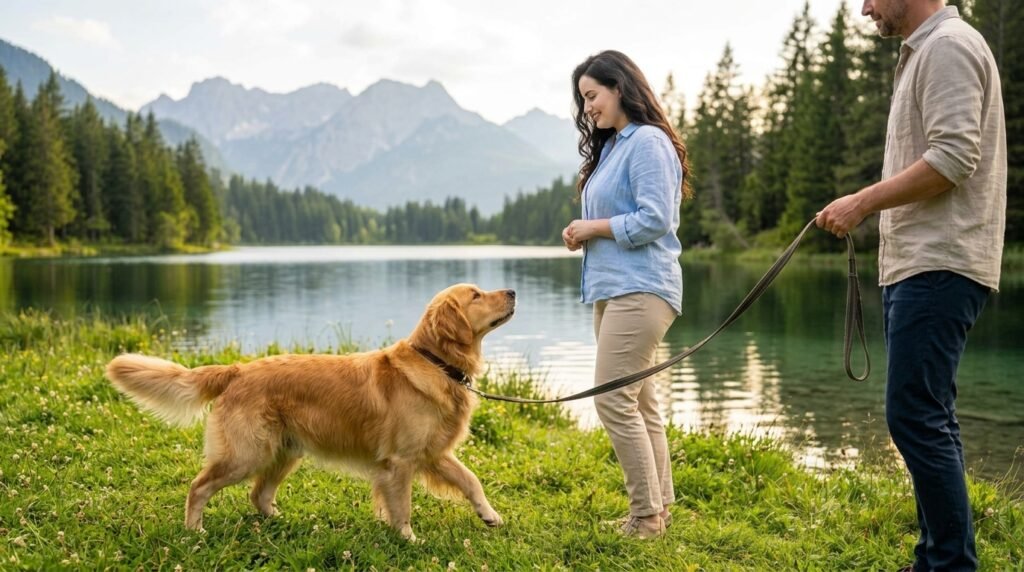
If the dog approaches, the person should not immediately reach over the dog’s head. Sniffing does not necessarily mean the dog wants to be touched. Look for a loose body, soft eyes, voluntary re-engagement, and an absence of avoidance signals.
Introducing Visitors at Home
Some dogs are more defensive inside their home. Consider meeting the visitor outdoors first and taking a short parallel walk before entering together.
Inside the home:
- Use a leash, baby gate, exercise pen, or separate room when needed
- Give the dog access to a safe resting space
- Ask the visitor to ignore the dog initially
- Prevent children from rushing, hugging, or cornering the dog
- Reward resting or calmly observing
- Keep the first visit brief
Management is not failure. It prevents the dog from rehearsing barking, chasing, or defensive behavior while training progresses.
How to Introduce an Adult Dog to Other Dogs
Not every adult dog needs canine friends. For some dogs, the appropriate goal is simply passing other dogs calmly.
Avoid using a crowded dog park to socialize a fearful or reactive adult dog. You cannot control the other dogs, greetings, play styles, or distance. A single frightening encounter can create a setback.
For a planned introduction, select a calm, socially appropriate dog and a capable handler. Start on neutral ground with plenty of space.
Use a Parallel Walk
Begin with both dogs walking in the same direction at a distance where neither dog becomes fixated. Keep the leashes loose and avoid forcing face-to-face contact.
Gradually decrease the distance if both dogs show:
- Loose, curved body movement
- Soft facial expressions
- Normal sniffing
- Easy disengagement
- Relaxed tails
- Willingness to respond to their handlers
Increase distance if either dog stiffens, freezes, stares intensely, lunges, hides, or tries to escape. Do not allow the dogs to “work it out.”
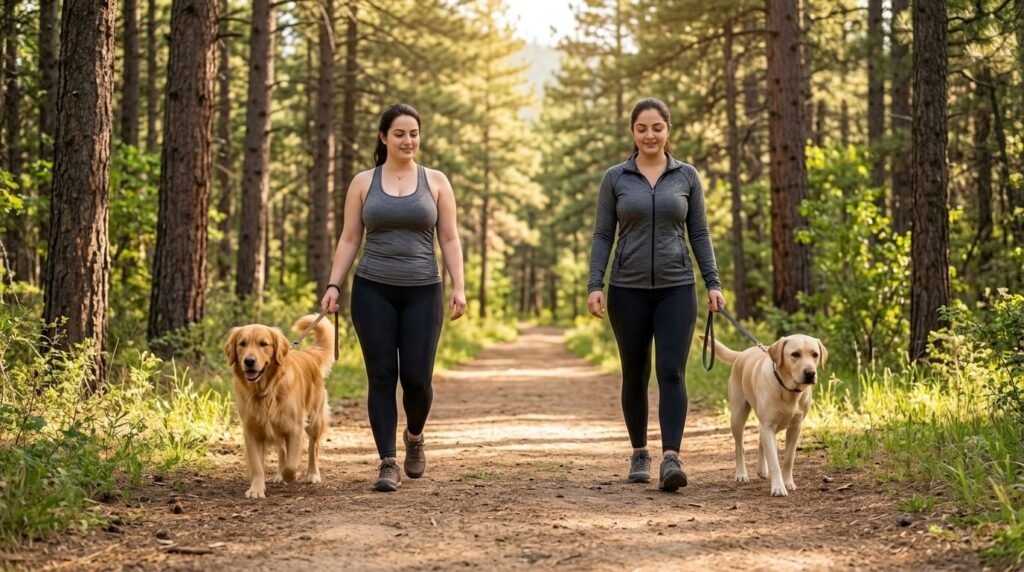
If both dogs remain comfortable, allow a brief curved approach and a short sniff, then call them apart for a break. Several short interactions are safer than one long, escalating meeting.
Socializing an Adult Dog in New Environments
Start with quiet versions of places your dog will regularly need to visit. You do not have to begin inside the building.
Useful early exercises include:
- Sitting in the car near a park
- Walking through an empty parking lot
- Watching people from the edge of a quiet public area
- Exploring new surfaces during low-traffic hours
- Standing outside the veterinary clinic and offering treats
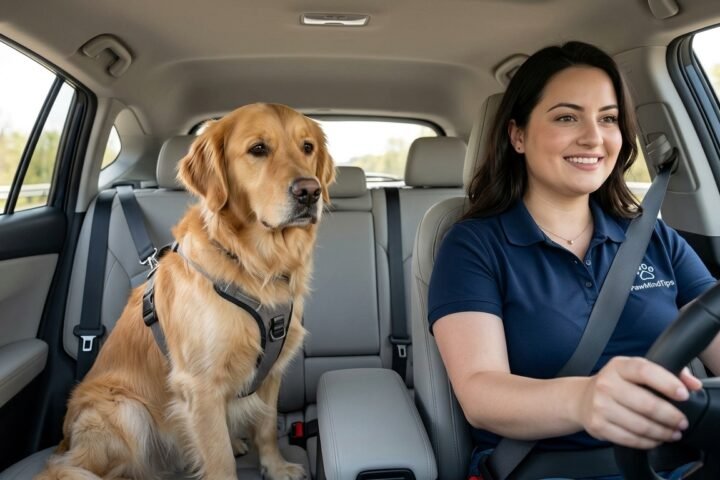
- Taking a short car ride with no stressful destination
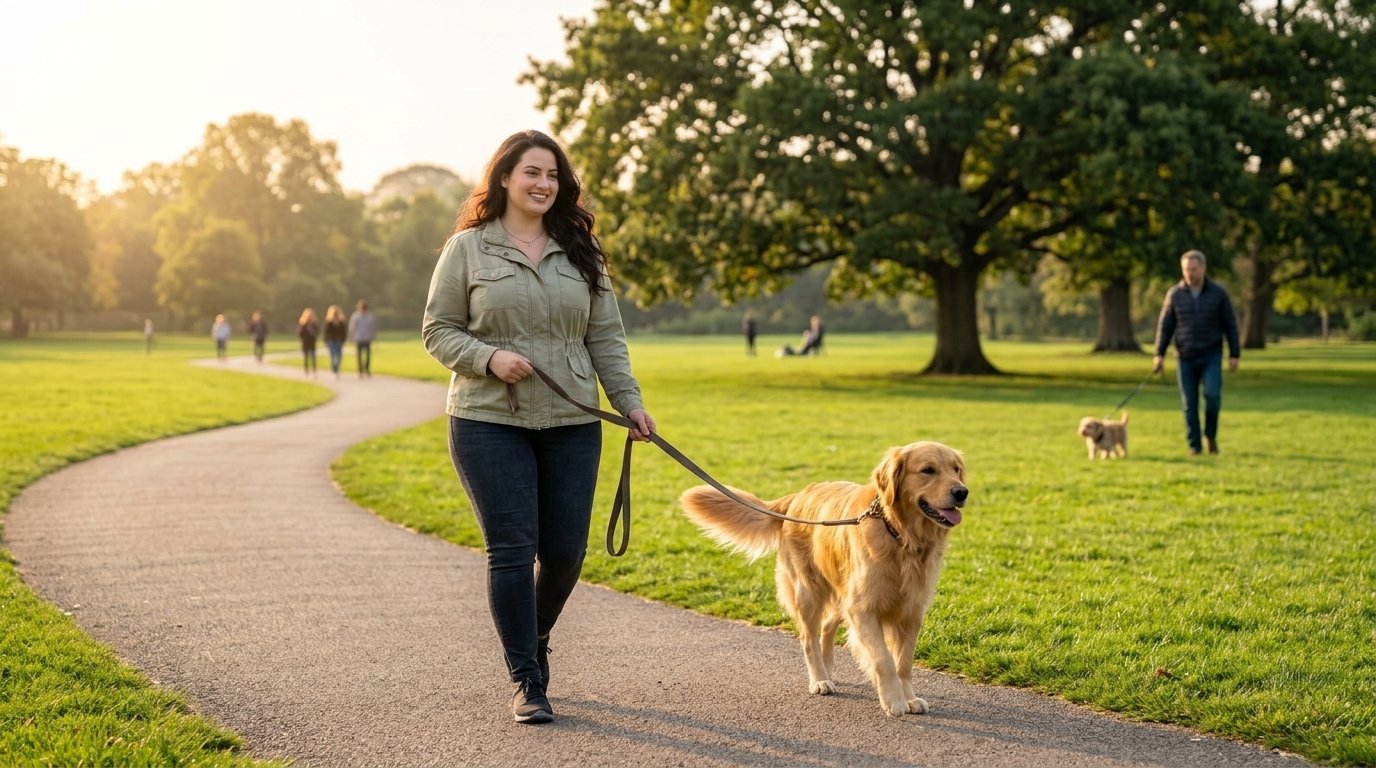
- Walking one block in a new neighborhood
Allow plenty of sniffing. Sniffing can help a dog gather information and move through the environment without being pressured into direct interaction.
A nervous dog may need an even slower approach. The strategies in how to help a nervous dog can support confidence-building alongside structured socialization.
If your dog also struggles when left alone, treat that as a separate behavior plan. Social exposure does not directly resolve separation anxiety in dogs.
Common Adult Dog Socialization Mistakes
Flooding the Dog
Flooding means exposing a dog to more intensity than they can handle, hoping they will eventually “get used to it.” Examples include taking a dog-reactive dog into a crowded park or holding a fearful dog while strangers touch them.
Overwhelming exposure can strengthen the association that the trigger is dangerous.
Forcing Greetings
Your dog does not need to greet every person or dog. Forced leash greetings remove the dog’s ability to create distance and can increase defensive behavior.
Punishing Growling
Growling is a warning signal. Punishment may stop the warning without changing the underlying fear. That can produce a dog who appears quieter but remains uncomfortable.
Create distance, determine what triggered the warning, and revise the plan.
Moving Too Quickly
Progress in one session does not mean the dog is ready for the hardest version of the situation. Increase difficulty gradually and expect new environments to require easier starting conditions.
Mistaking Shutdown for Calmness
A silent dog is not necessarily relaxed. Freezing, refusing food, avoiding eye contact, moving slowly, or remaining motionless can indicate fear.
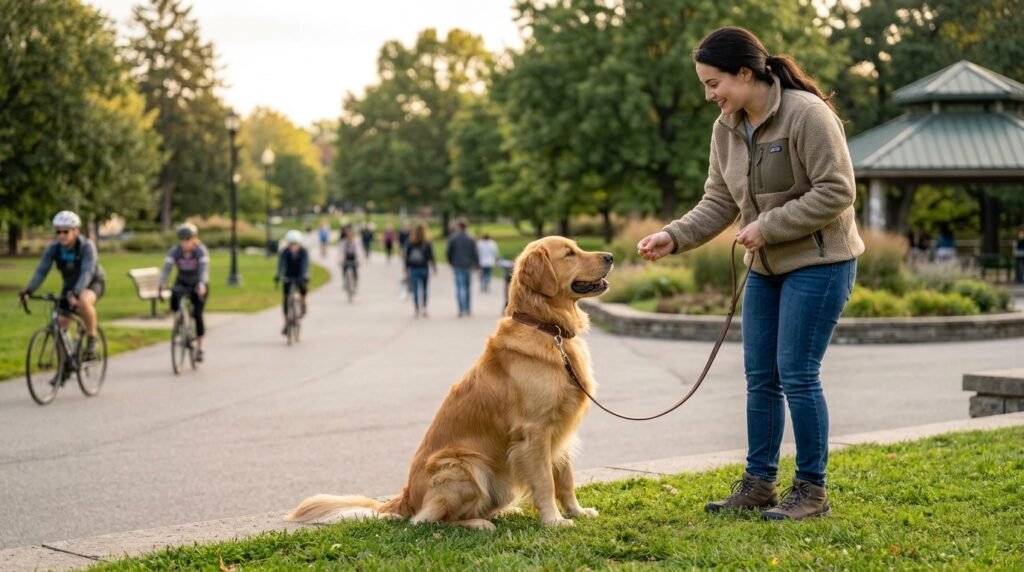
True relaxation generally includes soft muscles, normal breathing, curiosity, sniffing, and the ability to make choices.
Expecting a Social Butterfly
Your adult dog may never enjoy dog parks, strangers touching them, or crowded events. A dog who can move through everyday life without severe distress has made meaningful progress.
When to Seek Professional Help
Consult a qualified professional if your dog:
- Has bitten or attempted to bite
- Regularly lunges or snaps at people or animals
- Cannot recover after seeing a trigger
- Is afraid in most everyday environments
- Guards you or blocks people from approaching
- Has suddenly developed aggression or fear
- Is becoming more reactive despite careful training
- Cannot stay below threshold at a practical distance
Begin with a veterinarian to rule out medical contributors. For significant fear, aggression, or anxiety, ask about a board-certified veterinary behaviorist or another appropriately credentialed behavior professional.
A qualified reward-based trainer can help with controlled setups, leash handling, body-language interpretation, and progression planning. If there is any bite risk, use physical management and obtain professional assistance before arranging introductions.
Conclusion
Socializing an adult dog is not about forcing constant interaction. It is a gradual process of helping the dog feel safe enough to observe, learn, disengage, and recover.
Begin at a comfortable distance, pair unfamiliar experiences with positive outcomes, keep sessions short, and respect your dog’s choices. Prioritize calm neutrality over greetings and judge improvement across weeks rather than individual outings.
If your dog shows severe fear, aggression, a sudden behavioral change, or a history of biting, involve your veterinarian and a qualified behavior professional. The right support can protect everyone’s safety while giving your dog a realistic opportunity to build lasting confidence.