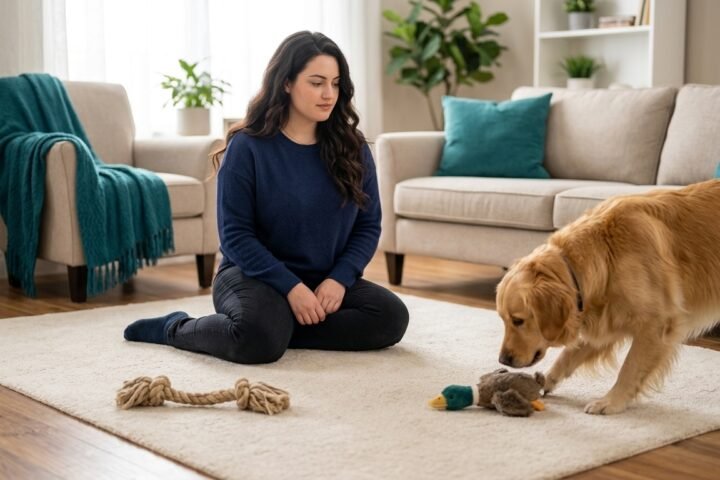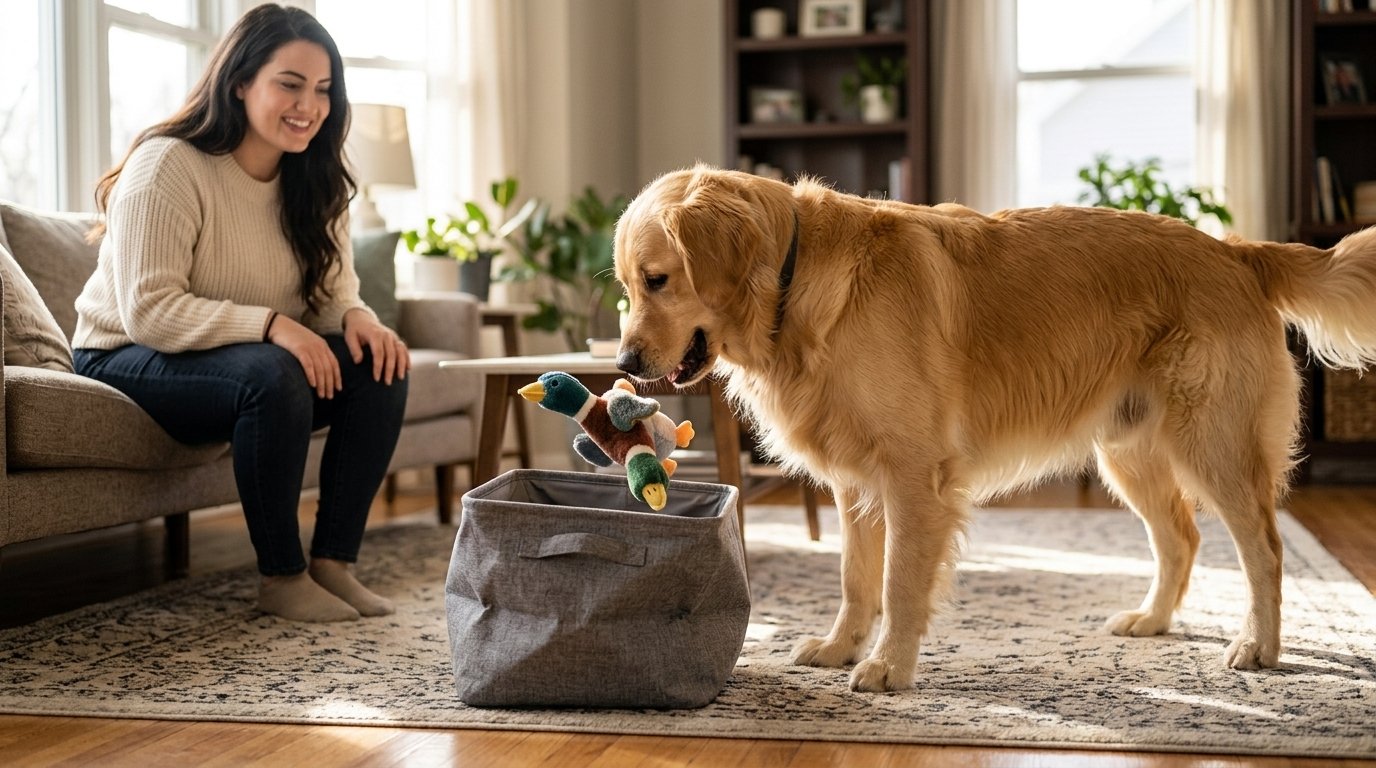
Your dog brings a stuffed duck to the couch, drops it at your feet, and trots off for the next one. By dinner, the living room looks like the bottom of the toy basket. To teach your dog to put toys away, start with the part you want to see at the end. Give your dog one chance to drop the duck straight into an open bin.
That first lesson takes very little space. You can sit beside the basket, offer the toy over the opening, and reward the moment it lands. The walk across the room comes later.
Watch where your dog looks as they let go. A dog aiming for your hand needs a different hint from one who reaches the basket and drops the duck beside it.
Quick Answer
Start with one familiar toy and a low, steady basket. Offer the toy over the opening, ask for a familiar release, and reward the instant it lands inside. Next, place the toy beside the basket so your dog can pick it up. Increase the walking distance gradually. Add “clean up” once your dog can complete one delivery with little help.
Choose a basket your dog can reach
Look at the basket from your dog’s height. Can they stand on all four feet and hang their chin over the opening without touching the rim? A bin that works for a Lab might come up to a terrier’s eyes. Try a shallow, open container on a rug. Give it a nudge with your hand. If it slides across the floor or rattles against the wall, fix that before bringing your dog over.
Pick one toy your dog already carries around. A soft duck with a broad middle is easier to aim than a ball that bounces back out. Leave long ropes, favorite chews, and toys with loose stuffing out of this lesson. Set the toy inside once yourself. If half of it hangs over the edge, choose a wider opening or a shorter toy.
Leave a clear approach along one side. Sit where your knees won’t block that route. Let your dog look around and walk away if they want. If a scraping sound made them back up, put the container away and try a quieter one another time. These ways to help a nervous dog feel comfortable at home can help you adjust the setting.
Find the piece your dog already knows
Offer the toy beside you and watch what happens. Some dogs take it, hold it proudly, and follow you anywhere. Others enjoy the chase but walk away once a toy stops moving. A dog who can carry a duck to the couch already has part of the skill you need. Start with the first thing that falls apart in your own living room.
Check the release separately. While your dog holds an ordinary toy, give their familiar “drop it” cue once. Do they open their mouth while your hands stay still? If so, try a basket drop. If they wait for you to grab the other end, work on a voluntary release first. If they stiffen over the toy or growl when you approach, give them space and pause this game. Ask your veterinarian for help before practicing trades. VCA explains how to keep people and dogs safe around guarded toys.
For a dog who happily gives up the toy, choose a word like “yes” to mark the instant they succeed. Follow it with a small treat each time you use it. PawMindTips’ dog training tips for beginners cover how to make those first rewards clear.
Teach a comfortable pickup
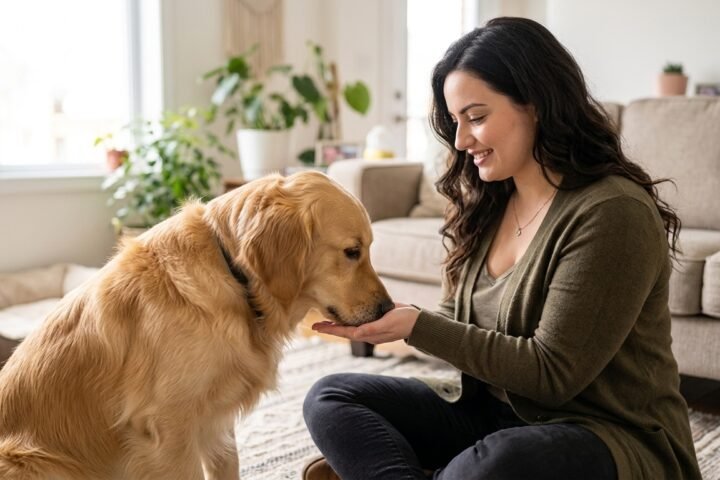
Sit beside your dog and hold the toy still at a comfortable height. Give them a moment to investigate. If they usually ignore a stationary toy, slide it a few inches along the rug and stop. Mark an interested nose touch at first. Give the reward from your other hand, then offer the toy again. Keep your fingers well clear of the part your dog likes to grab.
Once your dog readily noses the toy, wait for an open mouth before you mark. Next, look for the brief moment when their teeth close gently around it. Loosen your fingers so they can feel the toy’s weight. The American Kennel Club’s guide to teaching a hold and retrieve breaks down this part of fetch for dogs who need a smaller starting point.
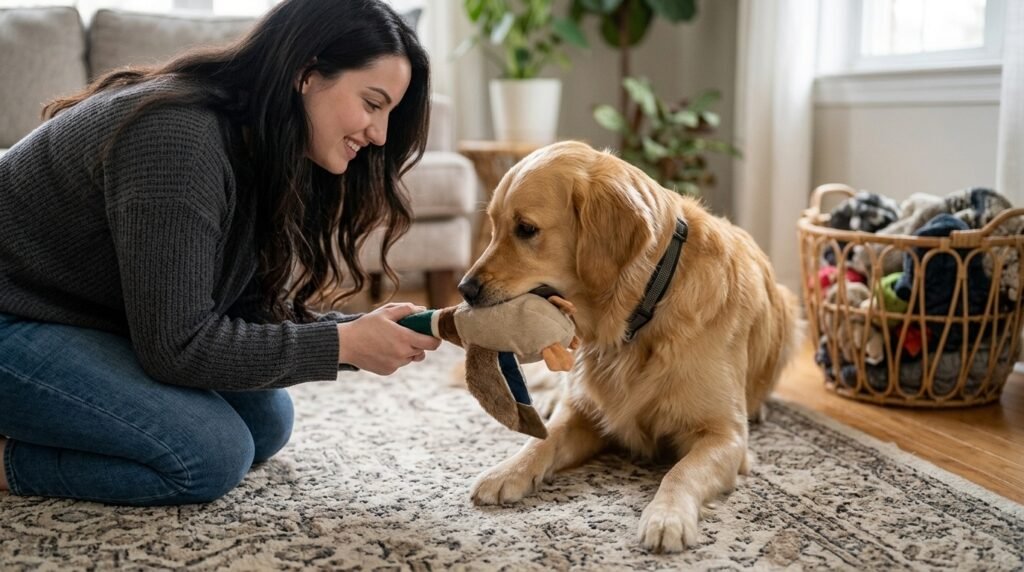
Gradually lower your hand until the toy rests on the floor while you still touch one end. Then take your hand away before your dog reaches it. If they stare at the duck on the rug, lift one end slightly for the next try. You can move on when they pick it up without needing someone to wiggle it.
Practice letting go without taking the toy
A release should feel like a fair deal. Choose a toy your dog enjoys but readily leaves, and practice while things are quiet. VCA’s guide to teaching a voluntary drop describes starting at a comfortable distance and using a treat exchange. Keep the toy available afterward so letting go can lead straight back to play.
If your relaxed dog has the duck, drop a little treat where they can see it beside them. Watch the jaw open. On later easy turns, say “drop it” just before the release you can now predict. As the words become familiar, say them before you move your treat hand. Give the treat when the toy drops. Keep your hands out of your dog’s mouth and resist the urge to tug on the duck.
Check the order of events on your last turn. Did the words prompt the release, or did your dog wait for the sight of chicken? Either observation tells you where to begin next time. A dog who can let go with your treat hand still is ready to try the same movement over a basket.
Reward the first drop inside the basket
Sit on the far side of the bin so your dog can approach the open side. Offer the duck just above the middle, at a height that lets your dog take it comfortably. Let your dog support its weight. With their muzzle still over the opening, give the release cue once. Mark the landing and hand over the treat. Leave the duck where it fell until your dog has finished eating.
The AKC toy cleanup exercise also starts with the dog over the box. That placement saves both of you a lot of guesswork. On this turn, all your dog has to do is open their mouth. If you hand over the duck on one side of the basket and ask for a drop there, landing on the rug is a perfectly accurate response.
When a toy clips the edge, look at where you offered it. Adjust your starting hand a few inches toward the middle. If the bin is so narrow that the duck only fits nose first, switch containers. You want an arrangement that works even when your dog takes the toy a little sideways.
Connect the floor pickup to the basket
Place the duck on the rug touching the outside of the bin. Sit where you sat for the first drops. Invite your dog to take it. As they lift their head, give a small point over the opening if they need it. Wait until the toy clears the inside edge before asking for the release. Mark the landing and pay right there.
Now your dog has two things to manage at once. Watch the first attempt from the side if another adult is handling the toy. Does the dog pick it up and look toward the basket, or pick it up and immediately spit it out? For the second dog, lift the toy halfway between floor height and the rim on the next turn. A smaller change can help them hold it long enough to turn their head.
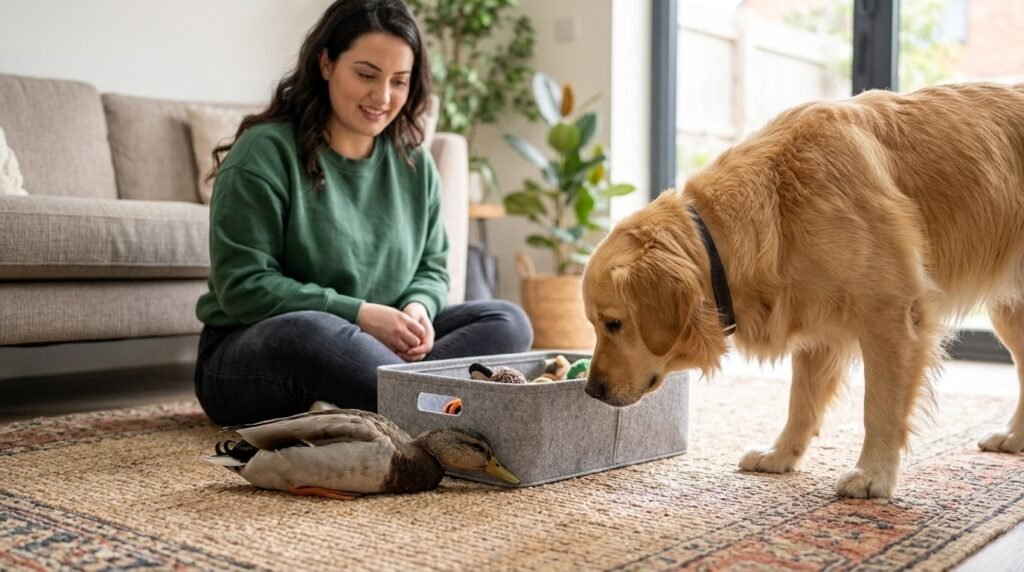
A quiet pickup beside the bin teaches something a long throw can hide. Your dog can begin the job when the toy is lying still. Once that works, place it a hand’s width farther away on the same side. Save the exciting throws for a separate game of fetch.
Give the whole job one cue
Choose words everyone at home can remember. “Clean up” works well if it sounds different from the cues you already use. Put one toy in its familiar starting spot. Just before your dog begins the pickup they have practiced, say the words once. Then give the little point or familiar pickup cue that has helped them finish the job. Reward the delivery as usual.
On another turn, say “clean up” and leave a short pause before you help. Your dog may start toward the toy during that pause. Let them work. If they get as far as the bin and hold the duck there, give the old release cue. Over several easy turns, leave room for the release to happen on its own. Dogs Trust’s toy tidying lesson also builds the behavior in small parts.
Keep the words out of unrelated situations while they are new. Saying “clean up” five times as you collect the toys yourself gives your dog little information about their role. One cue, a reachable duck, and time to move make the next turn much easier to understand.
Move away without becoming the target
A dog who delivers neatly while you sit behind the basket might follow you when you stand. Try changing just your position. Keep the toy beside the usual bin and shift one knee a little to the side. Cue one delivery. Where does the duck land? If it still goes inside, shift a little farther on a later turn.
For a dog who likes delivering to an outstretched hand, keep your palm against your thigh. Briefly point at the opening if needed, then bring your hand back. Reward when the toy lands in the bin. If your dog walks around the basket to reach you, move back closer and try a smaller change. Avoid catching the duck on its way down. That catch makes your hand a pretty convincing destination.
Next, sit in a chair beside the same bin. Start with the toy close again. Once your dog can deliver while you sit upright, try standing beside the chair. Move the toy farther away on a different turn. Changing your posture, the walking distance, and the basket location together makes it hard to tell which part your dog needs to practice.
Read a miss by where the toy lands
A duck at your feet tells a different story from a duck balanced on the rim. At your feet, the first thing to test is whether your dog is aiming for you. Move behind the bin again and keep your reward hand quiet. At the rim, look at the fit. A wide toy held by one wing may hit the edge even when your dog’s nose is centered.
If the toy falls halfway across the rug, shorten the trip. Notice whether your fingers reached into the treat pouch just before it fell. Some dogs have learned that rustling means food is already on the way. On the next easy delivery, keep your hands still until after you say “yes.” Pay promptly once you have marked the landing.
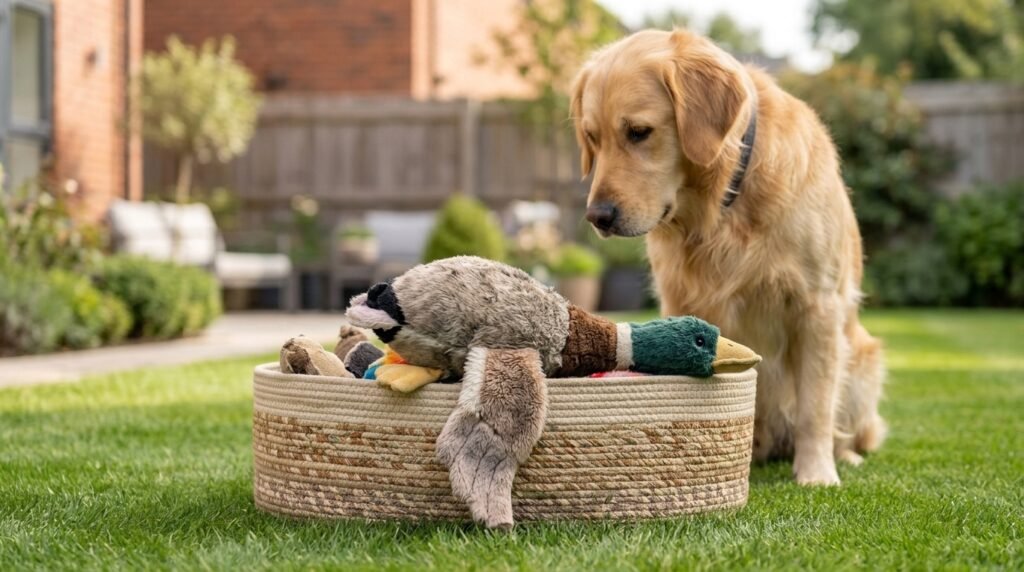
If the dog circles the bin with the toy still in their mouth, clear a path to the side they naturally approach. Reward one easy drop there. Keep a simple note such as “reached rim, duck bounced out.” That note gives you a specific change to try. “Wouldn’t clean up today” leaves out the part of the job your dog actually understood.
Help a dog who runs off or loses interest
Watch what happens just before the getaway. Does your dog glance back and bounce away as soon as you reach for the duck? Keep your hands still and let the moment pass. Following them around the coffee table can turn a quiet lesson into a terrific chase game. Next time, start beside the bin with a less exciting toy and room for your dog to leave.
A dog who parks beside your treat pouch needs a different adjustment. Put the rewards on a nearby shelf within your reach before you start. Handle the toy with empty hands, then reach for a reward after you mark. If your dog loves a little play, try a short game with a second toy after a successful deposit. You can put the training duck back on the rug once the game ends.
Sometimes the best change is to finish. If your dog backs away when the bin appears, lowers their body, and keeps looking for the doorway, set the toy down and give them space. Read those changes together with what just happened. PawMindTips explains signs your dog may be stressed. Try a quieter setup another day if your dog chooses to join you.
Add a second toy and leave the first one in
Choose a second toy your dog can carry as easily as the duck. Put the duck away for a moment. Offer the new toy over the opening, reward the drop, then put that same toy on the floor nearby for a short delivery. A rubber ring feels different in the mouth and may need a different angle to clear the edge.
Once each toy works alone, place both on the floor with a little space between them. Give the cue and accept either choice. Reward the first delivery, then turn your shoulders toward the remaining toy and give your dog another turn. At this stage, it’s fine to cue each delivery separately. Let your dog finish eating before asking for the next pickup.
If your dog fishes the first toy back out, hand the reward on the side facing the remaining toy. Leave the first one alone. Make the next floor toy easier to notice by placing it nearby before you start. If your dog still prefers digging in the bin, practice one deposit and end there. You can tidy the rest without turning the basket into a competition.
Make cleanup fit the end of play
Pick a moment when your dog still wants to interact. Near the end of play, leave one easy toy beside the basket and cue a single delivery. Reward it, say a consistent finish phrase such as “all done,” and go on with your evening. Sometimes give the toy back for a little extra play. Your dog can learn that a delivery has more than one happy ending.
In a home with two dogs, teach each dog alone first. Put the other dog somewhere comfortable before laying out the toys or treats. When it’s time to tidy a shared room, one dog can do the job while the other relaxes elsewhere. Both dogs reaching for the same duck adds a problem that a single dog practicing quietly never has to solve.
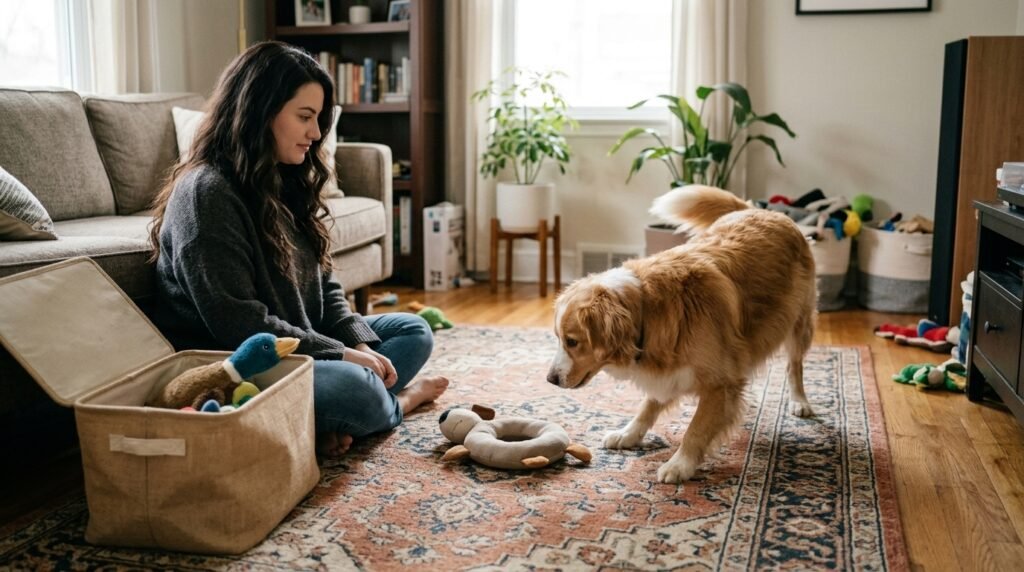
Keep what works in the routine. If your dog happily puts two toys away while you pick up the rest, you already have a useful household habit. On a day they wander off after one, finish the task yourself. The American Veterinary Society of Animal Behavior’s reward-based training guidance supports teaching the behavior you want through rewards. A missed turn needs no correction.
FAQs
Does my dog need to know fetch first?
No. A dog can learn to take a toy from your hand, drop it over the basket, and later pick it up nearby. Add the walk once both ends of that short trip make sense.
Does my dog need to know each toy’s name?
No. Any suitable toy can count when you say “clean up.” Names become useful if you want your dog to choose the duck while leaving the ball on the floor.
Can I move the basket to another room?
Yes. Bring the familiar bin and toy to the new spot. Start with a drop right over the opening. Work up to a short delivery there before asking your dog to carry anything through a doorway.
How long should I practice at a time?
Start with a few easy turns. If your dog eagerly returns for another, you can play a little longer. If the next pickup gets slower or they leave, finish the session and try again another day.
Conclusion
Tonight, leave just one toy beside an empty basket. Choose something your dog already likes to carry and sit where they can reach the opening comfortably. A single drop from your hand is a good place to finish the first lesson.
The next time you play, remember where the toy landed. If it fell at your feet, adjust where you sit. If it caught on the rim, change the fit. If it landed inside, let your dog try picking it up from the rug nearby.
Keep the job small enough that your dog comes back willingly. A duck placed in the basket while you’re sitting on the floor together is already one less toy to step on and a skill you can build on tomorrow.