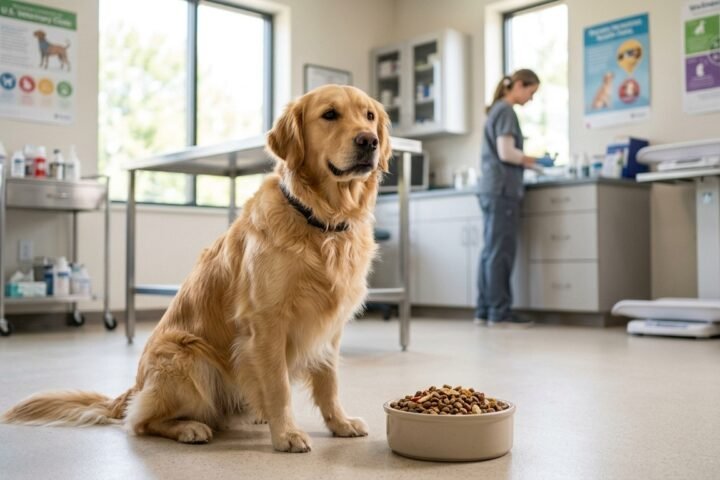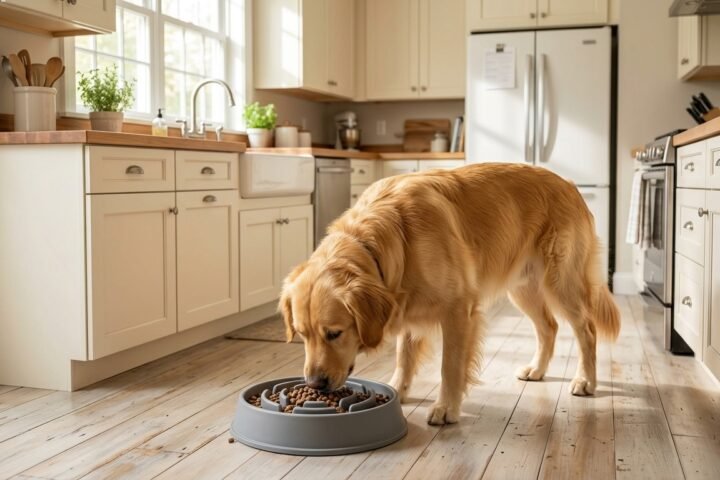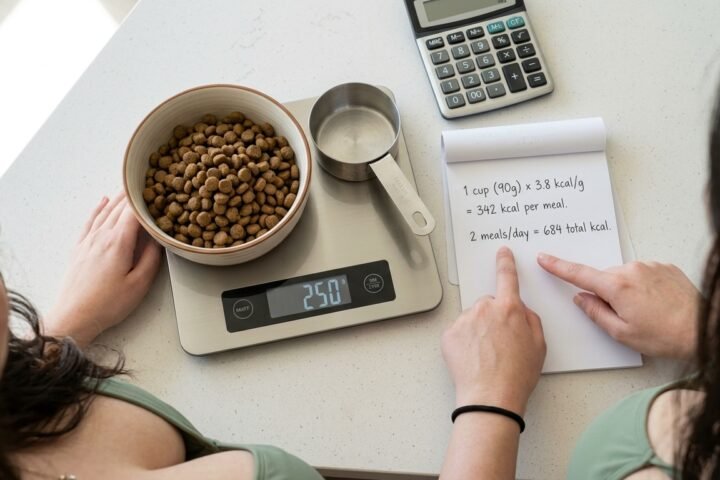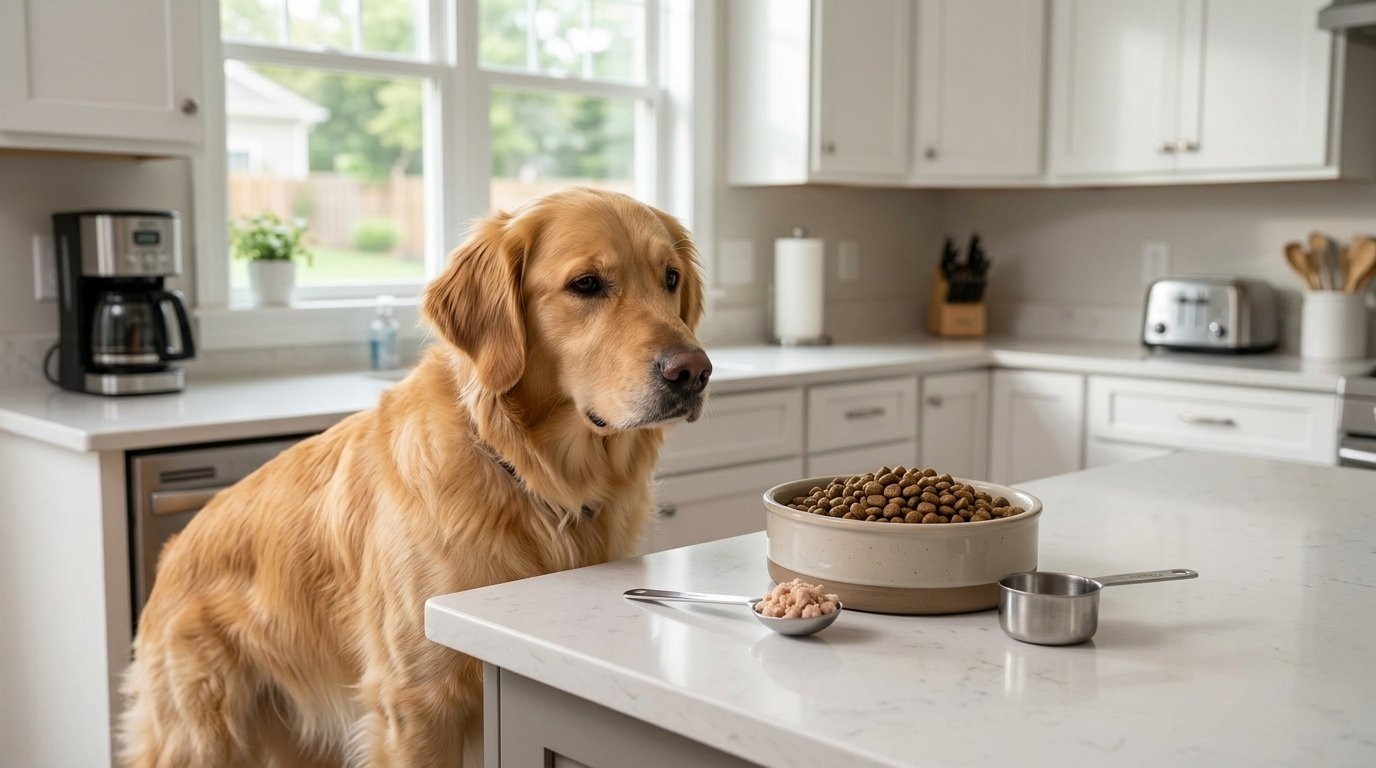
Dog food toppers can add aroma, moisture, and variety to a familiar meal. The safe way to use them is to measure what goes into the bowl, count other treats given that day, and protect the nutrition supplied by your dog’s main food. For most healthy adult dogs, a practical starting point is to keep all supplemental extras together below 10% of daily calories. If you swap part of one complete and balanced dog food for another appropriate complete and balanced food, the nutritional calculation is different, but the calories still count.
You do not need a complicated recipe. Start with a goal, read the label, introduce one ingredient slowly, and check your dog’s weight and stools. If a dog suddenly loses interest in food, seems ill, or is eating a prescription diet, speak with your veterinarian before trying to solve the problem with a tastier topping.
Table of Contents
What Counts as a Dog Food Topper?
A topper is something you add to a dog’s regular meal for flavor, texture, moisture, or variety. Examples include a spoon of suitable canned dog food, small pieces of plain cooked meat, a few cooked green beans, or a commercial product labeled as a meal enhancer. Warm water stirred into kibble changes the smell and texture but adds no food calories.
The word topper describes how you serve a food, not whether it is nutritionally complete. That distinction matters. A canned dog food with a nutritional adequacy statement for your dog’s life stage may serve as part of the actual meal. A bag labeled “for intermittent or supplemental feeding only,” a broth, and most kitchen additions are extras. They do not provide a reliable replacement for a substantial share of the complete diet.
The WSAVA guide to choosing pet food advises that complementary or intermittent foods should make up no more than 10% of the diet unless used under veterinary supervision. The separate WSAVA treat handout puts treats below 10% of daily calorie intake. Think of an incomplete topper as part of that same allowance, alongside chews, training rewards and table scraps.
Healthy dogs eating an appropriate complete diet do not need a daily supplement just because their kibble looks plain to us. A topper may be a convenient way to serve a little variety, but labels suggesting it will “fix” digestion, joints or immunity deserve scrutiny. Those conditions need individual assessment, not a promise from a scoop.
How Much Topper Can You Add Without Overfeeding?
Start with your dog’s actual daily intake, including meals and all extras, rather than guessing from body weight alone. The feeding instructions on a bag are a starting estimate; age, neuter status, activity, health and body condition affect an individual’s needs. Your veterinarian can help establish a daily target, especially if weight management or illness is involved.
For supplemental dog food toppers, use this straightforward budget:
Daily extra allowance = daily calorie target × 0.10.
If the dog is allotted 600 kilocalories (kcal) a day, the upper guideline for all treats and supplemental toppers combined is 60 kcal. Suppose the dog already receives 25 kcal of training treats and a 15 kcal chew. That leaves around 20 kcal for the topper, not an additional 60. You can use less; 10% is a ceiling for routine extras, not a target you must reach.
Check the food package for “kcal/cup,” “kcal/can,” or “kcal per serving.” Look for the same unit when calculating the topper. If a label lists 30 kcal per tablespoon and you add two tablespoons, you have added 60 kcal. Teaspoons, tablespoons, ounces and grams cannot be swapped without a conversion tied to that specific product. Oil and dried products may deliver surprisingly many calories in a small volume.
Tufts Cummings School notes that, for a dog without medical conditions, treats including some people foods can account for up to 10% of daily calories. If the product has no usable calorie information, ask the manufacturer or choose a measurable alternative. Avoid relying on the phrase “low calorie” as a substitute for numbers.
Does every topper require less kibble?
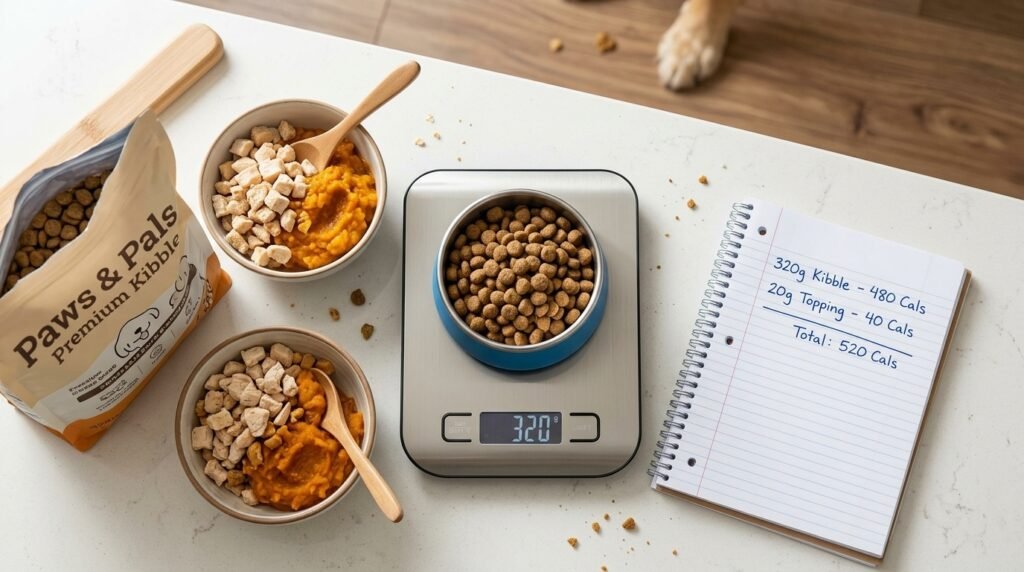
Any meaningful calories added on top of the existing ration can lead to weight gain over time. If the new topper adds 40 kcal, remove approximately 40 kcal from elsewhere in the day’s food. However, that arithmetic does not give you permission to replace a large portion of a complete diet with an incomplete extra. Stay within the 10% supplemental budget and preserve an appropriate base food.
You may instead reserve some of the already measured complete food for training. A tablespoon of the dog’s usual wet food or a few pieces of daily kibble can make the meal feel different without adding calories to the total. Plain water is another option if you simply want to soften food. Feed the moistened meal promptly and follow the food maker’s handling directions.
If both foods are complete and balanced
When two commercial diets are each labeled complete and balanced for the dog’s relevant life stage, one may replace part of the other. You still need to match calories and consider whether the dog tolerates the mix. “50% kibble plus 50% canned” by volume is not necessarily 50% of calories: canned food contains more water, and calorie density varies among brands. Ask the manufacturer or your veterinarian about the appropriate mix if the feeding directions do not cover it. A puppy needs a product suitable for growth; a therapeutic diet requires veterinary guidance before substitutions.
A Simple Calorie Calculation for Kibble and Toppers
Imagine a healthy adult dog whose current appropriate daily ration is 2 cups of kibble at 350 kcal per cup. That equals 700 kcal daily. The dog also gets 20 kcal of training treats. A new supplemental topper contains 25 kcal per tablespoon.
First, calculate the total supplemental allowance: 700 × 0.10 = 70 kcal. Subtract the 20 kcal of existing treats: 50 kcal remains. If you serve one tablespoon of topper, 25 kcal remains available for any other extras, though there is no need to use it. If the current 700 kcal of kibble was already maintaining the right weight before those treats, review the whole existing diet with your veterinarian; the goal is not to quietly raise the total to 745 kcal.
To keep the example at 700 kcal including both treats and topper, subtract 45 kcal of kibble. At 350 kcal per cup, 45 ÷ 350 = about 0.13 cup removed from the daily kibble ration. Feed roughly 1.87 cups of kibble across the day, plus the 20 kcal treats and 25 kcal topper. The amounts are illustrative, not a feeding prescription for a particular dog.
| Step | Example |
|---|---|
| Total daily target | 700 kcal |
| Training treats | 20 kcal |
| One tablespoon of topper | 25 kcal |
| Kibble calories remaining | 655 kcal |
| Kibble at 350 kcal/cup | About 1.87 cups |
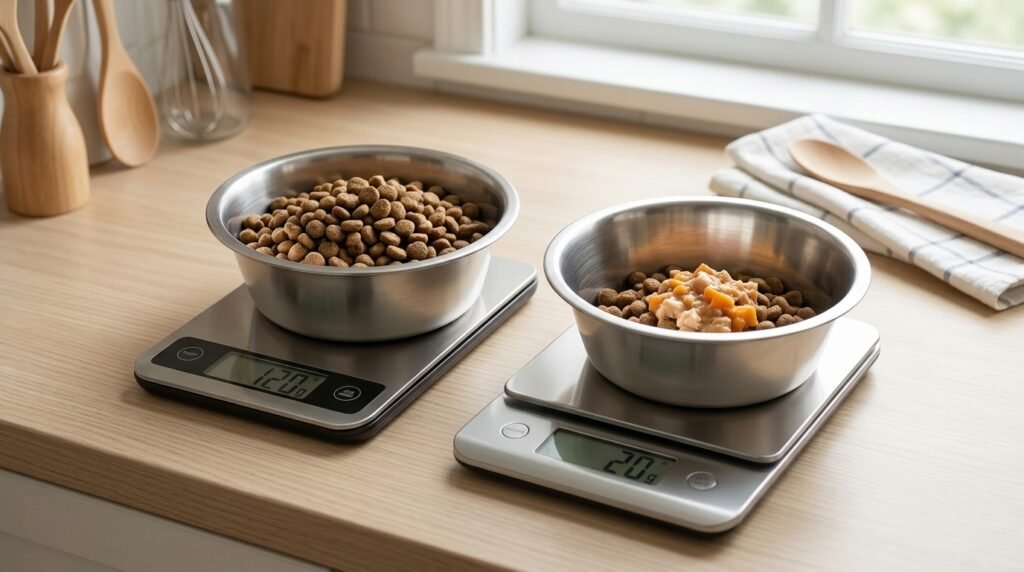
A small measuring cup may be difficult to read accurately at 0.13 cup. If the package lists kcal per kilogram, a kitchen scale can help you measure kibble by grams. If it lists only kcal per cup, use an appropriately sized measuring tool, check the maker’s gram conversion, or ask the manufacturer.
Your dog’s overall feeding amount should remain grounded in a balanced diet rather than a kitchen estimate of what “looks enough.” For home cooking specifically, that guide explains why a few healthy ingredients are not a complete recipe.
Which Dog Food Toppers Make Sense?
The best choice depends on why you want one. Choose a format you can measure, a product your dog tolerates, and a serving that fits the daily allowance. There is no need to buy an expensive powder if warm water solves the texture problem.
To add moisture or aroma
Warm water added to kibble is an easy first step. A modest amount of appropriate canned dog food is another option; read its calorie and nutritional adequacy statements before deciding whether it is a supplement or part of a complete mixed meal. A dog-safe broth can add aroma, but check every ingredient and the sodium content. Many human soups and stocks contain onion or garlic, which should not be fed to dogs.
Keep fresh water available regardless of how moist the meal is. When combining wet and dry foods, compare their calories per serving instead of assuming that equal volumes provide equal energy.
For a little texture or variety
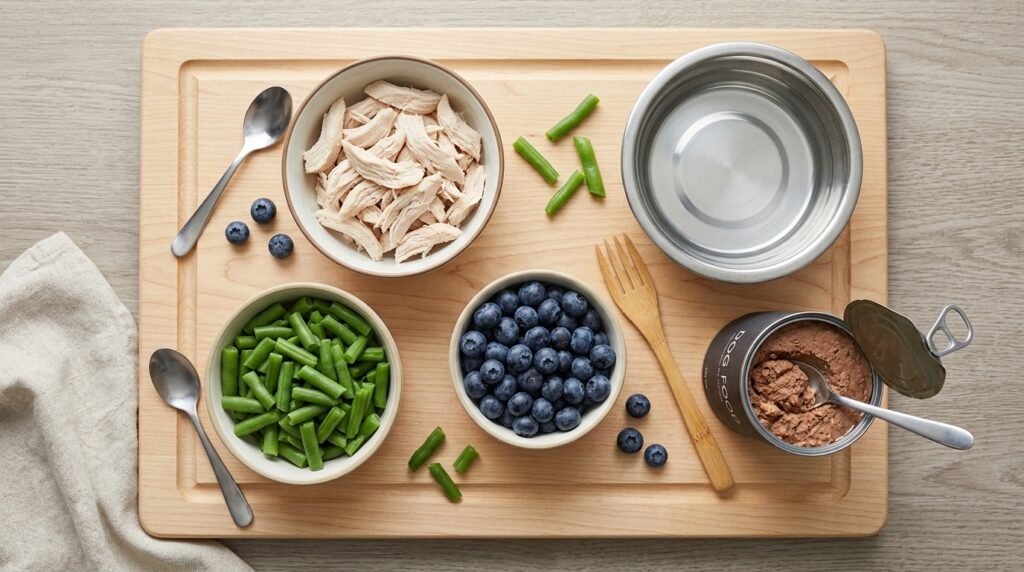
Plain, fully cooked, unseasoned chicken or turkey can work in a measured amount when it suits the dog’s medical and allergy history. Small amounts of washed, appropriately prepared green beans or blueberries offer another texture. Remove choking hazards, cut food into pieces suited to your dog’s size, and introduce only one new item at a time. The PawMindTips guide to safe human foods for dogs provides more ingredient-specific context; it does not replace the daily calorie calculation here.
Plain canned pumpkin is another option for some dogs, but “pumpkin” is not a treatment for unexplained diarrhea. Choose plain pumpkin rather than sweetened pie filling, and consult the vet for persistent digestive symptoms. See the site’s pumpkin serving and safety guide before adding it routinely.
Commercial sprinkles, gravies and freeze-dried pieces
These can be convenient, but “natural,” “functional,” or “healthy” does not establish calorie content or nutritional adequacy. Freeze-dried meat pieces may be especially concentrated. A product’s suggested scoop may be too much for a small dog’s remaining treat budget. Measure by the label’s listed calories and note whether a serving means one teaspoon, one scoop, one packet, or an entire can.
Raw or freeze-dried raw animal products deserve separate caution. Freezing and drying do not automatically eliminate pathogens. The FDA warns about raw pet food risks, including risks to people who handle it.
Choose appropriately processed products and maintain good kitchen hygiene, particularly around young children, older adults, pregnant people and anyone immunocompromised.
Read the Label Before It Goes in the Bowl
Look for five things: calories per usable unit; a nutritional adequacy statement; ingredients and known allergens; feeding directions; and storage instructions. These tell you far more about safe use than the photograph on the front of a package.
An AAFCO nutritional adequacy statement may say the food is formulated to meet nutrient profiles for adult maintenance, growth, or another specified life stage. Another product may say “for intermittent or supplemental feeding only.” These are meaningfully different uses. The WSAVA selection guidance explains what information to seek about a pet food and its manufacturer. A topper marketed as a supplement should not be assumed to balance a home-cooked diet or cure a nutrient deficiency.
Check that the calorie number corresponds to the form you serve. Is the powder’s calorie count for a dry scoop or a reconstituted bowl? Does the label list one tablespoon of gravy or a whole pouch? If the package promises “servings” but lacks an obvious calorie statement, contact the maker. Record both the amount fed and the kcal so different household members follow the same plan.
Watch for ingredients that should never end up in an improvised topper. The ASPCA’s list of people foods to avoid includes grapes and raisins, chocolate, alliums such as onion and garlic, and xylitol, also called birch sugar. Avoid greasy drippings, heavily seasoned leftovers and sweetened products too. If a potentially toxic food has been eaten, contact a veterinarian or animal poison service promptly rather than waiting to see whether symptoms develop. PawMindTips also explains foods not to feed dogs.
Follow package instructions for refrigeration and use after opening. The FDA’s pet food handling advice recommends washing hands after handling food, cleaning bowls and utensils, and storing food correctly. Refrigerate opened wet food as instructed, use a clean spoon, and discard spoiled food. A topper is not worth a food safety gamble.
How to Introduce a Topper Without Creating a Picky Habit
Start with less than the intended measured serving and offer it alongside the usual food. Over several days, increase gradually if stools and appetite remain normal. The exact pace depends on the individual dog and the amount of new food; a tiny garnish requires less adjustment than a meaningful partial meal swap. If you are changing the base food as well, PawMindTips’ dog food transition guide explains a more structured, gradual change.
Serve the planned amount on a consistent schedule. If a healthy dog declines a meal and you repeatedly bring out increasingly rich extras, the dog may learn to wait for a better offer. Try mixing an approved small topper through the meal instead of putting an irresistible mound on top for the dog to lick off. Do not force a dog to eat or withhold food as a strategy when there are signs of illness.
Introduce one product or ingredient at a time. That makes it easier to notice loose stool, vomiting, itching or a change in appetite and identify a possible trigger. For a dog with a history of food reactions, ask the veterinarian before introducing a new animal protein or supplement. A food elimination trial works only when the prescribed diet is followed closely; even small treats can undermine it.

Write the plan on the food container: “Breakfast: half the daily kibble plus one measured teaspoon of topper; dinner: remaining kibble; training allowance: X kcal.” This is particularly helpful when several family members feed the same dog. Count any medication-hiding food, dental chew or edible enrichment item as well.
When Should You Ask Your Veterinarian First?
Check before adding dog food toppers if your dog eats a prescription diet, is a growing puppy, has diabetes, pancreatitis or another diagnosed condition, has a known food allergy, or is losing or gaining weight unexpectedly. A food that is usually fine for a healthy adult may be unsuitable for a dog whose diet is designed to control fat, minerals, calories or specific proteins. Veterinary guidance can also help if you want to combine two complete foods in substantial amounts.
Do not assume that a senior dog’s sudden fussiness is normal aging. Dental pain, nausea and other conditions may change how a dog eats. A dog refusing food, repeatedly vomiting, showing signs of pain or marked lethargy, or having bloody diarrhea needs veterinary advice promptly. Trouble breathing, collapse, a swollen painful abdomen, or suspected toxin exposure calls for urgent or emergency care.
If your dog is maintaining a good appetite but consistently chooses the topper and leaves the main food, reduce the garnish and review the feeding schedule. For an apparent appetite problem, especially one that is new or worsening, discuss the pattern with a veterinarian instead of masking it with richer food. Any claimed therapeutic effect from a topper should be checked against your dog’s diagnosis and current medications.
How to Tell Whether the New Routine Is Working
Keep a short record for two to four weeks: base food amount, topper portion, treats, stools, appetite and body weight. Reassess if a few “small” extras accumulate into a large daily allowance. Dog food toppers are easiest to manage when everyone in the home follows the same measured serving.
Look at body condition as well as the scale. In many dogs at an appropriate condition, you can feel ribs with a light layer of tissue and see a waist from above. Breed and build affect appearance, and a veterinarian can score your dog more accurately. The Merck Veterinary Manual’s overview of body condition scoring explains why a consistent scoring method helps track changes. Do not abruptly restrict food, especially for a puppy or a dog with illness.
If weight creeps up, first check the actual measured calories, extra treats and household handouts. Revisit the daily target with your veterinarian if needed. If stools soften after introducing an extra, pause the new item and seek advice if symptoms persist, recur, or come with vomiting, blood, pain or lethargy. A topper should make feeding simpler and more pleasant, not create a cycle of guesswork.
FAQs
Are dog food toppers necessary if my dog’s food is complete and balanced?
No. Many dogs do well without any topper. You may add a measured, dog-safe option for flavor or texture, but do not assume it provides a needed health benefit. Keep supplemental extras within the daily allowance.
Can I use wet dog food as a topper for kibble?
Yes, if the product suits your dog. Check whether the wet food is complete and balanced for the relevant life stage, compare its calories with the kibble, and adjust the portions. Introduce the combination gradually if your dog has a sensitive stomach.
Does warm water count toward the 10% topper limit?
Plain water has no food calories, so it does not use the treat allowance. It can soften kibble and increase moisture in the bowl. Serve the moistened food promptly and keep drinking water available.
What if my dog will only eat food with a topper?
If this is a sudden change or comes with weight loss, vomiting, dental discomfort or low energy, call your veterinarian. If your otherwise healthy dog has developed a preference, keep a consistent, measured meal routine and avoid repeatedly upgrading the bowl after refusals.
Conclusion
Dog food toppers work best as measured additions to an appropriate base diet. For incomplete extras, keep toppers and all other treats together below about 10% of daily calories, then account for those calories in the day’s food.
Check labels, add only dog-safe ingredients, introduce changes gradually, and monitor weight and digestion. Ask your veterinarian to tailor the plan whenever appetite changes, a medical condition is present, or a prescription food is involved.